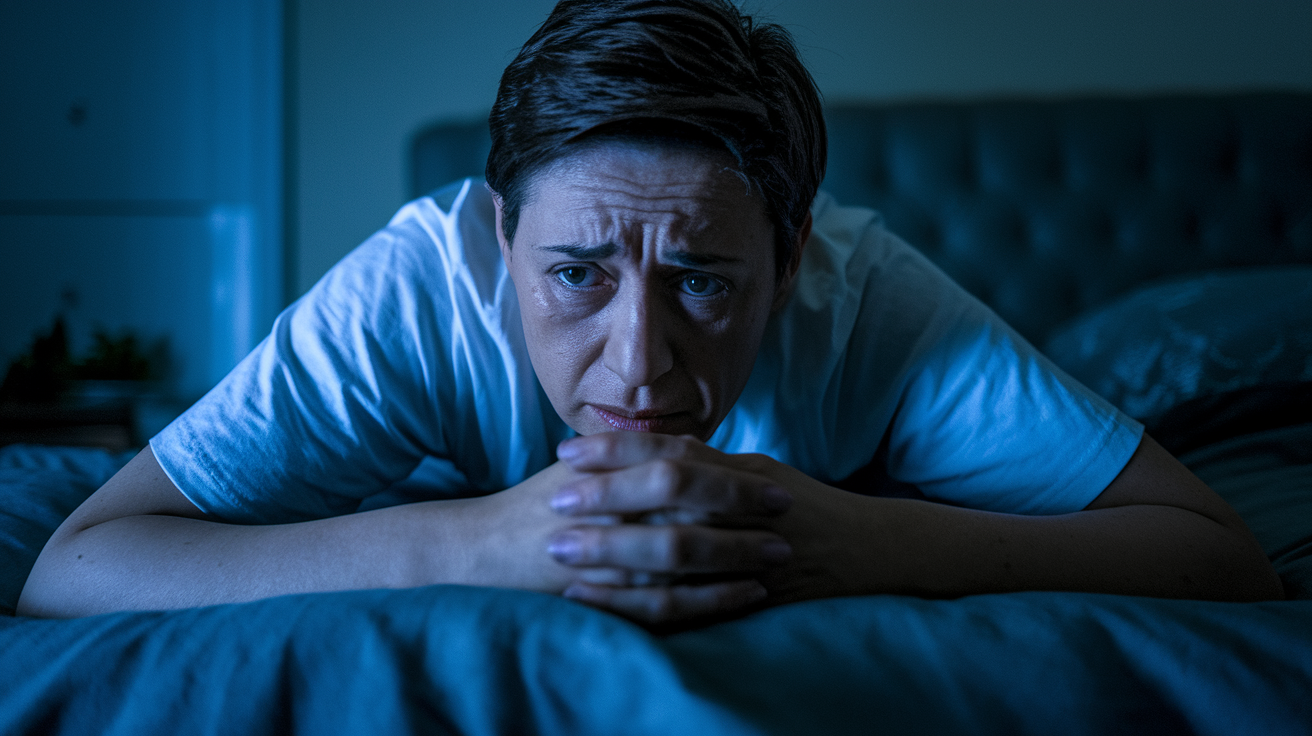
Why does worry often hit hardest when it’s supposed to be quiet?
You lie down and suddenly your heart is racing, your stomach flips, and your mind replays every problem.
This sudden anxiety at night is not random.
When distractions vanish your brain goes into threat scanning, and sleep-cycle and hormone shifts can nudge an anxious nervous system awake.
In this post you’ll get a clear, calm explanation of why it happens, five fast relief methods you can use immediately, simple tracking prompts for your doctor, and the warning signs that mean it’s time to seek help.
Why Anxiety Strikes at Night and How to Calm It Fast

Your head hits the pillow, and worry slams into you. Heart racing. Stomach churning. Mind spinning through every possible problem at once.
That sudden anxiety at night? It’s not random.
During the day, distractions keep your nervous system busy. At night, when those distractions vanish, your brain defaults to threat scanning. Fewer sensory inputs to process means intrusive thoughts get room to run wild.
Cortisol (your body’s main stress hormone) naturally rises in the early morning, usually between 4:00 and 6:00 a.m. If you’re prone to anxiety, that hormonal shift can jolt you awake with a racing heart and tight chest. Your autonomic nervous system, which controls fight-or-flight responses, also shifts gears as you move through sleep cycles. Transitions between light sleep and deeper stages can briefly activate alertness systems. In anxious brains, that moment of arousal can escalate fast.
Good news: you can interrupt this spiral quickly. Fast-acting techniques work by engaging your parasympathetic nervous system, the body’s natural calming brake. Here are five methods you can use the moment anxiety hits:
1. Diaphragmatic breathing – Slow inhale through your nose for 4 seconds, hold for 2, exhale through your mouth for 6. The longer exhale activates the vagus nerve and slows your heart rate. Repeat for 2 to 3 minutes.
2. Get out of bed – Lying still while your thoughts spiral makes it worse. Stand up. Move to another room. Do something quiet and neutral like reading or folding laundry until the wave passes.
3. Grounding exercise – Name 5 things you can see, 4 you can touch, 3 you can hear, 2 you can smell, 1 you can taste. This simple sensory check pulls your attention back to the present.
4. Progressive muscle relaxation – Start at your toes. Tense each muscle group for 5 seconds, then release. Move up through your legs, core, arms, shoulders. The deliberate tension and release help discharge the physical energy of anxiety.
5. Cold water on your wrists – Run cool water over the inside of your wrists for 30 seconds. The mild shock shifts your nervous system out of panic mode and gives your brain something concrete to focus on.
Deeper Physiological and Psychological Causes of Nighttime Anxiety
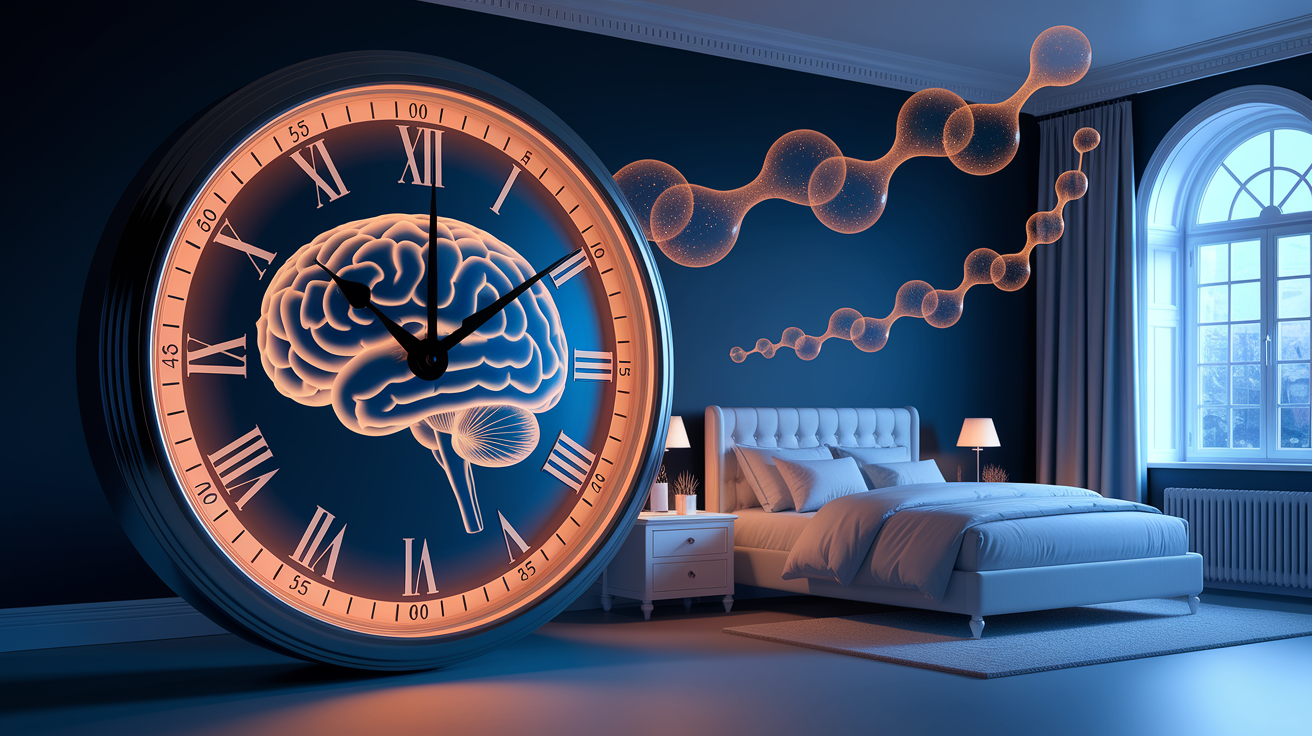
Your body runs on an internal clock called the circadian rhythm. It governs hormone release, body temperature, alertness. For most people, cortisol dips at night to allow sleep, then starts climbing around 3:00 or 4:00 a.m. to prepare you for waking. If you have an overly sensitive stress response or disrupted sleep cycles, that early-morning cortisol spike can jolt you awake with symptoms that feel identical to a threat response. Pounding heart, shallow breathing, a sense of dread.
Rumination thrives in silence and stillness.
During the day, work demands, conversations, routine tasks keep your conscious mind busy. At night, lying in a dark room with no external structure, your brain may start replaying mistakes, imagining worst-case scenarios, fixating on unsolved problems. This tendency gets amplified when you’re overtired, because exhaustion reduces your ability to redirect intrusive thoughts or put worries into perspective.
Underlying anxiety disorders (particularly generalized anxiety disorder) can make nighttime symptoms worse. If your baseline anxiety is high during the day, the shift to nighttime quiet doesn’t offer relief. Instead, it removes the buffer of distraction. The anxiety you’ve been managing all day surges to the surface. Sleep deprivation itself becomes a feedback loop: poor sleep worsens anxiety, worsening anxiety disrupts sleep further.
Overstimulation before bed plays a bigger role than most people realize. Screen time. Caffeine after 2:00 p.m. Emotionally charged news. Conflict with a partner. All of these can leave your nervous system in a heightened state. Even if you feel calm on the surface, your autonomic system may still be in a semi-activated state when you try to sleep. That residual arousal can express itself as sudden anxiety when your conscious mind finally quiets down.
Nighttime Anxiety vs. Nocturnal Panic Attacks
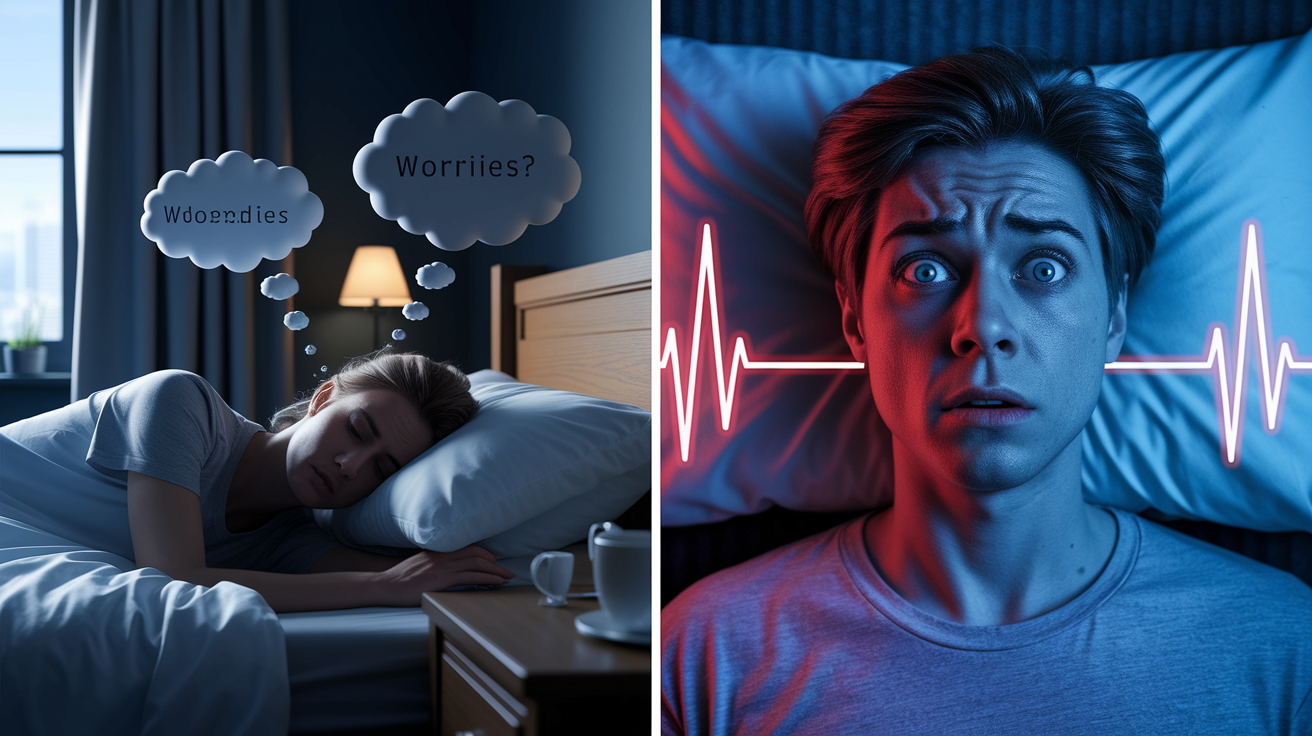
These aren’t the same thing, even though they share overlapping symptoms. Understanding the difference helps you know what you’re dealing with and what kind of help to seek.
Nighttime anxiety usually builds gradually. You might wake naturally, then notice your mind is racing or your chest feels tight. The worry feeds on itself. Within minutes you’re wide awake and upset. It’s driven primarily by thought patterns: rumination, catastrophizing, fixating on unresolved issues. You remain aware of your surroundings and can often trace the anxiety back to a specific worry or trigger.
Nocturnal panic attacks are abrupt and intense. They strike during sleep, often during non-REM stages like N2 or N3, and they wake you suddenly with overwhelming physical symptoms. Your heart may pound so hard it feels like it’s going to burst. You might gasp for air, sweat through your sheets, or feel a crushing sense of doom with no clear cause. The peak of a nocturnal panic attack happens within minutes. While the episode is brief, the aftermath (racing thoughts, fear of going back to sleep) can last much longer.
Key differences:
Onset – Nighttime anxiety develops after waking and noticing thoughts or sensations. Nocturnal panic attacks begin during sleep and cause the awakening.
Intensity – Panic attacks are sharply intense and peak quickly. Nighttime anxiety tends to escalate more gradually.
Physical vs. cognitive dominance – Panic attacks are dominated by physical symptoms like pounding heart, shortness of breath, trembling. Nighttime anxiety is more heavily driven by racing thoughts and worry spirals.
Duration and memory – Panic attacks are brief but vivid. You remember the physical terror. Nighttime anxiety can persist for hours and is often tangled up in specific worries or fears.
Nighttime Habits and Routines That Reduce Anxiety
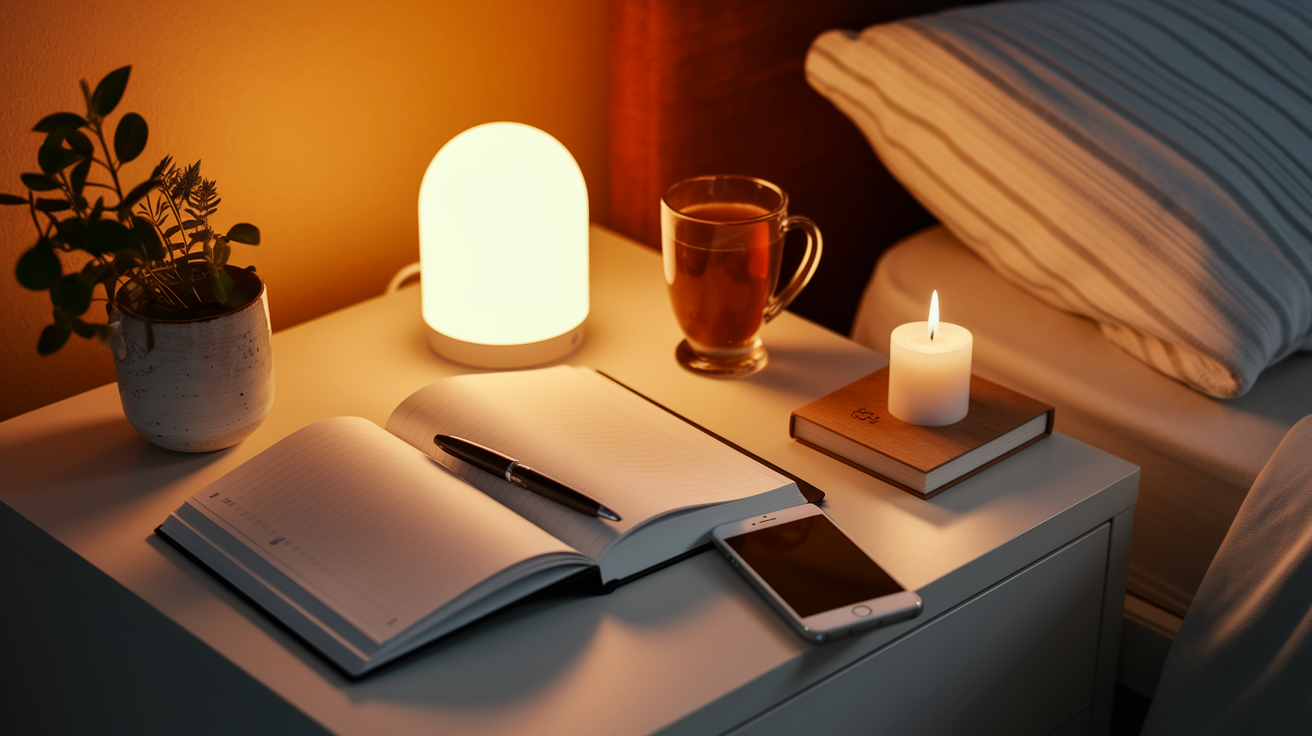
Building a consistent evening routine retrains your nervous system to recognize bedtime as safe, not threatening.
Your brain is highly pattern-sensitive. When you repeat the same calming sequence each night, you create a predictable wind-down signal that lowers cortisol and prepares your body for sleep.
Start by setting a fixed bedtime and wake time, even on weekends. Irregular sleep schedules confuse your circadian rhythm and make it harder for your body to anticipate rest. Consistency is more powerful than perfect conditions.
Here are six practical routine steps that reduce the likelihood of sudden anxiety at night:
Turn off screens at least 90 minutes before bed – Blue light suppresses melatonin and keeps your brain alert. If you must use a device, use night mode or blue-light-blocking glasses. But stopping entirely works better.
Dim the lights after dinner – Bright overhead lighting signals daytime alertness. Switch to lamps or candles in the evening to cue your body that the day is ending.
Do a 10-minute body scan or guided meditation – Lie down, close your eyes, mentally check in with each part of your body from your toes to your head. Notice tension without trying to fix it. This practice helps you notice and release physical stress before it builds.
Write down tomorrow’s to-do list before bed – A quick brain dump onto paper stops your mind from rehearsing tasks all night. Keep a notebook on your nightstand and jot down anything you’re afraid you’ll forget.
Avoid caffeine after 2:00 p.m. and alcohol close to bedtime – Caffeine has a half-life of 5 to 6 hours, so an afternoon coffee can still be active at midnight. Alcohol might make you drowsy initially, but it disrupts deep sleep and often triggers middle-of-the-night waking with anxiety.
Keep your bedroom cool, dark, and quiet – Aim for around 65 to 68 degrees Fahrenheit. Use blackout curtains or an eye mask. Consider white noise or earplugs if external sounds wake you.
Long-Term Treatments and Supports
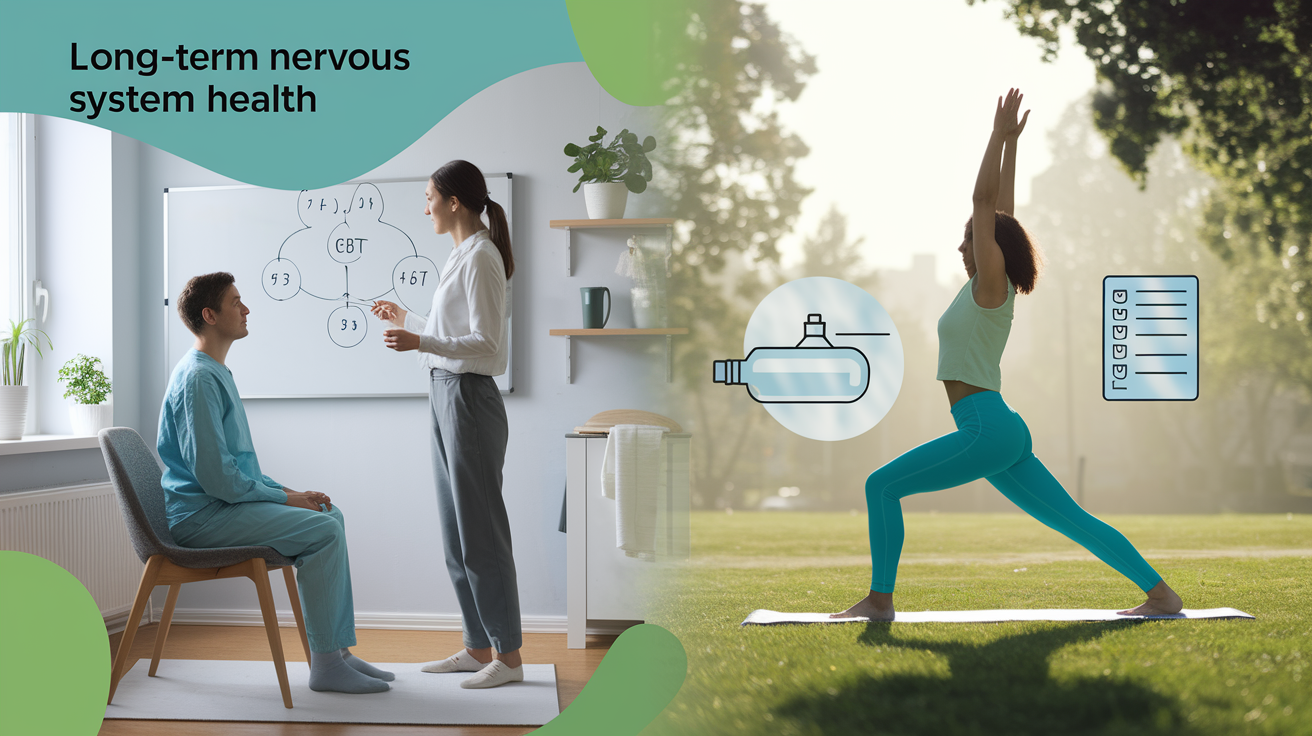
If sudden anxiety at night is happening regularly, short-term coping techniques alone won’t solve the underlying problem.
Long-term management requires addressing the root causes. Whether that’s an anxiety disorder, unresolved stress, poor sleep hygiene, or a combination of factors.
Cognitive Behavioral Therapy (CBT), especially CBT for insomnia (CBT-I), is one of the most effective long-term treatments. CBT-I helps you identify and change the thoughts and behaviors that keep anxiety and insomnia locked together. You learn to challenge catastrophic thinking (“I’ll never fall back asleep” or “This will ruin my whole day”), break the habit of lying awake in bed, and rebuild trust in your body’s ability to sleep. Many people see significant improvement within 6 to 8 weeks of consistent practice.
Medication can be part of the solution when anxiety is severe or persistent. Selective serotonin reuptake inhibitors (SSRIs) are commonly prescribed for generalized anxiety and panic disorders, and they can reduce the frequency and intensity of nighttime symptoms over time. Short-term medications (such as certain sedatives or anti-anxiety agents) may be used briefly to restore sleep during acute episodes, but they’re not a long-term fix and carry risks of dependence. Any medication decision should be made with a prescriber who understands your full health picture.
Lifestyle changes that support long-term nervous system regulation include regular exercise (especially earlier in the day), consistent exposure to natural light in the morning, a diet rich in whole grains and magnesium (found in leafy greens, nuts, seeds), and daily stress-reduction practices like journaling, yoga, or time in nature. Building these habits creates a foundation that makes your brain less reactive to nighttime triggers.
Therapy, medication when appropriate, and lifestyle adjustments work best when used together, not in isolation.
When to Seek Medical or Professional Help

Most people experience occasional nighttime anxiety, especially during stressful periods. But if it’s happening multiple nights a week, interfering with your ability to function during the day, or making you afraid to go to bed, it’s time to talk to a professional.
Persistent insomnia that lasts more than a few weeks, frequent nocturnal panic attacks, or anxiety that doesn’t respond to self-help strategies are all signs that you need a clinical evaluation. A provider can help rule out underlying medical causes like thyroid problems, sleep apnea, or medication side effects, and recommend targeted treatment.
You should seek help if you notice:
Frequent awakenings with intense physical symptoms – If you’re waking multiple times a week with a pounding heart, shortness of breath, or choking sensations, especially if you also snore or have been told you stop breathing during sleep, you may need a sleep study to check for obstructive sleep apnea.
Daytime impairment – If nighttime anxiety is causing persistent fatigue, difficulty concentrating, irritability, or problems at work or in relationships, professional treatment can make a substantial difference.
Fear of sleep or avoidance behaviors – If you’re staying up late to avoid going to bed, relying on alcohol or over-the-counter sleep aids regularly, or feeling dread as bedtime approaches, these are signs that the problem has moved beyond occasional stress.
Final Words
in the action: nighttime surges of worry usually come from hormones, a quieter mind, and sleep-stage shifts. This guide showed fast calming tools—breathing, grounding, progressive muscle relaxation—and how to tell gradual nighttime anxiety from sudden panic.
We also covered routines, longer-term options like CBT, and simple tracking steps to bring to a clinician if symptoms persist.
If you get sudden anxiety at night, try the quick steps and note timing and triggers. Small changes and a clear plan can make nights calmer.
FAQ
Q: Why am I all of a sudden getting anxiety at night?
A: Sudden nighttime anxiety often happens because your day’s distractions end, thinking ramps up, and body systems shift, like hormone changes, sleep-cycle transitions, or stress, which can trigger it.
Q: What is having a feeling of dread in the evening?
A: A feeling of dread in the evening is heavy, focused worry or an unsettled sense that something bad might happen, often tied to rumination, fatigue, or looming responsibilities.
Q: How to sleep during an anxiety attack?
A: Sleeping during an anxiety attack is possible by using grounding and slow diaphragmatic breaths, 5-4-3-2-1 grounding, progressive muscle relaxation, and keeping the room dark and cool. If breathing worsens, seek help.
Q: How to calm anxiety?
A: Calming anxiety uses short, low-risk steps you can try now: slow exhale breathing, grounding, drink water, step outside, and 10-minute light movement to shift your nervous system. If symptoms are severe or ongoing, contact a clinician.
Comments are closed