What if you could stop a sudden anxiety spike in under three minutes?
You’re not imagining it, most anxiety spikes peak in 5 to 15 minutes, but a few quick moves can shorten that window.
This post shows three fast, low-risk techniques: breathing, grounding, and a cold cue.
They often bring relief in under three minutes and interrupt the panic loop in different ways so you can pick what feels doable right now.
Try one now; if symptoms are severe, unusual, or not easing, get medical help.
Immediate Calming Techniques to Stop Sudden Anxiety Fast
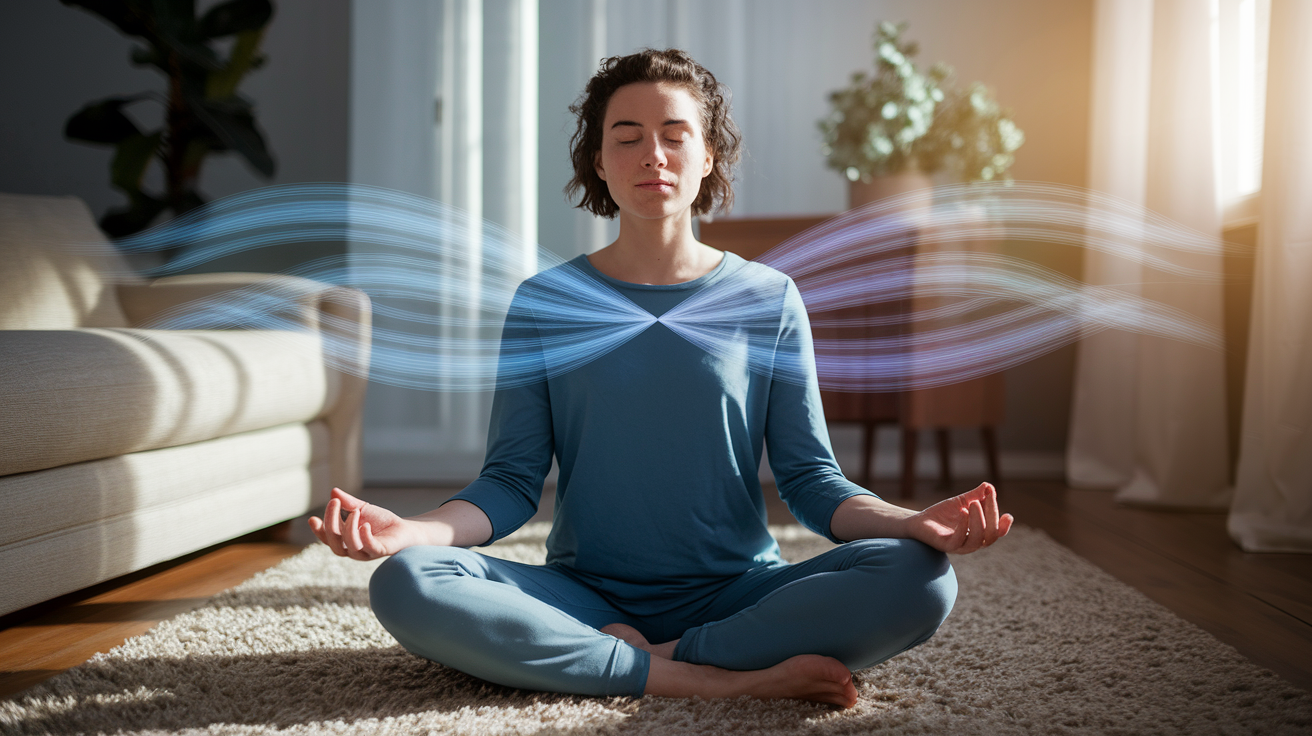
Your heart’s pounding, chest feels tight, thoughts won’t stop racing. Here’s what helps: most anxiety spikes peak in 5 to 15 minutes, then start dropping on their own. These three techniques can shorten that window and bring relief in under three minutes.
Each one interrupts the panic loop differently. Breathing slows your nervous system down. Grounding pulls you back to the present. Cold interrupts the alarm signal. Pick whichever feels most doable right now, or use them in order.
-
4-7-8 breathing: Breathe in through your nose for 4 seconds, hold for 7, exhale slowly through your mouth for 8. Repeat 4 cycles. Takes about 90 seconds total and forces your nervous system to downshift.
-
5-4-3-2-1 grounding: Name out loud or silently 5 things you see, 4 you can touch, 3 you hear, 2 you smell, and 1 you taste (or just take one deep breath). Takes 30 to 90 seconds and anchors you immediately.
-
Cold water on your face: Splash cold water on your face for 10 to 20 seconds, or hold an ice cube against your wrist or neck for 30 to 60 seconds. This triggers the dive reflex and interrupts fight-or-flight within seconds.
Grounding Methods for Sudden Anxiety Relief
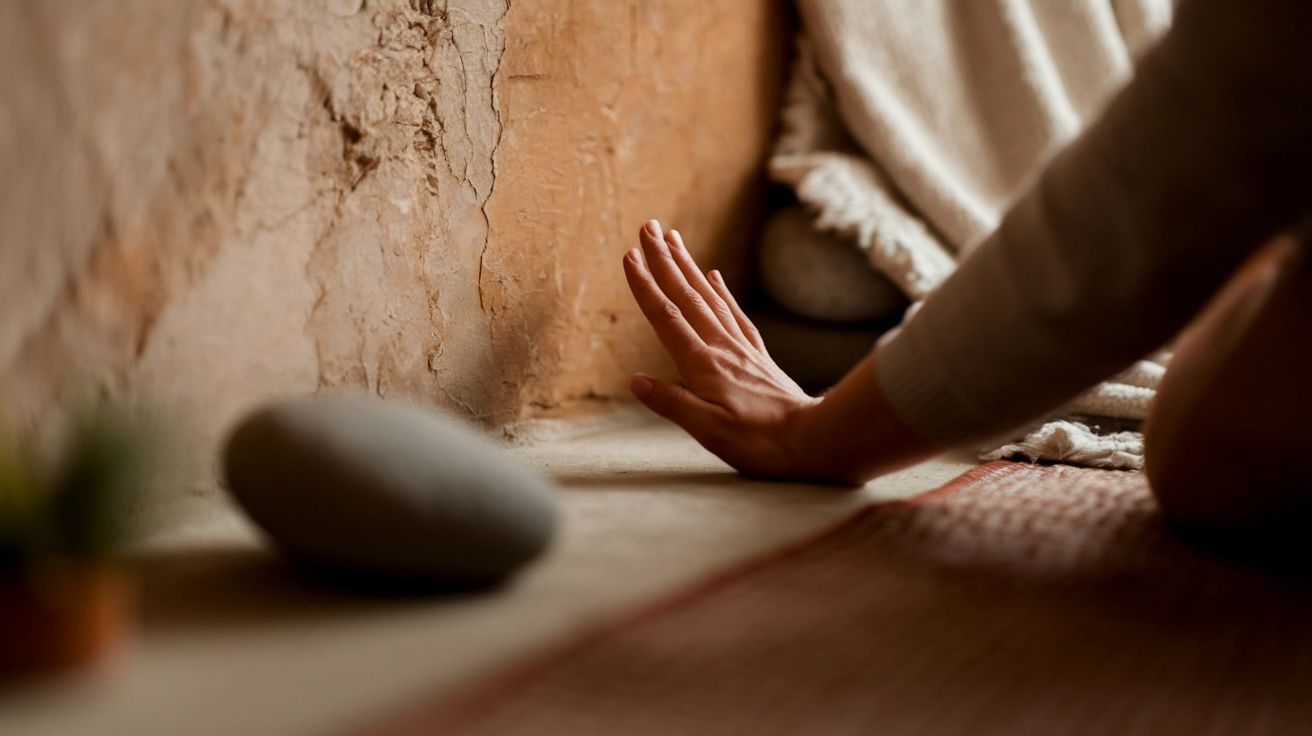
Grounding works by pulling your attention away from internal panic and locking it onto something concrete around you. When you’re in fight-or-flight, your brain’s scanning for threats. Naming real, neutral details tells your brain “I’m here, I’m safe, nothing’s attacking me right now.” It interrupts the spiral.
Different grounding strategies work at different speeds. Some people find counting objects faster than naming smells. Some need movement or texture more than words. If one doesn’t land, try another. You’re trying to shift attention quickly, not do it perfectly.
- Count objects in a category: Blue items, rectangular shapes, anything with text. Forces focus.
- Touch something with texture: Rough wall, smooth stone, cold metal, soft fabric. Notice the details.
- Name sounds: Traffic, a fan, a voice, your own breathing. List them one by one.
- Press your feet into the floor: Notice the pressure, temperature, stability. Push down harder.
- Say your location out loud: “I’m in my kitchen. I’m sitting in a chair. It’s Tuesday afternoon.”
Using Sensory Anchors Quickly
Sensory grounding works faster when the input’s strong and unusual. A sudden temperature change, a sharp taste, a loud sound, anything that demands attention, can snap you out of a spiral in 20 to 60 seconds. Keep a small object with strong texture in your pocket: a stone, piece of velvet, a metal key. When panic starts, hold it and describe it in detail, even just in your head.
If you can’t move or talk, focus on one sense at a time. Stare at one object and describe its edges, shadows, color. Listen to one sound and follow it. Wiggle your toes inside your shoes and notice the feeling. The tighter you narrow your focus, the faster the panic loses its grip.
Breathing Techniques That Stop Anxiety Immediately
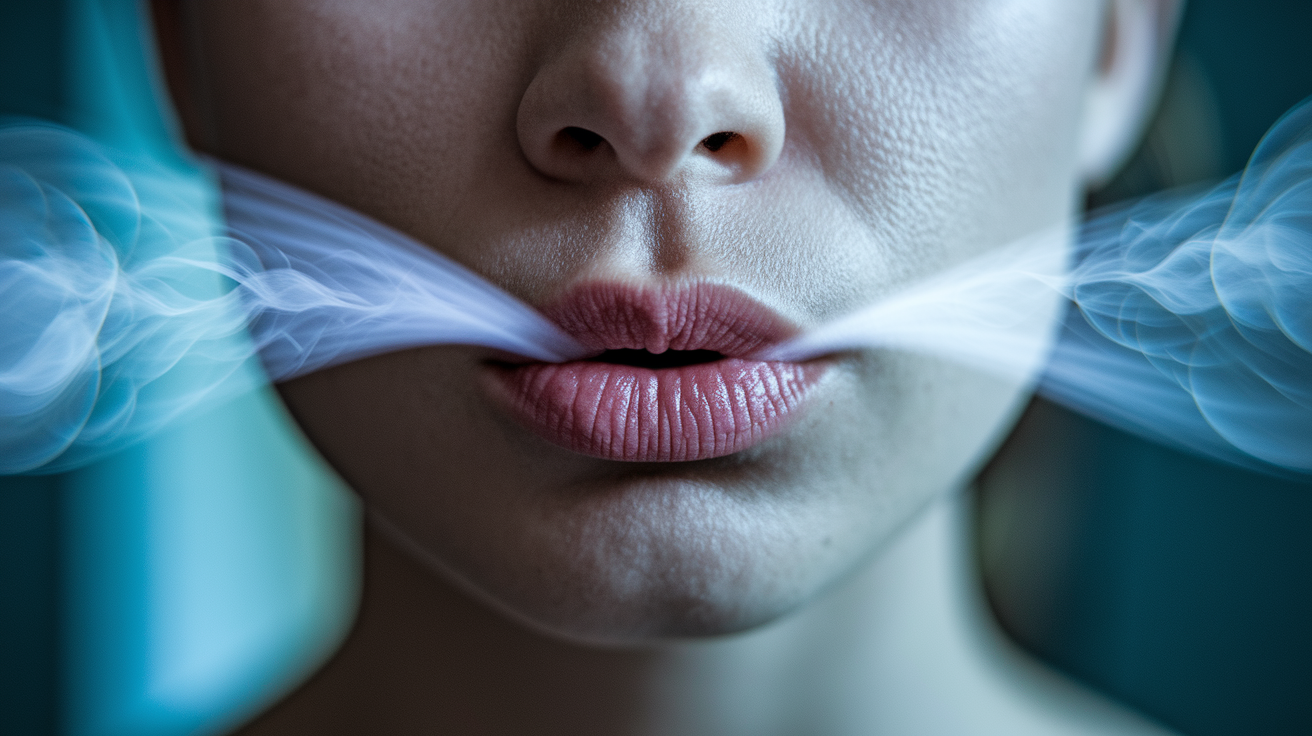
Breathing’s the only part of your nervous system you can control directly in the moment. When you’re anxious, your breath gets fast and shallow, which signals danger to your brain. Slowing your breath, especially lengthening the exhale, tells your body the threat’s passed. Different breathing patterns work better for different symptoms.
If you’re dizzy or tingling, you’re probably hyperventilating. Pursed-lip breathing works fast: breathe in through your nose and out slowly through barely open lips, like blowing out a candle that won’t go out. This slows the exhale and rebalances oxygen and carbon dioxide within 60 to 90 seconds. If your mind’s racing and you can’t focus on counts, just count your breaths: inhale one, exhale two, inhale three, exhale four, up to ten, then start over. The counting itself interrupts the thought spiral.
| Technique | How It Works | Time Needed |
|---|---|---|
| Diaphragmatic (belly) breathing | Activates the vagus nerve, signals safety to the brain | 6–10 slow breaths (1–2 minutes) |
| Box breathing (equal counts) | Steadies heart rate, creates predictable rhythm | 4–6 cycles (1–3 minutes) |
| Breath counting | Interrupts racing thoughts, anchors attention | 10 breaths repeated 2–3 times (1–2 minutes) |
| Pursed-lip breathing | Slows exhale, reduces dizziness from hyperventilation | 6–12 breaths (60–90 seconds) |
Physical Interventions to Stop Panic Fast

Your body holds surprising control over your mind. When your brain’s stuck in alarm mode, a sharp physical cue can reset the loop. Cold’s one of the fastest. It triggers the dive reflex, a survival mechanism that slows your heart rate and redirects blood flow within 10 to 30 seconds. But cold isn’t the only option.
Movement burns off the flood of adrenaline making you feel wired and shaky. A brisk 5-minute walk, marching in place for 60 seconds, or doing 10 jumping jacks can clear the tension faster than sitting still. If you can’t move much, try progressive muscle relaxation: tense one muscle group hard for 5 seconds, then release for 10. Start with your fists, then your shoulders, jaw, legs. The contrast between tension and release signals your nervous system to let go.
Posture matters more than you’d think. Anxiety makes you curl inward. Shoulders hunched, chest collapsed, shallow breath. Sit up, plant both feet flat on the floor, roll your shoulders back, open your chest. Even if your mind’s still racing, your body starts sending “I’m okay” signals within 30 to 60 seconds.
- Ice on pulse points: Hold an ice cube on your wrist, neck, or behind your ear for 30 to 60 seconds.
- Cold drink, slow sips: Drink ice water slowly, focusing on the cold moving down your throat.
- Shake it out: Literally shake your hands, arms, legs for 30 seconds to release muscle tension.
- Wall push: Push against a wall as hard as you can for 10 seconds, then release. Repeat 3 times.
Cognitive Techniques to Slow Racing Thoughts Immediately

When your thoughts are looping (“Something’s wrong, I can’t breathe, what if this doesn’t stop”), you need a mental circuit breaker. Mantras work because they’re simple, repetitive, and take up just enough brain space to interrupt the spiral. Pick a short phrase and repeat it, out loud or silently, for 30 to 60 seconds: “This will pass.” “I am safe right now.” “It’s just adrenaline.” The words matter less than the repetition.
Visualization shifts your focus away from the panic and onto something neutral or pleasant. Picture a place where you’ve felt calm. A specific room, a beach, a friend’s couch. Describe it in detail. What colors do you see? What sounds? What does the air feel like? Spend 60 to 90 seconds building the scene. Your brain can’t hold two vivid pictures at once, so the anxiety fades into the background.
- Thought-stopping: Say “Stop” out loud or in your head when a scary thought loops. Then redirect to a neutral fact: “I’m sitting. My feet are on the floor.”
- Cognitive distancing: Add “I’m having the thought that…” before the anxious sentence. “I’m having the thought that something bad will happen.” It creates a tiny gap between you and the fear.
- Countdown anchor: Count backward from 100 by 7s, or list items in a category (dog breeds, car makes, cities). Forces your brain to focus on something concrete.
- Body scan redirect: Mentally scan your body from toes to head, naming each part as you go. Takes about 60 seconds and pulls attention away from the chest and throat.
- Short reassurance script: “My body’s reacting to adrenaline. Adrenaline’s uncomfortable but not dangerous. This peaks in minutes, not hours.”
You can pair a mantra with any slow breathing pattern to double the effect. Inhale and think “I am,” exhale and think “okay.” Or inhale “let,” exhale “go.” Match the words to the rhythm and repeat for 1 to 3 minutes. The combination locks your focus and steadies your breath at the same time.
Quick Anxiety Relief Tools You Can Carry With You
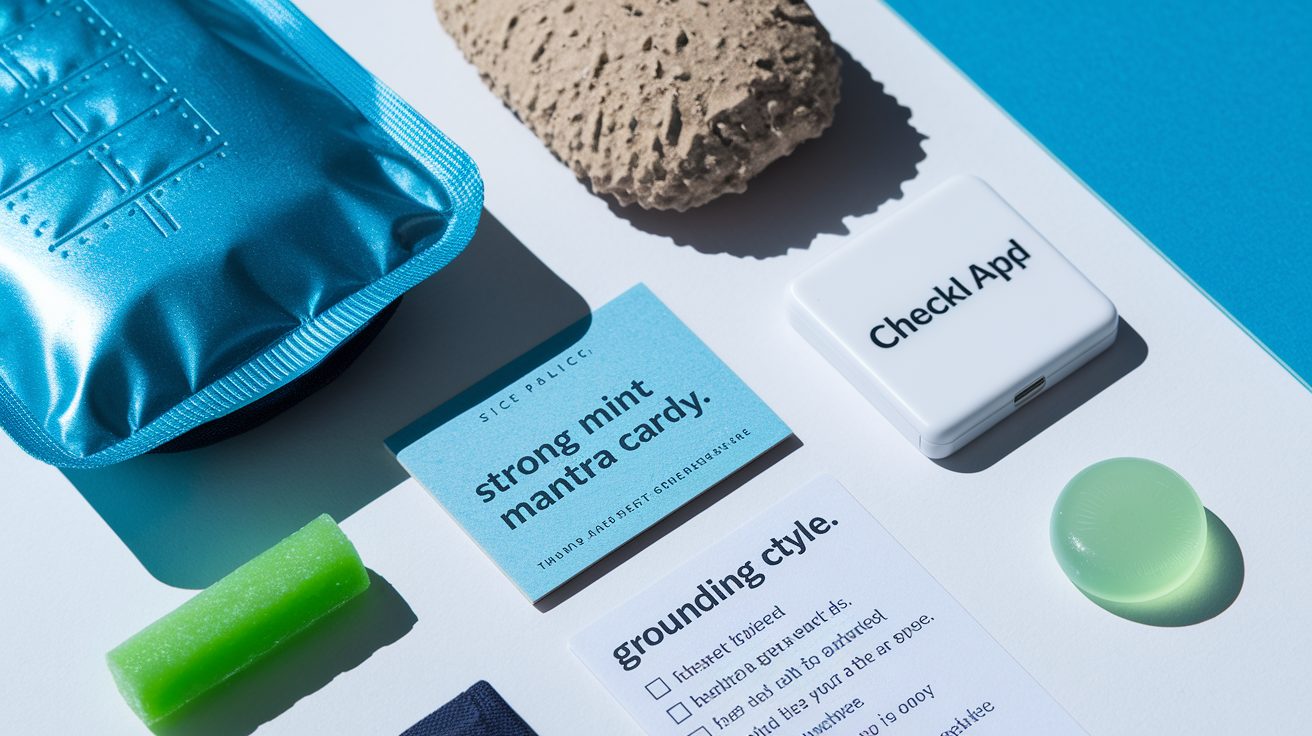
An anxiety first-aid kit’s a small collection of sensory and cognitive tools you keep with you. In your bag, your car, your pocket. When panic starts, you don’t have to think or problem-solve. You just reach for the kit. It works because decision-making’s hard when you’re in fight-or-flight, but following a simple script or using a familiar object is easy.
Pack items that engage your senses quickly: something cold, something textured, something that smells or tastes strong, and something that guides your breath or thoughts. Digital tools count too. A saved breathing exercise, a calm playlist, or a grounding checklist on your phone. Test each item when you’re calm so you know what works for you.
- Small ice pack or freezer gel pack (wrap in a thin cloth, hold against your face or wrist for 30 seconds)
- Textured object (smooth stone, rough fabric square, ridged metal coin, anything with strong tactile contrast)
- Strong mint or sour candy (sharp taste interrupts the spiral in seconds)
- Written mantra card (short phrase on a note card or phone lock screen: “This will pass. I am safe.”)
- Guided breathing audio or app (saved to your phone, 2–5 minutes, works without cell signal)
- Short grounding checklist (one-page list: 5-4-3-2-1 steps, breathing counts, mantra options)
When Sudden Anxiety Needs Professional or Emergency Support

Most anxiety spikes are uncomfortable but not dangerous. But some symptoms look like panic and are actually medical emergencies, and some patterns mean it’s time to talk to a clinician. If you’re not sure, check it out.
Go to the emergency room or call 911 if you have chest pain that doesn’t ease within a few minutes, fainting or near-fainting, trouble breathing that doesn’t improve with slow breathing, severe confusion or disorientation, or thoughts of hurting yourself. If anxiety’s happening multiple times a week, lasting longer than 20 minutes, or making it hard to work, sleep, or leave the house, talk to a healthcare provider. Frequent sudden anxiety often responds well to therapy, medication, or both, but it won’t resolve on its own.
- Chest pain, pressure, or pain radiating to your arm or jaw: Could be a heart issue. Get emergency care immediately.
- Can’t catch your breath even after trying slow breathing for 3–5 minutes: May be asthma, a respiratory issue, or severe panic. Seek urgent care.
- Fainting, collapsing, or feeling like you’re about to pass out: Needs immediate medical evaluation.
- Suicidal thoughts or urges to hurt yourself: Call 988 (U.S. crisis line), go to an ER, or call a trusted person and ask them to stay with you until you can get help.
When you talk to a clinician about sudden anxiety, bring a simple tracking log: when it happens, how long it lasts, what you were doing beforehand, what symptoms you notice, and what helps or doesn’t. That information makes it easier to figure out whether you’re dealing with panic disorder, generalized anxiety, a medication side effect, a thyroid issue, or something else. If medication comes up, ask about timing. Fast-acting options like benzodiazepines (Ativan, Xanax, Klonopin) work within 30 to 60 minutes but carry dependence risk with regular use. Antidepressants used for anxiety (SSRIs, SNRIs) take 4 to 6 weeks to build up but don’t cause dependence. Know what you’re choosing and why.
Final Words
In the action, you learned three fast moves to try right now: one breathing trick, one grounding step, and one quick physical cue — with clear timing so you know what to expect.
You also got options to expand those skills: more grounding ideas, different breathing approaches, body-based alternatives, quick mental tools, a pocket first‑aid kit, and clear red flags for help.
Try the steps, note what helps, and share the patterns with your clinician. These practical tools can help you know how to stop sudden anxiety immediately and feel more in control.
FAQ
Q: How to manage anxiety in the moment? / How to self soothe anxiety? / How do you deal with anxiety without medication?
A: Managing anxiety in the moment, self-soothing, and dealing without medication can start with three fast steps: slow diaphragmatic breaths, a 5-4-3-2-1 grounding check, and a 10–20 second cold‑water face splash.
Q: How to talk to someone with anxiety?
A: Talking to someone with anxiety means listen calmly, validate their feelings, offer simple support (sit with them, suggest grounding or breathing), and ask directly if they need professional help or emergency care.
Comments are closed