
Ever had your heart race and the world go a bit unreal while you’re behind the wheel?
Sudden anxiety while driving is common and comes from your nervous system mistaking traffic or speed for danger.
It can bring a pounding heart, lightheadedness, tunnel vision, and the urgent need to stop.
This doesn’t mean you’re weak or that something is seriously wrong.
In this post I’ll explain what usually triggers these spikes, how the brain-body loop keeps them going, and most important, simple, safe steps you can use right now to calm down and stay in control.
Key Causes Behind Sudden Anxiety While Driving and Immediate Safety Tips
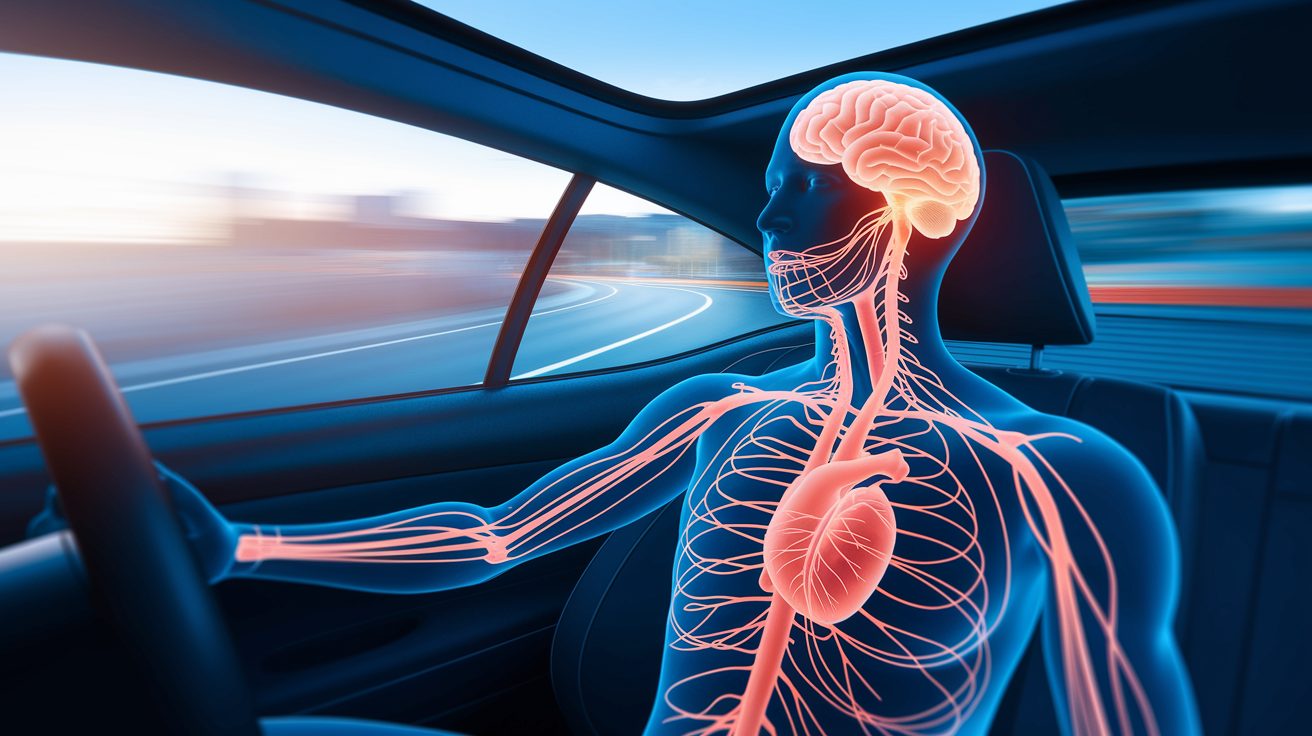
Sudden anxiety while driving usually starts with your nervous system going into overdrive. Your body sees busy roads, high speed, or merging traffic as danger and flips the fight-or-flight switch. That brings rapid heartbeat, sweating, dizziness, lightheadedness, and the feeling you’re losing control or that the world around you isn’t quite real. The surge can happen even when nothing’s objectively wrong. It doesn’t mean you’re weak or that something’s medically broken. It’s your body reacting to what it misreads as an immediate threat.
Both physical surges and psychological factors drive these episodes. Past experiences matter. A memory of a close call or an accident, intrusive thoughts about crashing, paying too much attention to your own body sensations can all flip that switch. Your brain reads a racing heart or tight chest as confirmation that danger is real, which feeds more adrenaline, which produces more symptoms. It’s a fast loop. Common symptoms include pounding or skipping heartbeat, trembling hands, nausea, shortness of breath, tunnel vision, hot or cold flashes, and derealization (that eerie sense that you or the road isn’t quite real).
Panic peaks within about 10 minutes and then begins to ease on its own, even without intervention. That timeline matters. Knowing the worst will pass helps you ride it out instead of fighting it. Here are immediate, in the moment steps you can take to stay safe and calm your system while driving or during a sudden anxiety spike:
-
Ease off the accelerator gently. Slow your speed without slamming the brakes. Reducing velocity lowers physical intensity and buys you time to think.
-
Use controlled, paced breathing. Breathe in for four counts, hold for four, exhale for six. A longer exhale signals your nervous system to downshift. You can do this while steering.
-
Engage grounding techniques. Name five things you can see (road signs, car colors, trees), four you can touch (steering wheel, seat fabric, gear shift), three you hear, two you smell, and one thing you taste or notice. This pulls attention out of panic and back into the present.
-
Reduce sensory overload. Turn down the radio, adjust the air to a comfortable temperature, and open a window slightly if the car feels too closed in.
-
Use the next exit or pull over safely. Highways have exits, often a few miles apart. Recognize you’re not trapped. Signal, move to the right lane, and take the next exit if anxiety is rising. If no exit is near, find a wide shoulder or parking area, turn on your hazard lights, and stop.
-
Wait it out. Once stopped, give yourself 5 to 15 minutes. Breathe slowly, let your heart rate settle, and remind yourself that panic is time limited.
These episodes are frightening but manageable. The steps above work because they interrupt the feedback loop between body and mind, reduce the physical intensity of the response, and give you a safe path forward when anxiety strikes suddenly behind the wheel.
Why Driving Anxiety Returns: Learned Patterns, Triggers, and Reinforcement Loops
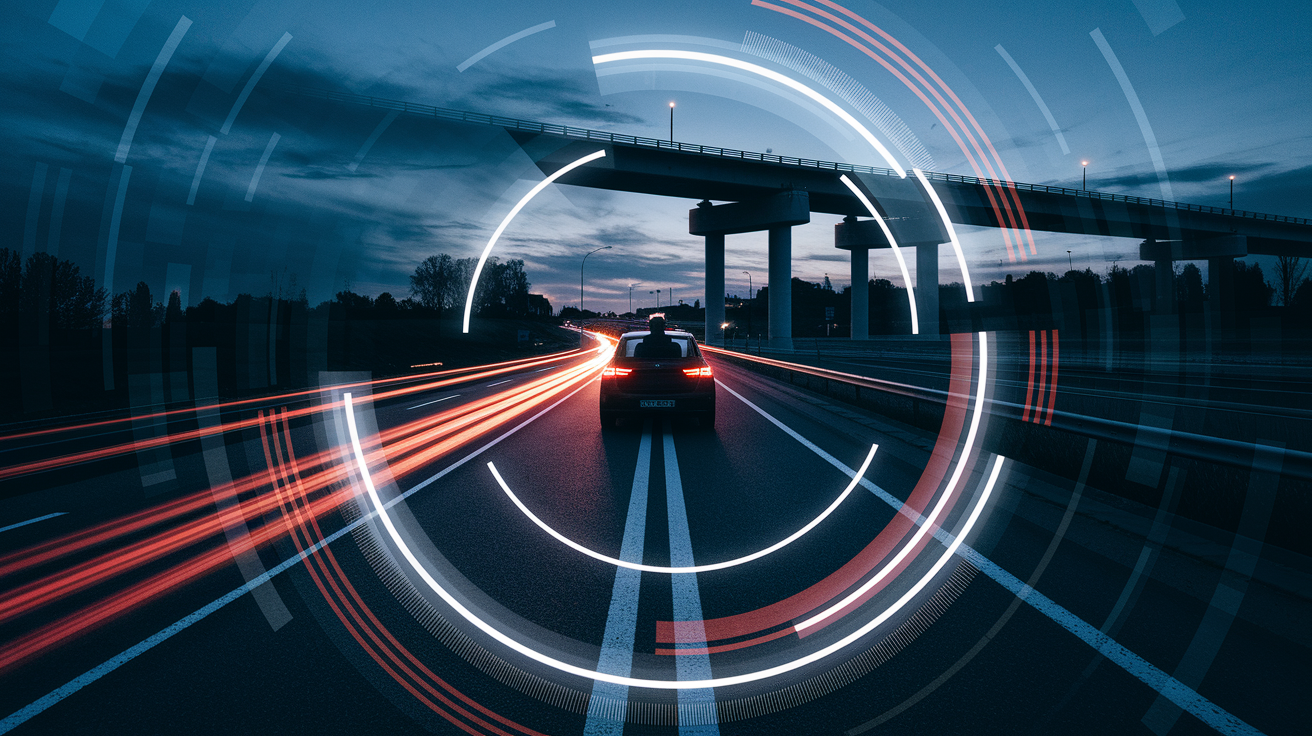
Once you’ve had a panic episode while driving, your brain starts watching for it to happen again. Anxiety can become tied to specific locations, speeds, or visual environments. A bridge where you felt dizzy once, a stretch of highway with six lanes, merging onto a freeway, or even the sight of brake lights stacking up ahead can all become cues that predict danger. Your brain generalizes past panic events and uses environmental details to decide whether you’re safe. The more similar a new situation feels to a past episode, the more likely your nervous system will fire the same alarm.
This isn’t irrational. It’s how the brain protects you. But it also means that fear can spread. You might start avoiding not just the bridge where panic first hit, but all bridges, then all highways, then driving alone, then driving at all. Each time you avoid a situation, you teach your brain that the situation was genuinely dangerous. You never get the corrective experience that would’ve shown you that driving the bridge, staying in the left lane, or merging at speed is something you can do safely. Avoidance feels like relief in the moment, but it strengthens the fear response over time.
Reinforcement loops keep the anxiety alive. You feel your heart race, you exit early or cancel a trip, your anxiety drops, and your brain logs that as proof that leaving was the right call. The next time, the urge to leave arrives faster. Without exposure to the feared situation and without practicing the skills that interrupt panic, the anxiety doesn’t fade. It waits. Breaking the cycle means doing the opposite. Staying, using your tools, and collecting evidence that you can handle the situation even when it feels uncomfortable.
Cognitive Strategies That Reduce Sudden Anxiety While Driving
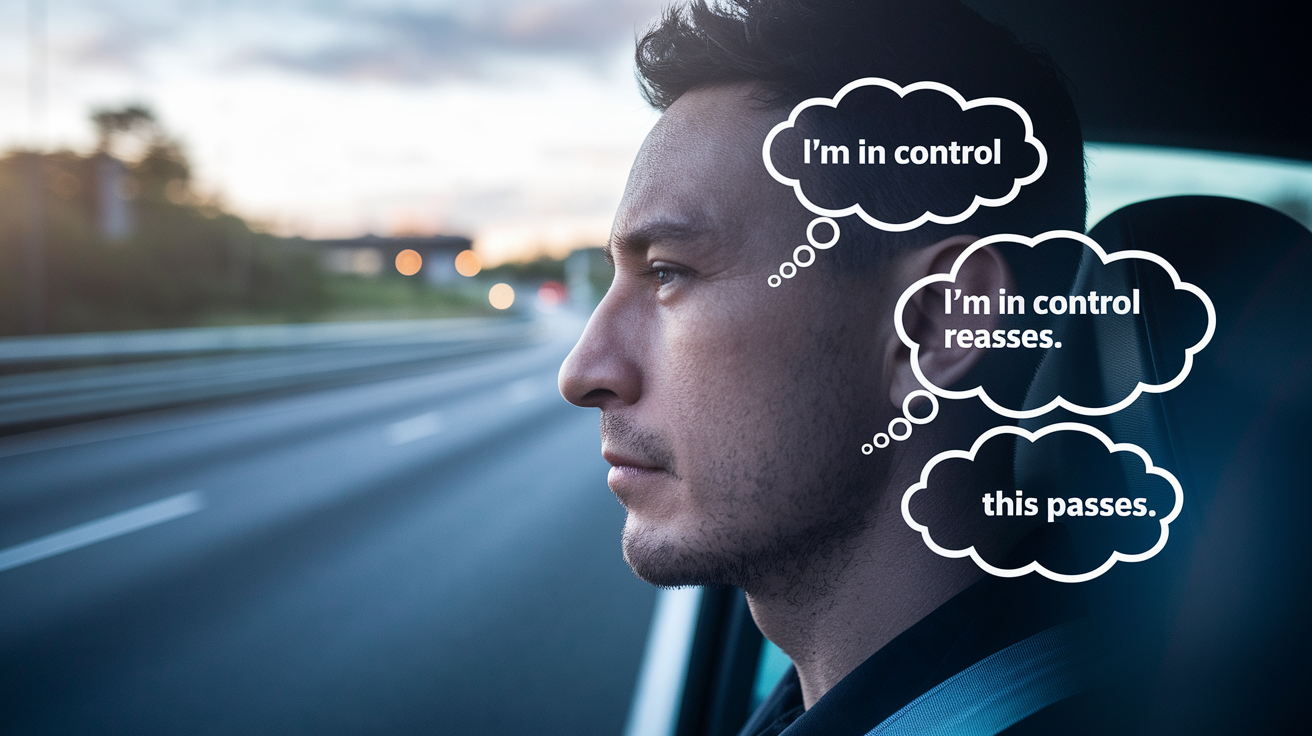
Cognitive reframing helps you challenge catastrophic thoughts in real time and replace them with statements that match reality. When anxiety spikes, your mind often jumps to worst case predictions like “I’m going to crash,” “I’m having a heart attack,” or “I’m going to lose control and cause an accident.” These thoughts feel true in the moment, but they’re predictions, not facts. CBT-based reframing teaches you to notice the thought, test it against evidence, and substitute a more balanced statement that reduces the emotional charge.
Replacement thoughts you can use while driving:
“My body is reacting to stress, but I’m still in control of the car.”
“Panic is uncomfortable, but it peaks within about 10 minutes and then fades. I can ride this out.”
“I’ve driven safely hundreds of times before. This feeling doesn’t change my driving skills.”
“Highways have exits. I’m not trapped. I can pull over if I need to.”
“My heart is racing because of adrenaline, not because something is medically wrong.”
Mental rehearsal before driving can also lower anxiety. Spend a few minutes visualizing the route you’re about to take. Picture yourself driving calmly, handling merges smoothly, breathing slowly, and arriving safely. Rehearsal primes your brain to expect competence instead of catastrophe. It’s a low risk way to practice the emotional tone you want to carry into the real drive. Some people combine visualization with a short breathing exercise or a few minutes of progressive muscle relaxation before getting in the car, so the body starts from a calmer baseline.
In the Moment Breathing and Grounding Techniques for Sudden Driving Anxiety
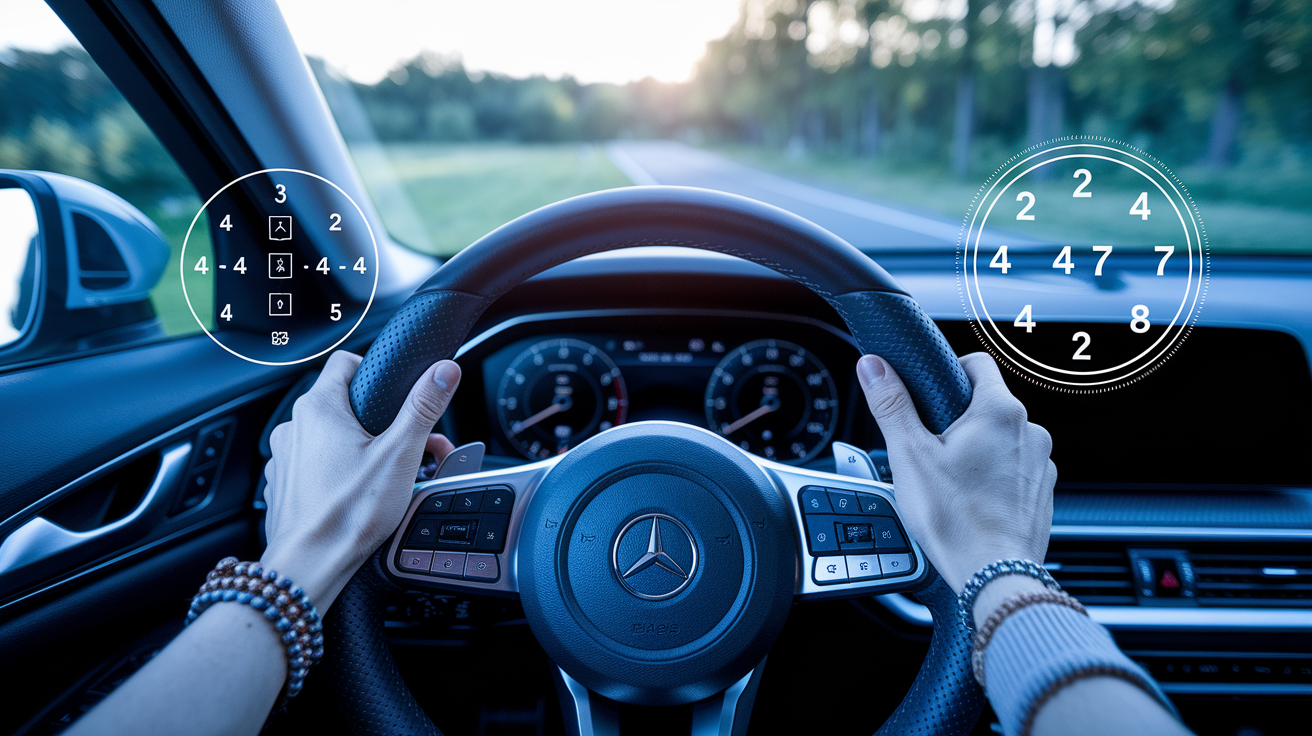
Slow, controlled breathing directly signals the parasympathetic nervous system to reduce the fight or flight response. When you extend your exhale, your heart rate slows, your blood pressure drops slightly, and the sense of panic begins to ease. These techniques work because they interrupt the physiological loop that keeps anxiety high. You don’t have to stop driving to use them. Small adjustments to your breathing pattern can be done safely while steering, watching the road, and maintaining lane position.
Breathing methods that work in the car:
Box breathing. Inhale for four counts, hold for four, exhale for four, hold for four. Repeat three to four times.
4-7-8 breathing. Breathe in through your nose for four counts, hold for seven, exhale slowly through your mouth for eight. The long exhale is key.
Slow count exhale. Breathe in normally, then exhale slowly while counting to six or eight. Focus on making the exhale longer than the inhale.
Paced breathing with a visual anchor. Match your breathing rhythm to something you see repeating, like dashed lane lines or telephone poles passing by. Inhale for two poles, exhale for three.
Grounding techniques pull your attention away from internal sensations and back into the present moment:
5-4-3-2-1 sensory grounding. Name five things you see, four you can touch, three you hear, two you smell, one you taste or one calming image you can picture.
Steering wheel grip check. Notice the texture and temperature of the steering wheel under your hands. Squeeze gently, then release.
Foot pedal awareness. Feel the weight of your foot on the gas pedal or brake. Notice the small pressure adjustments you make.
Speedometer focus. Glance at your speed and say it aloud or silently. Adjust if needed. This simple action reorients you to the task of driving.
Window or mirror check. Look deliberately at your side mirror, rearview mirror, or out the passenger window. Name one object you see in each.
If breathing and grounding don’t bring relief within a few minutes, or if panic is intense enough that you feel unsafe continuing to drive, pull over. Use the next exit, find a wide shoulder, or turn into a parking lot. Turn on your hazard lights, stop the car, and give yourself the time and space to let the episode pass fully before resuming.
Safe Pull Over Protocol and Emergency Planning for Sudden Anxiety Episodes
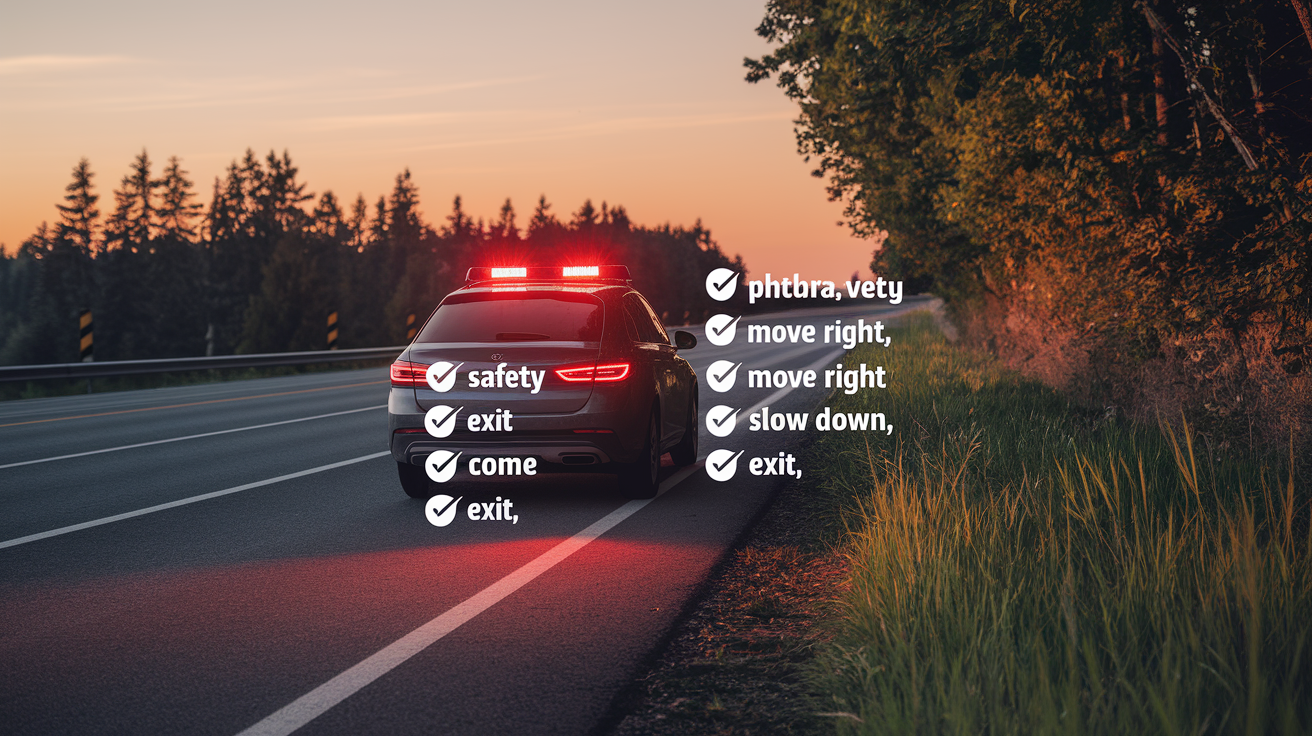
Having a clear, repeatable plan for pulling over safely reduces the fear of being trapped and gives you a concrete action to take when anxiety spikes. Knowing the steps in advance means you won’t have to figure them out while panicking. The plan becomes a mental anchor, a way to stay oriented and in control even when your body is sending alarm signals.
Steps for a safe pull over sequence:
-
Signal your intention early. Turn on your right turn signal as soon as you decide to pull over or exit. This alerts other drivers.
-
Move to the right lane gradually. Don’t cut across multiple lanes at once. Ease right one lane at a time, checking mirrors and blind spots as you go.
-
Slow down gently. Ease off the gas without braking hard unless you need to. Gradual deceleration is safer and less likely to startle drivers behind you.
-
Use the next exit or find a wide shoulder. Exits are often a few miles apart. If an exit is within a mile or two, use it. If not, look for a wide shoulder, rest area, or parking lot.
-
Turn on hazard lights once stopped. This tells other drivers you’re not moving and increases your visibility, especially on a shoulder.
-
Put the car in park and engage the parking brake. Make the car fully stationary so you don’t have to think about holding the brake pedal.
-
Wait 5 to 15 minutes. Let your breathing slow, let your heart rate settle, and remind yourself that panic peaks and then fades. Sit until you feel steady enough to resume driving or until you can call someone for support.
This protocol works because it gives you agency. You’re not stuck. You have a plan, and you can execute it safely whenever you need to.
Long Term Strategies to Prevent Sudden Anxiety While Driving
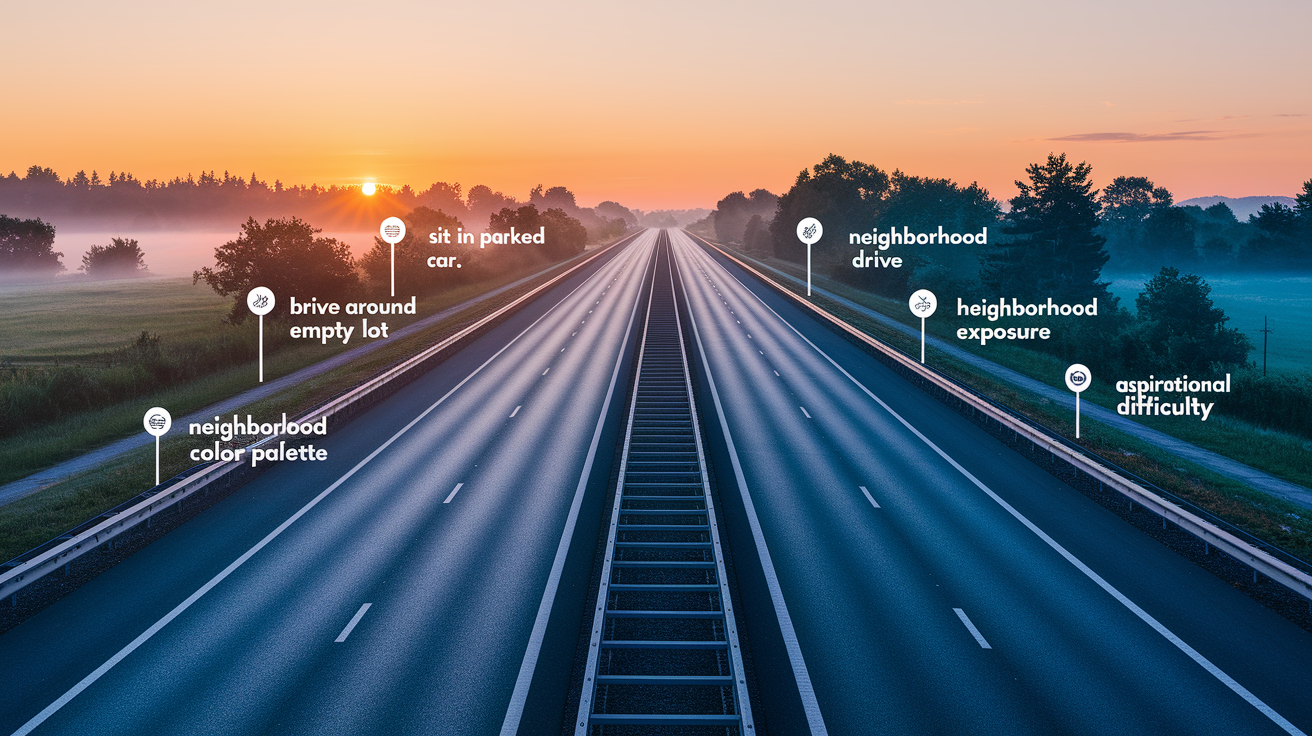
Cognitive behavioral therapy and exposure therapy are the most effective long term treatments for driving anxiety. CBT helps you identify and challenge the catastrophic thoughts that fuel panic, while exposure therapy gradually reintroduces you to the situations you’ve been avoiding. Together, they reduce both the frequency and intensity of anxiety episodes and teach you that you can handle discomfort without fleeing.
Exposure therapy works by starting small and building up. The goal is to stay in a mildly uncomfortable situation long enough for your anxiety to peak and then decline naturally, without using avoidance or escape. That experience rewrites the brain’s prediction about danger. Over time, situations that once triggered panic become neutral or manageable. Progress is often slower than people expect, but it’s durable. Here’s a typical graded exposure sequence for driving anxiety:
-
Sit in the parked car for 10 minutes daily. Start the engine, adjust the seat and mirrors, and breathe slowly. Build comfort with being in the driver’s seat.
-
Drive around an empty parking lot. Practice turning, stopping, reversing, and parking. Low speed, no traffic, full control.
-
Take a short neighborhood drive during low traffic hours. 5 to 10 minutes on quiet streets you know well. Repeat daily until it feels routine.
-
Add slightly longer or less familiar routes. 15 to 20 minutes, still in low traffic conditions. Introduce one new turn or road each time.
-
Drive during moderate traffic periods. Late morning or early afternoon on roads with other cars but not rush hour density.
-
Gradually add highway or freeway segments. Start with one exit, then two, then a longer stretch. Practice merging, lane changes, and maintaining speed with other vehicles around you.
Pre-drive routines help lower baseline anxiety and set a calmer tone before you start the car. Spend five minutes doing progressive muscle relaxation (tense each muscle group for about five seconds, then release). Or try a short guided meditation focused on steady breathing and calm imagery. Some people visualize the route they’re about to take, picturing themselves driving smoothly and arriving safely. These small rituals signal to your nervous system that driving is something you can approach calmly, not something that requires full emergency alert.
Medication Considerations and Safety Guidelines for Driving with Anxiety
Medication can be part of a treatment plan for driving anxiety, but it’s not usually a standalone solution. Short acting anxiolytics like benzodiazepines can reduce panic quickly, often within 30 to 60 minutes, but they also carry sedation and impairment risks that make driving unsafe. If you take a medication that causes drowsiness, slowed reaction time, or reduced coordination, don’t drive while under its influence. These medications are typically prescribed for acute, non-driving situations or as a temporary bridge while longer term treatments take effect.
SSRIs and other antidepressant classes are safer options for ongoing anxiety management because they don’t cause sedation or impair motor skills once you’ve adjusted to them. They take four to six weeks to show full effect and work best when combined with therapy. A prescriber will help you choose the right medication, adjust the dose, and monitor for side effects. If you’re starting a new medication or changing doses, ask your doctor when it’s safe to resume driving. Some people experience dizziness or fatigue in the first week or two, which can temporarily affect driving ability. Once those side effects stabilize, driving is generally safe.
Always coordinate medication decisions with a provider who knows your full medical and mental health history. Medication can lower the intensity of anxiety enough to let you engage in exposure therapy and practice the coping skills that lead to long term improvement, but it doesn’t teach your brain that driving is safe. That learning happens through experience, repetition, and therapeutic support.
When Sudden Anxiety While Driving Signals a Need for Professional Help

If panic attacks while driving happen more than once, if they’re severe enough that you avoid driving altogether, or if the avoidance disrupts your work, relationships, or independence, it’s time to seek professional help. Other red flags include anxiety that worsens despite using self help techniques, panic that spreads to other areas of life, physical symptoms that feel extreme or unusual, and thoughts of harming yourself or feeling unable to cope. Driving anxiety can become functionally disabling when it prevents you from getting to work, taking kids to school, attending medical appointments, or maintaining social connections. When avoidance narrows your world, professional support isn’t optional.
Look for a therapist trained in anxiety disorders, ideally with experience in CBT or exposure therapy. Some therapists offer in-car or on the road sessions as part of exposure work, which can be especially helpful for people whose anxiety is tied to specific driving situations. Ask potential therapists about their approach to driving related panic, how they structure exposure, and whether they’ve worked with clients who have similar symptoms. Treatment usually involves both cognitive work (identifying and challenging catastrophic thoughts) and behavioral work (gradually practicing driving in progressively more challenging conditions). Therapy often takes several months, with noticeable improvement typically appearing within four to six weeks of consistent sessions.
If your anxiety is accompanied by chest pain that feels different from past episodes, fainting, or thoughts of self harm, seek urgent medical evaluation. While panic itself isn’t medically dangerous, these symptoms can indicate other conditions that need assessment.
Building a Personalized Coping Toolkit for Reducing Sudden Anxiety While Driving
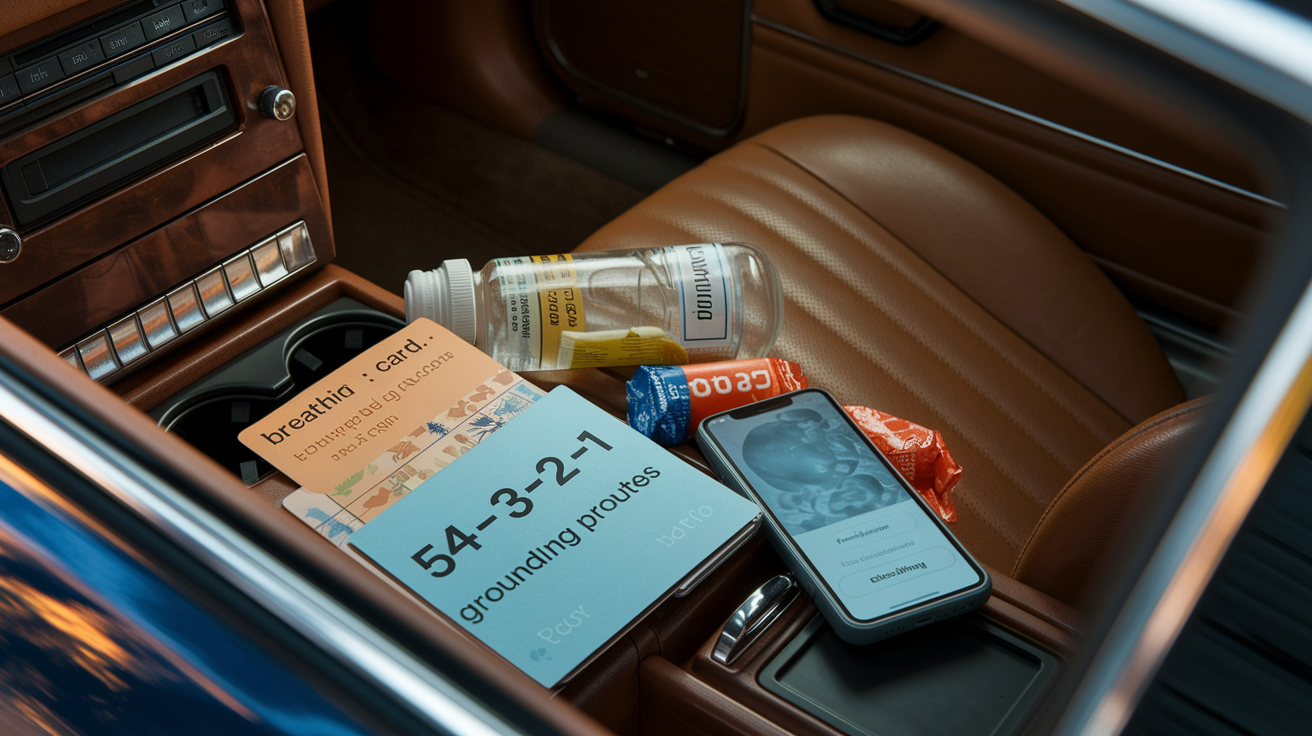
A personalized coping toolkit gives you a set of tools you can reach for whenever anxiety starts to rise. The toolkit works best when it’s tailored to your specific triggers, symptoms, and preferences. Some people need grounding more than breathing. Others respond better to cognitive scripts or sensory distractions. Building your toolkit means testing different techniques, noticing what actually lowers your anxiety in the moment, and keeping those tools easy to access while driving.
Components to include in your toolkit:
A short breathing script written on a card or saved on your phone. Example: “Breathe in for four, hold for four, breathe out for six. Repeat four times.” Having it written down removes the need to remember the pattern when you’re anxious.
Grounding prompts. A printed list of the 5-4-3-2-1 sequence or a reminder to check your grip on the steering wheel and notice three things you can see right now.
Pre-planned routes and alternatives. Know your exits, rest stops, and safe pull over spots before you start driving. Mark them on a map or GPS. Knowing you have options reduces the feeling of being trapped.
Hydration and steady blood sugar. Dehydration, low blood sugar, and too much caffeine can all amplify anxiety. Keep water in the car and eat a small meal or snack before longer drives.
Apps for guided breathing, meditation, or anxiety tracking. Use them before driving to lower baseline anxiety or after an episode to log what happened and what helped.
Tracking your anxiety patterns over time helps you spot triggers and measure progress. Notice when episodes happen. Time of day, type of road, weather, whether you’re alone or with someone, how much sleep you got the night before, caffeine intake, stress level before you started driving. Write it down or use an app. Over a few weeks, patterns emerge. You might see that anxiety spikes on highways but not side streets, or that it’s worse in the morning after poor sleep, or that it rarely happens when you have a passenger. That information helps you adjust your exposure plan, choose the right coping tools, and talk more specifically with a therapist or doctor about what’s driving the anxiety.
Final Words
When anxiety spikes while you’re driving, your body feels wired and your thoughts race. This article laid out why that can happen—both nervous-system surges and learned triggers—and put practical safety steps in one place: breath work, grounding, easing off the gas, and a clear pull-over plan.
Make a small toolkit, practice the cognitive tools, and track patterns to bring to a clinician if needed.
Use the sudden anxiety while driving causes and tips to create one simple plan. These episodes usually pass, and you can learn to handle them.
FAQ
Q: Why did I suddenly develop driving anxiety?
A: Sudden driving anxiety can come from a nervous-system surge (fast heart, dizziness), a past panic memory, intrusive thoughts, low sleep, caffeine, or medication. If driving feels unsafe, pull over, breathe, and ground yourself.
Q: What is the 3 3 3 rule for anxiety?
A: The 3-3-3 rule for anxiety is a quick grounding exercise: name three things you see, notice three sounds, and move three body parts. It brings you into the present and calms panic.
Q: Does driving anxiety go away?
A: Driving anxiety can go away with time and treatment, but it often returns if avoided. Cognitive techniques, graded exposure, and breathing often help; see a therapist if symptoms persist or disrupt daily life.
Q: How to overcome road fear while driving?
A: To overcome road fear while driving, start with safety steps: slow down, use paced breathing, ground yourself, or pull over if needed. Then use graded exposure, pre-drive routines, CBT tools, and track triggers for therapy.
Comments are closed