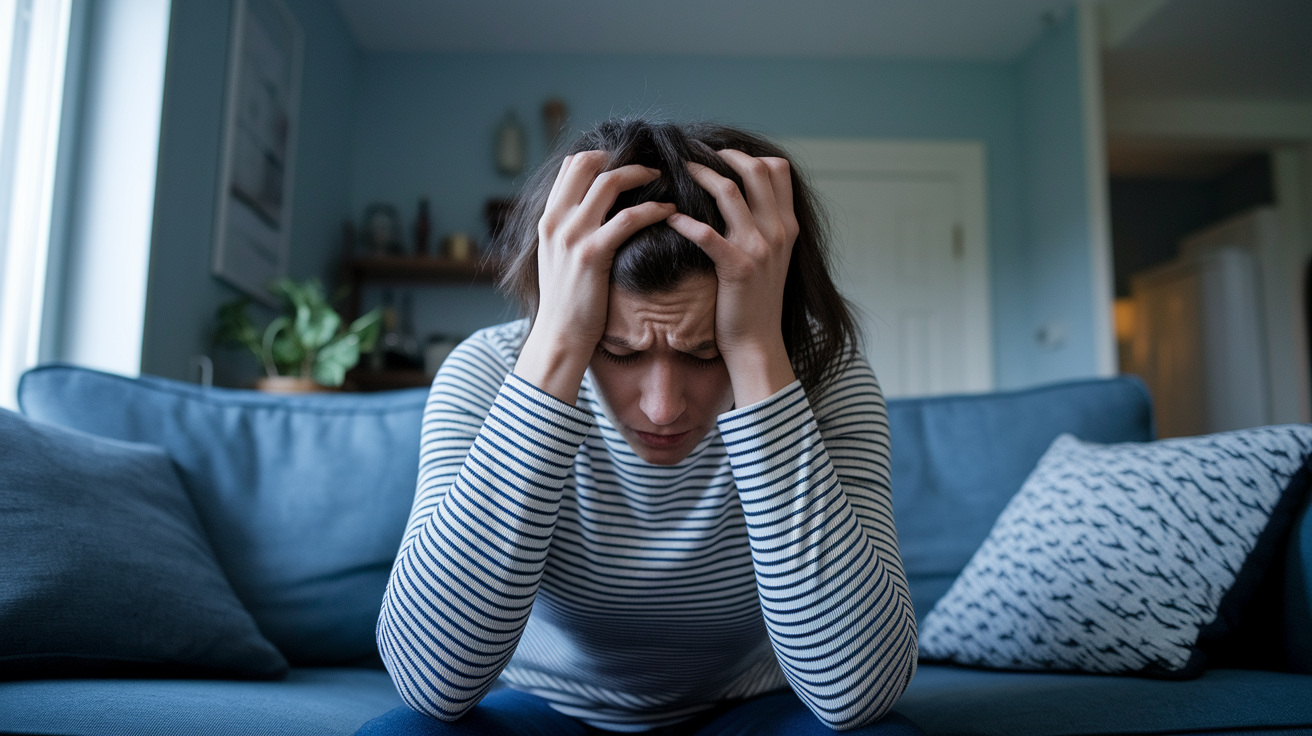
Could your sudden dizziness be anxiety pretending to be something worse?
It can feel like the room tilting, your heart racing, or like you might pass out, all out of nowhere.
You’re not imagining it, and it’s not necessarily dangerous.
In this post I’ll explain what your body is doing when anxiety causes dizziness and lightheadedness, give low-risk things to try right away, show what to track so you can tell a clinician, and point out the clear warning signs that need quick medical attention.
Understanding Sudden Anxiety With Dizziness and Lightheadedness
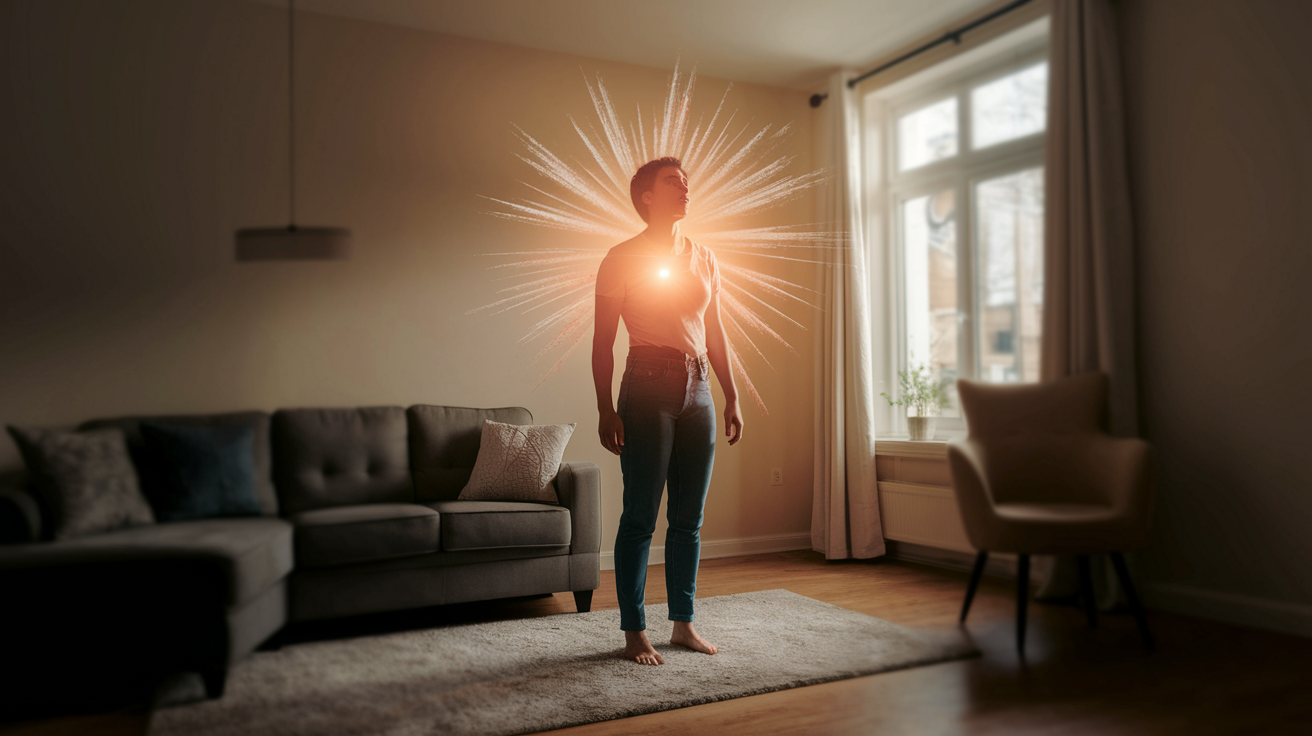
When anxiety hits, your body shifts into fight-or-flight mode fast. That shift can create sudden dizziness and lightheadedness, even when you’re standing still or doing something completely ordinary. The sensation can feel scary, out of nowhere, hard to explain. Your chest might tighten, your vision might narrow a little, and you might feel like the floor just tilted.
This happens because your nervous system releases adrenaline, speeds up your breathing, and changes how blood flows through your body. Rapid breathing lowers carbon dioxide in your blood, which can reduce blood flow to your brain and create that floating, disconnected feeling. Your heart rate climbs. Your muscles tense. Your balance system gets flooded with stress signals, and suddenly you feel unsteady.
None of this means something is broken. It means your body is responding to perceived danger, whether or not the danger is real.
These symptoms can show up during a moment of obvious stress or appear out of the blue during a quiet afternoon. Sometimes the dizziness itself becomes the thing that triggers more anxiety, creating a loop that’s hard to interrupt. That’s common. Your body feels off, your brain tries to figure out why, fear kicks the whole system up another notch.
Here’s what your body is doing when anxiety creates sudden dizziness:
Breathing too fast (hyperventilation), which drops CO₂ and reduces oxygen delivery to the brain
Adrenaline surges, which tighten blood vessels and shift blood flow away from non-essential systems
Blood pressure swings, especially if you stand up quickly or tense your muscles
Sensory overload, where your brain struggles to process balance signals clearly
Most of the time, dizziness tied to anxiety isn’t dangerous. But if you also have chest pain, confusion, sudden weakness on one side, trouble speaking, fainting, or a severe headache, that’s a different situation. Those symptoms can point to a heart issue, stroke, or other medical emergency and need urgent evaluation. If you’re unsure, get checked.
Common Anxiety-Related Causes of Dizziness

Hyperventilation is one of the biggest drivers. When you breathe quickly and deeply during anxiety, you blow off too much carbon dioxide. That changes the pH of your blood slightly and causes blood vessels in your brain to constrict. Less blood flow means less oxygen, which can make you feel lightheaded, floaty, or like you might faint.
It’s temporary, and fainting from it is rare. But the sensation itself can be intense.
Adrenaline does its own part. When your system floods with stress hormones, your heart pounds harder and faster. Blood gets redirected to your large muscles, preparing you to run or fight. That redistribution can leave you feeling dizzy or weak, especially if you’re sitting still. Your pupils might dilate. Your vision might seem a little tunneled. Your sense of balance can feel off because your inner ear and your brain are getting mixed signals about whether you’re safe or in danger.
Muscle tension adds another layer. Anxiety often tightens the muscles in your neck, shoulders, and jaw. That tension can restrict blood flow to your head and create a feeling of pressure or imbalance.
Sensory overstimulation plays a role too. When you’re anxious, your brain is on high alert, scanning for threats. That heightened state can make normal sensory input, like movement or bright lights, feel overwhelming. Your balance system tries to keep up, and the result can be dizziness or a sensation that the room is tilting even though nothing has moved.
When It’s Not Anxiety: Symptoms That Suggest a Medical Cause

Some physical conditions produce dizziness that looks and feels a lot like anxiety.
Low blood pressure, especially orthostatic hypotension (a drop when you stand up), can cause sudden lightheadedness that mimics a panic response. Dehydration does the same thing. If you haven’t had enough water, or if you’ve been sweating, throwing up, or dealing with diarrhea, dizziness can show up fast. Low blood sugar, particularly if you haven’t eaten in several hours or if you have diabetes, can create shakiness, lightheadedness, confusion, and a rapid heartbeat that all feel like anxiety.
Heart rhythm problems, like atrial fibrillation or other arrhythmias, can cause dizziness, palpitations, and chest discomfort. Vestibular disorders such as benign paroxysmal positional vertigo (BPPV), labyrinthitis, or vestibular neuritis affect your inner ear and balance system, creating spinning sensations, unsteadiness, and nausea. Anemia (low red blood cell count) reduces oxygen delivery throughout your body, including your brain, and can make you feel constantly tired, weak, and dizzy. Thyroid problems, migraines, and certain medications can also produce dizziness as a side effect.
The pattern can help you tell the difference. Anxiety-related dizziness usually comes on during or right after a moment of stress, fear, or rapid breathing. It often improves when you sit down, slow your breathing, and calm your nervous system.
Medical causes tend to follow other patterns. BPPV happens with specific head movements. Orthostatic hypotension happens when you stand. Low blood sugar happens when you haven’t eaten. Arrhythmias might cause dizziness that feels irregular or happens without any emotional trigger.
If your dizziness is new, frequent, severe, getting worse, or happening alongside other symptoms like chest pain, vision changes, weakness, numbness, slurred speech, or fainting, get it checked. A simple conversation with a clinician, along with basic tests like blood pressure, blood sugar, a complete blood count, and possibly an ECG, can rule out most of the serious stuff.
Immediate Techniques to Reduce Anxiety-Related Dizziness

Grounding techniques work by interrupting the feedback loop between your brain and your body. When you’re dizzy and scared, your nervous system stays revved. Grounding brings you back to the present moment and signals your body that you’re safe.
It doesn’t fix the root cause of anxiety, but it can stop the symptoms from spiraling in the next few minutes.
Here’s what to do right now if you feel sudden dizziness from anxiety:
Sit or lie down. Get stable. Remove the risk of falling. Sitting with your head between your knees can help if you feel faint.
Slow your breathing. Try the 4-7-8 pattern: breathe in slowly through your nose for 4 seconds, hold for 7 seconds, then exhale slowly through your mouth for 8 seconds. If holding feels uncomfortable, just focus on making your exhale longer than your inhale. Repeat for a few cycles until your breathing evens out.
Drink water. Dehydration makes dizziness worse. Sip slowly. Cold water can also give your nervous system a small sensory reset.
Use the 5-4-3-2-1 grounding method. Name 5 things you can see, 4 you can touch, 3 you can hear, 2 you can smell, and 1 you can taste. This pulls your attention away from the dizziness and back into your senses.
Move gently if you can. A slow walk, even just around the room, helps rebalance your CO₂ levels and improves circulation. Don’t force it if you feel too unsteady, but small movement often helps more than staying frozen.
Red-Flag Symptoms Requiring Urgent Care

Some symptoms that show up with dizziness are not anxiety. They’re signs of a medical emergency.
If any of these happen, call emergency services or get to an emergency department right away:
Chest pain or pressure, especially if it spreads to your arm, jaw, or back
Sudden, severe headache, the worst you’ve ever felt
Fainting or loss of consciousness
Sudden weakness, numbness, or tingling on one side of your body
Slurred speech, confusion, or trouble understanding others
Sudden vision loss, double vision, or unequal pupil size
These symptoms can indicate a heart attack, stroke, bleeding in the brain, or another urgent condition. Anxiety doesn’t cause these. If you’re not sure whether what you’re feeling is anxiety or something more serious, err on the side of getting checked. It’s better to have a doctor reassure you than to wait and risk missing something time-sensitive.
Long-Term Strategies to Prevent Anxiety-Related Dizziness

Building daily habits that stabilize your nervous system can reduce how often anxiety triggers dizziness.
Regular physical activity, even 20 to 30 minutes of walking, helps regulate your stress response and improves circulation. Exercise also trains your body to handle changes in heart rate and breathing more smoothly, so when anxiety does show up, your system doesn’t spike as hard.
Consistent sleep is just as important. When you’re sleep-deprived, your nervous system runs on a shorter fuse, and symptoms like dizziness show up more easily. Aim for roughly the same bedtime and wake time every day, even on weekends.
Structured breathing practice, done when you’re calm, builds a skill you can use when you’re not. Spend a few minutes each day practicing slow, diaphragmatic breathing. Breathe in for a count of 4, pause, then breathe out for a count of 6 or 8. This trains your body to default to slower breathing under stress.
Cognitive techniques, like recognizing and challenging catastrophic thoughts (“I’m going to faint,” “Something is seriously wrong”), can interrupt the mental loop that keeps dizziness going. Therapy, particularly cognitive behavioral therapy, teaches these skills in a structured way and has strong evidence for reducing anxiety symptoms over time.
Reducing stimulants can make a noticeable difference. Caffeine, especially on an empty stomach or in large amounts, can increase heart rate and trigger dizziness. Alcohol can do the same, particularly if it leads to dehydration or disrupts your sleep.
Eating regular, balanced meals helps keep your blood sugar steady, which reduces one common physical trigger for lightheadedness. Hydration matters too. If you’re consistently under-hydrated, your blood volume drops slightly, and dizziness becomes more likely. Small, sustainable changes, like drinking a glass of water when you wake up and another mid-afternoon, add up.
Track what helps. If dizziness is worse after coffee, after skipping breakfast, or during a particularly stressful week, that pattern gives you useful information. You can adjust your routine and reduce how often symptoms show up, even before you’ve worked through the deeper anxiety itself.
Final Words
If you feel sudden anxiety dizziness and lightheadedness, remember this is often your body’s stress response, with fast breathing, adrenaline, or temporary blood pressure shifts that can make the room tilt.
Try quick steps: sit down, breathe slowly with a longer outbreath, sip water, and ground yourself by naming five things around you. Track when it happens and what helps.
If you have chest pain, fainting, slurred speech, or worsening symptoms, get medical care right away.
With steady habits and a plan, you can reduce episodes and feel more confident handling sudden anxiety dizziness and lightheadedness.
FAQ
Q: Can anxiety cause dizzy spells?
A: Anxiety can cause dizzy spells and panic attacks can bring on vertigo by triggering rapid breathing, adrenaline surges, and balance disruption; seek medical care if spinning is severe, sudden, or worrisome.
Q: Can anxiety dizziness last for weeks?
A: Anxiety-related dizziness can last for weeks, especially with ongoing stress or repeated panic; if it persists beyond two weeks, worsens, or comes with red-flag signs, get checked by a clinician.
Q: How to get rid of dizzy anxiety?
A: To get rid of dizzy anxiety, slow your breathing (longer exhales), sit or lie down, drink water, focus on a steady object, try a 5–10 minute grounding exercise, and note triggers.
Comments are closed