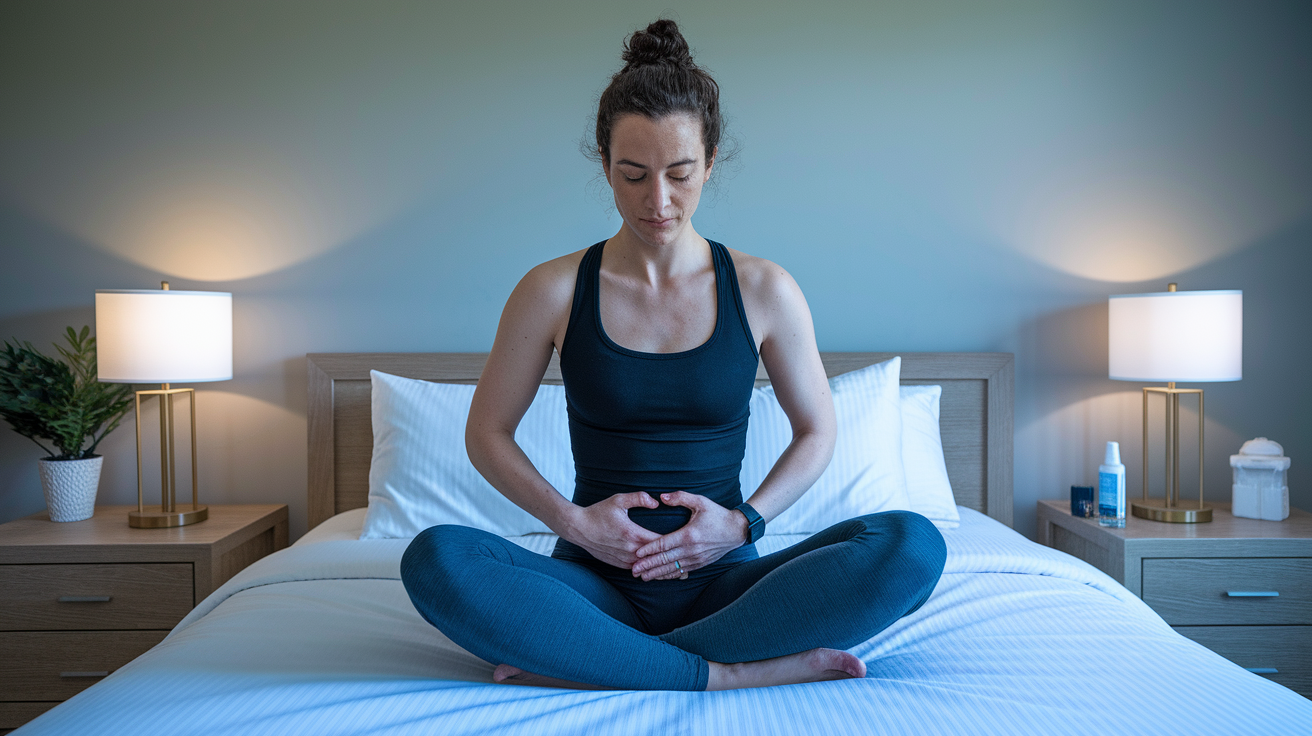
What if two minutes of gentle hands-on massage could ease hours of belly bloat?
If your belly feels tight, full, or like it’s pushing against your clothes, you’re not imagining it.
Stomach massage gently nudges trapped gas and slow-moving stool along the colon and calms the nervous system toward rest and digest.
This post gives simple, safe, step-by-step moves you can try now, breathing cues to boost results, when to repeat them, what to track for clinic visits, and the clear signs that mean you should get medical help.
Practical Stomach Massage Techniques for Immediate Bloating Relief
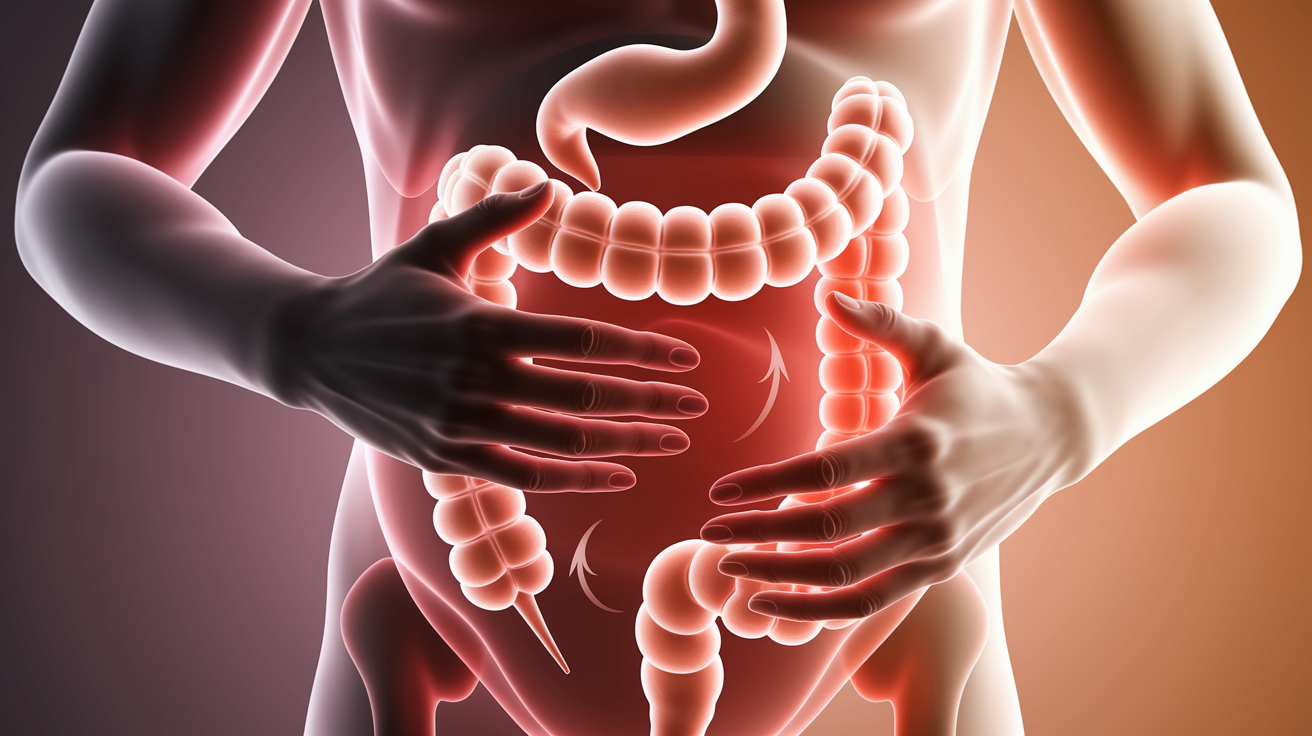
Clockwise movements work because they follow how your colon actually runs. Your large intestine travels up the right side of your belly, crosses under your ribs, then heads down the left before it reaches the rectum. Massaging clockwise gently nudges trapped gas and stool along that path, supporting the wave-like contractions (peristalsis) that move things through.
Pressure matters more than you’d think. Use gentle pressure that shifts the tissue under your skin without just sliding over the surface. Think of it like kneading dough, but softer. Most of the time, that light touch is plenty. You can press a bit deeper along the left side, the descending colon, where gas likes to collect. Sharp pain or cramping? Ease off right away. You’re looking for a gentle stretch and mild warmth, not discomfort.
Most people feel some relief within 15 to 30 minutes. The fullness starts to ease, your belly softens, and you might pass gas or have a bowel movement. Maximum relief often shows up 1 to 2 hours later as mobilized fluid and gas clear out. For chronic bloating, try 5 to 10 minutes daily for 2 to 4 weeks to see lasting change. Advanced tweaks like a deep colon sweep, diaphragmatic release just below your ribs, or small circular kneading in stubborn zones can help when basic moves plateau.
Complete Self-Massage Routine
-
Empty your bladder and lie flat on your back or recline comfortably. Rest for a minute so your body can settle.
-
Start with deep breathing. Inhale for 4 seconds, hold for 2, exhale for 6. Repeat 8 to 10 times to turn on your vagus nerve and shift into “rest and digest.”
-
Open drainage pathways. Use gentle fingertip circles at your collarbones, behind your ears, under your armpits, and at the top of each groin crease. Spend 20 to 30 seconds on each spot to prep lymphatic flow.
-
Begin at your lower right abdomen, near your right hip bone. Place both hands flat and use slow, gentle strokes to sweep upward toward your right ribcage. Do 10 to 15 upward strokes.
-
Move across your upper abdomen from right to left, just below your ribs. Use 10 to 15 slow horizontal strokes to guide things toward the left side.
-
Sweep down the left side from your left ribcage to your left hip. Use 10 to 15 downward strokes with slightly deeper pressure here, where gas tends to hang out.
-
Complete large clockwise circles. Place both hands on your lower right abdomen and make slow, continuous circles that follow the full colon path (up, across, down). Do 8 to 10 full circles, taking about a minute total.
-
Add advanced variations as needed. For slow digestion, try a deep colon sweep along the left side with firmer pressure. For bloating under your ribs, press gently into the margin just below your ribcage to release diaphragm tension. For stubborn pockets, apply small circular kneading motions in 2-inch sections.
-
Finish with breathing. Rest both hands on your belly and take 5 to 8 slow, deep breaths to let everything settle.
-
Track your response. Note the time you finish, any immediate changes in fullness or gas, and how you feel 1 to 2 hours later.
Understanding Why Abdominal Massage Helps Bloating
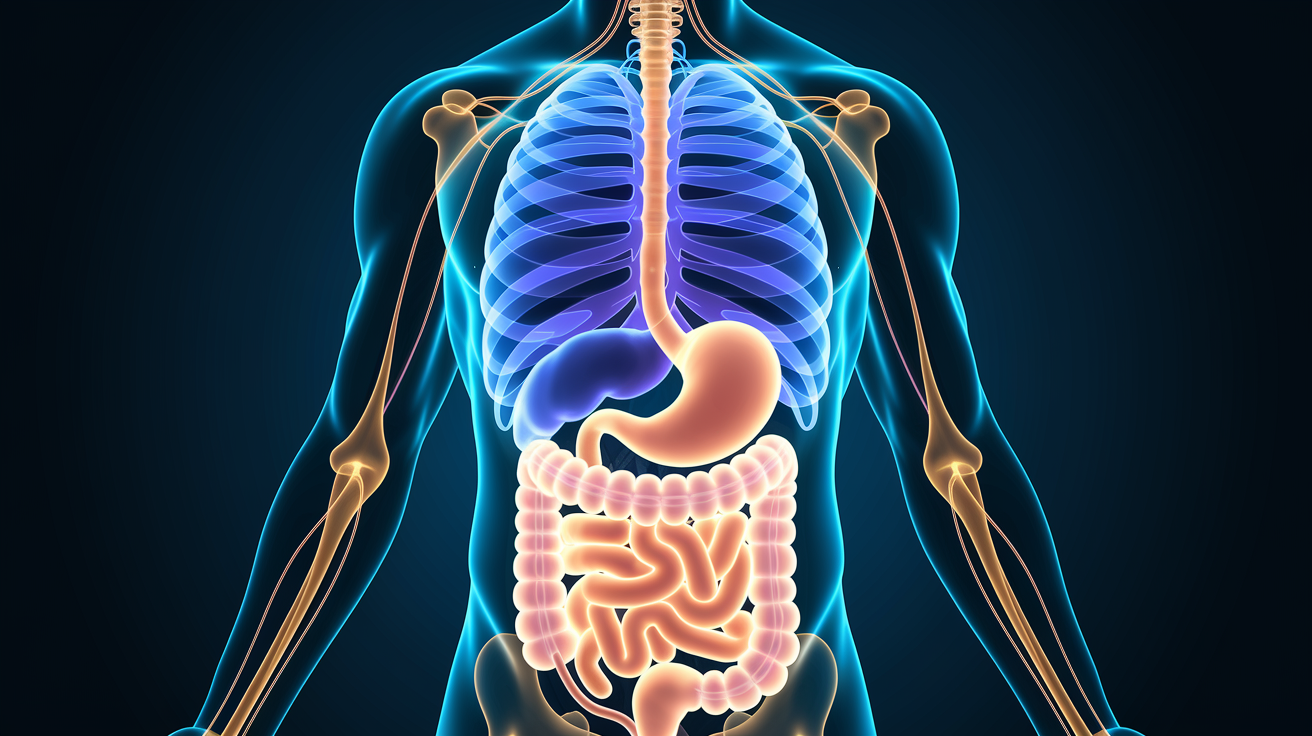
Your digestive system runs on coordinated muscle contractions that push gas, liquid, and stool from your stomach to your rectum. When those contractions slow down or gas gets stuck in pockets, you feel bloated, tight, and uncomfortable. Gentle abdominal massage wakes up the nerve endings and muscle layers in your intestinal wall, helping restart sluggish peristalsis and guiding trapped air toward the nearest exit.
Massage also supports your body’s drainage pathways. Fluid from your lower belly naturally drains toward your groin, while fluid from your upper abdomen drains toward your armpits. Light, directional pressure helps move excess fluid and immune waste out of the tissue around your intestines, cutting puffiness and inflammation. When you pair massage with slow, deep breathing, you can also activate your vagus nerve, the main pathway that tells your digestive organs to relax, release enzymes, and get moving. Daily practice for 2 to 4 weeks can reduce chronic bloating by training your system to respond more reliably.
Main Physiological Mechanisms
Gentle pressure physically moves gas and stool through the colon, breaking up pockets and easing transit. Massage signals nerve receptors in the intestinal wall to trigger rhythmic muscle contractions. Slow breathing and abdominal touch shift your nervous system toward “rest and digest,” improving enzyme release and motility. Lymphatic drainage clears immune waste and excess fluid from gut tissue, decreasing local swelling and discomfort.
How to Prepare for an Effective Belly Massage Routine
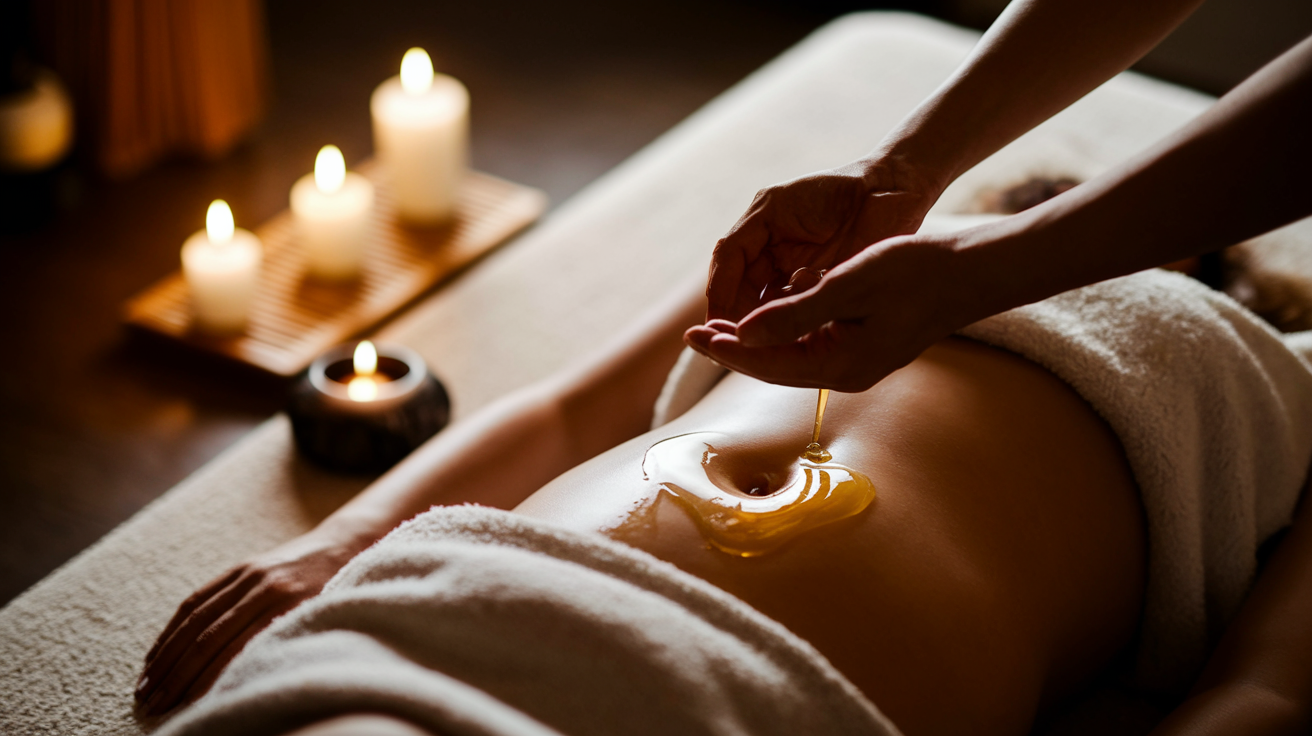
Setting up your space properly makes a real difference. Choose a quiet, warm room where you can lie down without interruptions. Wear loose clothing or work directly on bare skin so your hands can glide smoothly. Wash your hands before you start, and think about applying a small amount of natural oil or lotion to reduce friction. Optional additions like a warm compress or heating pad placed on your belly for 5 to 15 minutes before you begin can relax tight muscles and make the tissue more responsive.
Empty your bladder before you lie down. This cuts discomfort and gives you a clearer sense of how your abdomen feels during the massage. Recline on your back with a pillow under your knees if that’s more comfortable, or lie flat if you prefer. If you choose to use essential oils, dilute them properly in a carrier oil. Peppermint and ginger, for instance, may soothe digestion when applied topically in safe concentrations, though the physical massage itself does the heavy lifting.
Preparation Checklist
Quiet, warm room with space to lie down. Loose or no clothing over the abdomen. Clean hands. Optional natural oil or lotion. Empty bladder. Optional warm compress or heating pad for 5 to 15 minutes before starting.
Advanced Stomach Massage Variations for Deeper Digestive Support
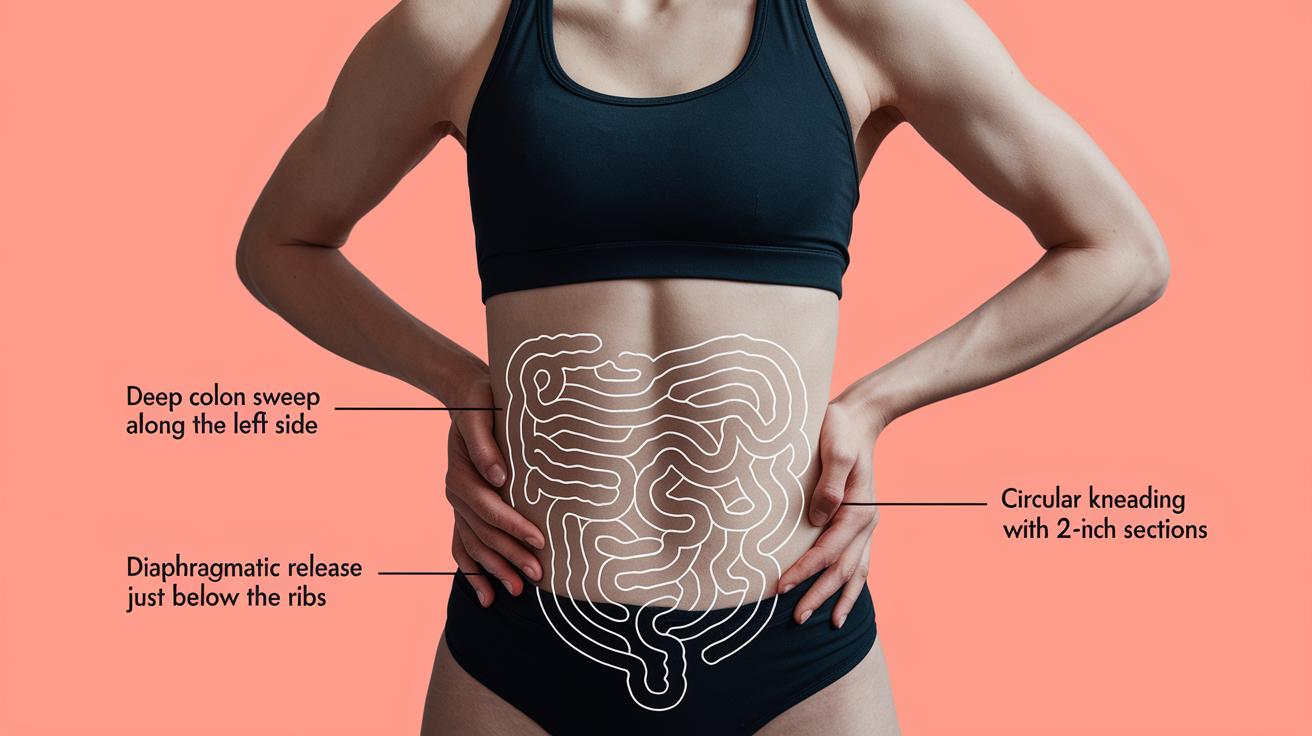
Once you’re comfortable with the basic clockwise routine, you can add targeted techniques to address specific trouble spots. A deep colon sweep along the descending colon uses firmer, slower pressure as you move down the left side of your abdomen, which is especially helpful when constipation slows transit. A diaphragmatic release involves pressing gently upward into the soft tissue just below your ribcage on both sides, which can ease bloating that feels high in your belly or under your ribs. Small circular kneading in 2-inch sections along your entire colon path helps break up stubborn gas pockets that don’t respond to broad strokes.
You can also use gentle pressure holds over tension points. If you find a firm or tender spot along the colon path, rest your fingertips there with light, steady pressure for 10 to 20 seconds, breathing slowly. This gives the tissue time to soften and release. These advanced variations work best when you already have a baseline routine and can sense where extra attention is needed. Use them as needed, not every session, and always stop if pain increases.
| Technique | Purpose | When to Use |
|---|---|---|
| Deep colon sweep | Stimulates slow digestion and constipation-related bloating | When bloating pairs with sluggish bowel movements or firm stool |
| Diaphragmatic release | Eases upper abdominal bloating and tension under the ribs | When fullness feels high in your belly or breathing feels restricted |
| Circular kneading | Breaks up stubborn gas pockets in localized areas | When broad strokes don’t fully relieve specific tight or tender spots |
Using Breathwork and Relaxation to Enhance Stomach Massage

Your breath has a direct line to your digestive system through the vagus nerve. When you breathe slowly and deeply, you signal your body to shift out of stress mode and into “rest and digest.” This improves enzyme release, intestinal muscle coordination, and overall motility. Pairing gentle breathwork with abdominal massage creates a feedback loop. The massage stimulates local nerve endings, and the breathing amplifies the calming signal to your entire digestive tract.
A simple breathing protocol can make a noticeable difference. Inhale slowly through your nose for 4 seconds, hold for 2 seconds, then exhale gently for 6 seconds. The longer exhale is key because it activates the parasympathetic nervous system, which controls digestion. Repeat this cycle 8 to 10 times at the start of your massage session, and again at the end. You can also breathe this way throughout if it feels natural. Some people find it helpful to place one hand on their chest and one on their belly to feel the rise and fall, making sure the breath moves low into the abdomen rather than staying high in the chest.
Three Simple Breathing Techniques
Inhale 4 seconds, hold 2 seconds, exhale 6 seconds. Repeat 8 to 10 times to activate vagus nerve. Place one hand on your abdomen, breathe so only that hand rises. Keeps breath deep and diaphragmatic. Make your exhale twice as long as your inhale (for example, inhale 3, exhale 6). Calms nervous system and supports digestion.
Best Times to Perform Abdominal Massage for Bloating Relief
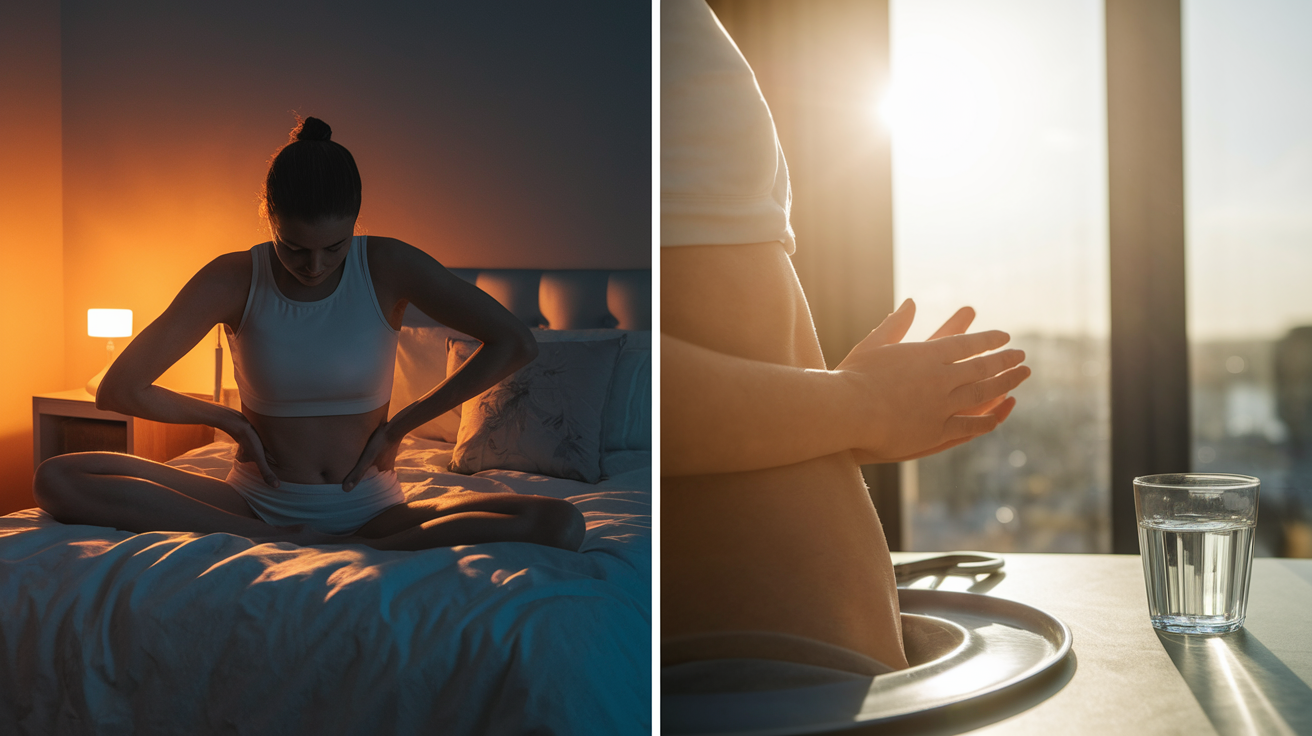
Timing matters because your digestive system is always moving. Evening is often the best window for a full 10 to 15 minute session. Try to massage 1 to 2 hours after your last meal, when your stomach has emptied a bit but before you’re ready for bed. This timing lets trapped gas and stool move through overnight, and many people wake up feeling lighter and less bloated.
A shorter morning routine can also help. A 5-minute session first thing in the morning reduces overnight fluid retention and jumpstarts your digestive motility for the day. You can do this before breakfast or right after a glass of water. The key is consistency, not length. Even a brief daily practice builds momentum in your system and trains your intestines to respond more reliably.
Don’t massage right after a large meal. Your stomach needs time to begin breaking down food before you apply pressure to your abdomen. If you feel uncomfortably full or nauseated, wait at least an hour, or skip the session and try again later when your belly feels less distended.
Complementary Remedies to Support Massage-Based Bloating Relief

Abdominal massage works best when you pair it with simple daily habits that support digestion. Hydration is one of the most effective. Try for 2 to 3 liters of water daily, and start your morning with 500 to 750 ml of room-temperature water to rehydrate your system and soften stool. If plain water feels heavy, add a squeeze of lemon or a pinch of sea salt for trace minerals and electrolytes.
Your diet plays a direct role in how often bloating shows up. Foods that support gut health and reduce inflammation include leafy greens, berries, fatty fish, ginger, turmeric, and fermented foods like sauerkraut or plain yogurt. On the other hand, high-sodium processed foods, simple sugars, alcohol, and carbonated beverages can all worsen bloating. If you notice patterns, like bloating after dairy or gluten, try a structured elimination trial. Remove one group for a few days, track your symptoms, then reintroduce and test the next group. This can help you identify specific triggers without guessing.
Additional Relief Methods
Drink ginger or peppermint tea after meals to soothe the digestive tract and reduce gas. Chew fennel seeds or drink fennel tea to ease cramping and bloating. Take short movement breaks every 60 to 90 minutes if you sit most of the day. Even 2 to 3 minutes of walking helps. Practice 30 to 45 minutes of moderate cardiovascular exercise 3 to 4 times per week to support overall motility. Try dry brushing your abdomen 3 to 4 times per week before showering to stimulate lymphatic flow. Add an Epsom salt bath with abdominal massage 1 to 2 times per week for deeper relaxation and magnesium absorption. Consider digestive enzyme supplements or probiotics if a healthcare provider recommends them, especially if you have chronic bloating or food intolerances.
Safety, Contraindications, and When to Avoid Stomach Massage

Abdominal massage is generally safe for mild, occasional bloating, but there are clear situations where you shouldn’t do it. Don’t massage your abdomen if you have an active abdominal infection, acute inflammation like appendicitis, known or suspected cancer, blood clots, or heart failure. Pregnancy requires special caution. Skip self-abdominal massage during the first trimester, and get clearance from your healthcare provider before trying it later in pregnancy. If you do receive clearance, work only with a trained prenatal therapist who understands safe pressure and positioning.
If you’ve had recent abdominal surgery, wait at least 6 weeks and get medical clearance before resuming massage. Even after clearance, start gently and watch for unusual pain, swelling, or changes at the incision site. Stop right away if pain increases during or after a session, or if you notice new symptoms like fever, vomiting, or blood in your stool. These signs suggest something more serious than simple bloating and require medical evaluation.
Key Contraindications
Active abdominal infection or acute inflammation. Known or suspected cancer in the abdomen or pelvis. Blood clots or clotting disorders. Heart failure or severe cardiovascular disease. First trimester of pregnancy (later trimesters require medical clearance and trained therapist). Recent abdominal surgery within the past 6 weeks.
When Stomach Massage Isn’t Enough: Signs You Should Seek Medical Care

Abdominal massage and dietary adjustments work well for occasional bloating tied to gas, mild constipation, or slow digestion. But if bloating sticks around despite consistent technique and diet changes, it may signal an underlying issue that needs professional evaluation. Chronic bloating that shows up multiple times per week, especially when paired with pain, changes in bowel habits, or unexplained weight loss, deserves a closer look from a gastroenterologist or registered dietitian.
Get medical care right away if you experience severe abdominal pain that comes on suddenly, high fever, persistent vomiting, or blood in your stool. These symptoms can point to conditions like bowel obstruction, infection, or inflammatory bowel disease that need immediate treatment. If you suspect food sensitivities or intolerances but structured elimination trials don’t clarify the pattern, ask your doctor about testing for celiac disease, lactose intolerance, or other digestive conditions. Many people live with undiagnosed issues for years simply because they assume bloating is normal. It doesn’t have to be, and the right evaluation can make a real difference in how you feel day to day.
Final Words
Start with the simple clockwise routine: lower right, up the right side, across the upper belly, then down the left—repeat 5–10 times with gentle to moderate pressure. Prep with warmth, loose clothes, and 10–15 minutes of calm breathing.
You may feel relief in 15–30 minutes, with the strongest effect 1–2 hours later. Add advanced moves like a deep colon sweep or diaphragmatic release if needed.
Track timing, triggers, and what eases it so you can bring clear notes to a clinician. Avoid massage with acute pain, fever, or recent surgery. Stomach massage for bloating is a gentle, actionable step you can try today—and it often helps.
FAQ
Q: Is it good to massage a bloated stomach?
A: Massaging a bloated stomach can be helpful because gentle clockwise strokes often move trapped gas and boost digestion; use light-to-moderate pressure, stop if pain increases, and expect relief in 15–30 minutes.
Q: How do you flush a bloated stomach?
A: Flushing a bloated stomach means promoting movement: drink 500–750 ml warm water, walk 10 minutes, sip peppermint or ginger tea, and try a short clockwise belly massage to help move gas.
Q: How to lymphatic drain a tummy?
A: Lymphatic draining a tummy uses very light, rhythmic strokes toward the groin and armpits, starting low and moving upward; do 5–10 gentle passes, breathe slowly, and stop if it feels painful.
Q: How to get unbloated in 5 minutes massage?
A: To get unbloated in 5 minutes with massage, use a quick clockwise routine: start lower right, sweep up the right side, across the upper abdomen, down the left; repeat 5–10 gentle passes while breathing slowly.
Comments are closed