
Think mono took your energy for good?
You’re not imagining it.
Many people feel drained long after their sore throat and fever fade.
Post-mono fatigue is real and common, often lasting weeks to months as your immune system and sleep slowly reset.
This post explains why that heavy tiredness lingers, what small, low-risk steps often help, and how to track progress so you can bring useful information to your clinician.
Renewed energy is possible. Let’s map the steady, practical steps that usually move recovery forward.
Why Fatigue Persists After Mono

Post-mono fatigue is the exhaustion that sticks around after the worst of infectious mononucleosis has passed. It’s common. Your fever’s gone, throat healed, lymph nodes back to normal size. But you still feel wiped. You’re not making it up.
Fatigue after mono can drag on for weeks or months. Most people feel meaningfully better somewhere between 2 and 4 months. A lot of folks get their usual energy back by 3 to 6 months. But around 10 to 15% report significant tiredness that stretches past 6 months. That’s discouraging. Knowing this pattern is well documented helps a little. Gradual improvement is the rule, even when the pace feels agonizingly slow.
The Epstein-Barr virus triggers a massive, sustained immune response. Your body throws everything at it: activated T-cells, antibodies, inflammatory signals. That immune storm takes time to settle. Even after the virus is controlled and viral particles aren’t flooding your bloodstream anymore, your immune system stays on alert. Inflammation lingers. Sleep gets disrupted. Your autonomic nervous system, which regulates heart rate and blood pressure, can get thrown off. Physical deconditioning sets in when you rest for weeks. Mood shifts like anxiety or low mood pile on. All of these factors add up.
Fatigue tends to stick around because of:
- Ongoing low-level immune activation and leftover inflammation in tissues
- Autonomic dysfunction, especially orthostatic intolerance (feeling faint or dizzy when you stand)
- Deconditioning from prolonged bed rest or reduced activity during the acute illness
- Sleep disturbance: unrefreshing sleep, trouble falling or staying asleep, or a shifted sleep schedule
Biological Factors Behind Prolonged Post-Mono Fatigue

Epstein-Barr doesn’t just make you sick for a few weeks and disappear cleanly. After initial infection, EBV stays dormant in B-cells for life. Most people keep it under control without symptoms, but the recovery period involves your immune system learning to suppress the virus while repairing tissues. During that process, cytokines (signaling proteins that coordinate immune responses) stay elevated. Cytokines like interleukin-6 and tumor necrosis factor can cause fatigue, muscle aches, and cognitive fog. The exact mechanisms are still being studied, but persistent cytokine activity is one likely reason for that heavy, tired feeling that won’t lift.
Sleep architecture gets disrupted during and after mono. Studies show post-viral states can fragment sleep, reduce deep restorative stages, and trigger overnight awakenings. Poor sleep feeds fatigue. Fatigue makes it harder to maintain healthy sleep routines. The autonomic nervous system, which manages involuntary functions like heart rate and blood vessel tone, can become dysregulated. Some people develop orthostatic intolerance. Blood pressure drops on standing, heart rate spikes, and lightheadedness or palpitations result. That orthostatic stress adds to the exhaustion and limits activity tolerance, creating a cycle that prolongs recovery.
Common Symptoms That Accompany Post-Mono Fatigue

Post-mono fatigue rarely shows up alone. It comes bundled with a cluster of symptoms that vary in intensity and duration. Some fade within weeks. Others take months. Recognizing the pattern helps you track progress and communicate clearly with your clinician.
Typical symptoms:
- Profound tiredness that doesn’t improve much with rest
- Reduced exercise tolerance. Short walks or light activity leave you depleted
- Cognitive fog or “brain fog”: difficulty concentrating, slower thinking, trouble finding words
- Mild recurrent sore throat or a sensation of throat tightness
- Swollen or tender lymph nodes, especially in the neck or armpits
- Lightheadedness, dizziness on standing, or heart palpitations (signs of orthostatic intolerance)
Timeline of Recovery and What to Expect
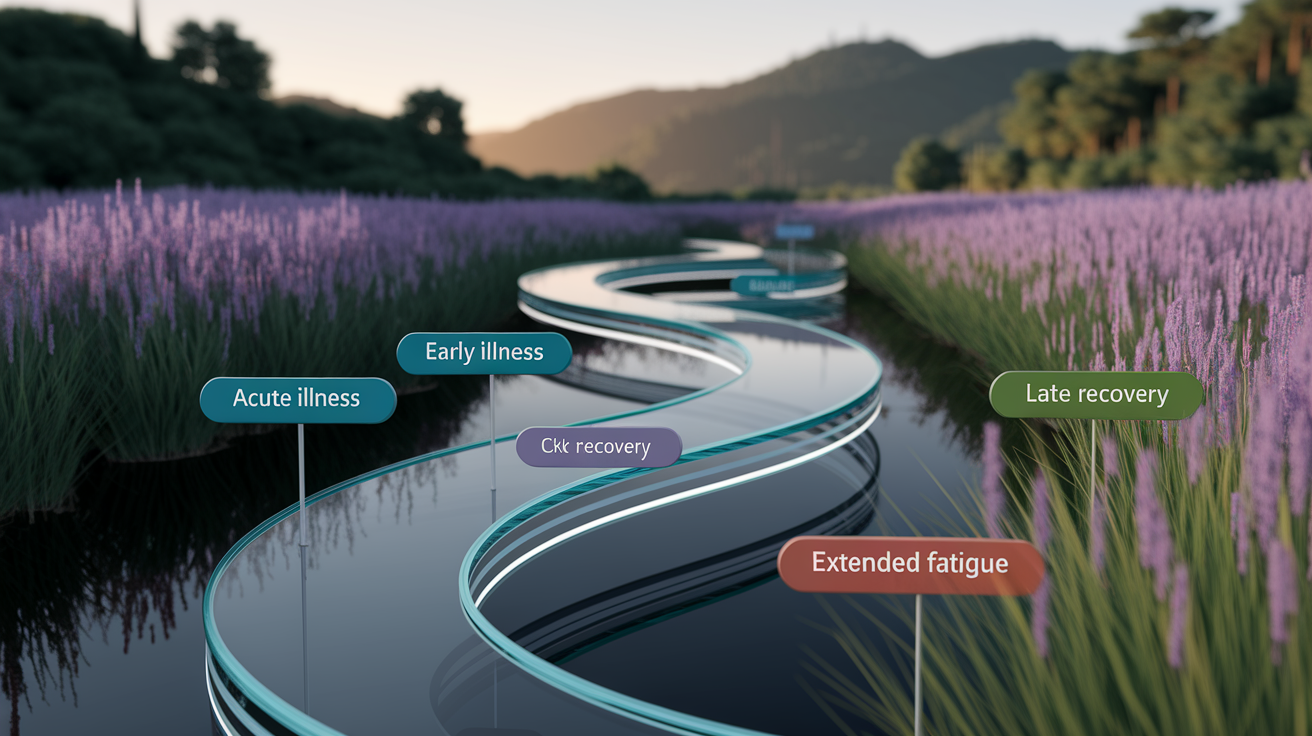
Most people with mono follow a recognizable arc. The acute illness hits hardest in the first 2 to 4 weeks: high fever, severe sore throat, swollen glands, profound fatigue. That phase usually peaks and then starts to ease. Fever typically resolves within 1 to 3 weeks. Throat pain and lymphadenopathy improve over 2 to 4 weeks. But fatigue often sticks around longer.
Improvement is usually gradual and non-linear. You may have a good week, then a setback. Energy slowly builds. Physical stamina returns in small increments. For younger adults and teens, recovery can stretch to several months. Roughly 10 to 15% of people report disabling fatigue that persists beyond 6 months. A smaller subset (estimates range from 1 to 5%) may meet criteria for chronic fatigue syndrome or myalgic encephalomyelitis (ME/CFS) if severe symptoms and post-exertional malaise continue at or beyond the 6-month mark.
| Stage | Typical Duration | Key Symptoms |
|---|---|---|
| Acute illness | 2–4 weeks | Fever, severe sore throat, swollen lymph nodes, profound fatigue |
| Early recovery | 4–12 weeks | Improving throat and fever, persistent fatigue, cognitive fog, reduced stamina |
| Late recovery | 3–6 months | Gradual energy return, lingering tiredness, occasional setbacks after exertion |
| Extended fatigue | Beyond 6 months | Persistent disabling fatigue, post-exertional malaise, orthostatic symptoms, cognitive impairment |
When to Seek Medical Evaluation

Check in with your clinician if fatigue isn’t improving after 4 to 6 weeks or if it’s seriously limiting your ability to work, attend school, or care for yourself. Earlier evaluation makes sense if symptoms are severe, worsening, or accompanied by concerning signs. Don’t wait if something feels wrong.
Red-flag signs that warrant urgent medical attention:
- High fever that persists beyond 2 weeks or returns after initial improvement
- Severe throat swelling, difficulty swallowing, or trouble breathing
- Severe abdominal pain, especially in the upper left quadrant (possible spleen complication)
- Jaundice (yellowing of the skin or eyes) indicating liver involvement
- Fainting, syncope, or new severe lightheadedness that limits standing or walking
Strategies to Manage and Reduce Post-Mono Fatigue

Recovery from post-mono fatigue isn’t passive. It requires a thoughtful balance: rest enough to let your body heal, but gently reintroduce activity to prevent deconditioning. The goal is to support your immune system, stabilize sleep, maintain nutrition, and pace yourself so you don’t trigger crashes or post-exertional malaise. Small, consistent steps work better than pushing hard and paying for it later.
Sleep is foundational. Aim for a fixed sleep schedule. Same bedtime and wake time every day, even on weekends. Prioritize 7 to 9 hours. Limit daytime naps to 20 to 30 minutes if you need them, and avoid napping late in the afternoon. Create a calm, dark, cool bedroom. Reduce screen time an hour before bed. If sleep remains unrefreshing despite good hygiene, discuss it with your clinician. A sleep study may be warranted if snoring, gasping, or severe daytime sleepiness is present.
Practical steps to support recovery:
- Pace your activity. Track what you do each day and notice patterns. If a certain level of exertion triggers a crash the next day, dial back. Increase activity in small increments. Common advice is roughly 10% more per week if you’re tolerating it without setbacks.
- Hydrate consistently. Aim for 1.5 to 2 liters of water daily, more if you have orthostatic symptoms. Consider increasing salt intake modestly (unless you have high blood pressure or other contraindications) to help maintain blood volume.
- Eat balanced, regular meals. Don’t skip meals. Include adequate protein and calories. Correct any documented deficiencies. Low iron, B12, or vitamin D can all worsen fatigue.
- Move gently. Short, light walks or stretching can prevent deconditioning. Avoid intense exercise until your clinician clears you and your energy is stable. If you experience post-exertional malaise (symptom worsening that lasts 24 hours or more after activity), stop increasing intensity and consider consultation with a physical therapist familiar with post-viral fatigue.
- Manage stress and mood. Anxiety and low mood are common after a prolonged illness. Gentle breathing exercises, short mindfulness practices, or talking with a therapist can help. If mood symptoms are significant, discuss treatment options with your clinician.
- Track symptoms and triggers. Keep a simple log of daily energy levels, activities, sleep quality, and any symptom flares. This record is invaluable for medical appointments and helps you spot patterns that guide pacing decisions.
Final Words
If you’re still wiped after mono, know this: prolonged tiredness is common and tied to immune recovery, inflammation, sleep disruption, and a slow rebuild of energy. Most people improve over weeks to a few months, though some take longer.
Try pacing, steady sleep, good hydration, and a gradual return to activity. Track timing, triggers, severity, and new symptoms so you have clear notes for a clinician if needed.
Be patient with your body. With gentle care and tracking, most people see post mono fatigue ease over time.
FAQ
Q: How long does exhaustion last after mono?
A: Exhaustion after mono typically lasts weeks to months; most people recover within 2–4 months, many by 6 months. If fatigue is severe, worsening, or still present after 6 months, see your clinician.
Q: Can mono flare up years later?
A: Mono’s virus (EBV) stays in the body and can reactivate, but full-blown mono years later is uncommon in healthy people; reactivation is more likely with weakened immunity—check with a clinician for new severe symptoms.
Q: Can you run a 5k with mono?
A: Running a 5k with mono is not advised during the acute illness because an enlarged spleen raises rupture risk. Wait for clinical clearance, restored energy, and a gradual return to activity.
Q: Does mono drain your energy?
A: Mono does drain your energy: EBV sparks strong immune activity and inflammation, often causing profound, lingering tiredness for weeks to months. Rest, pacing, sleep, and hydration usually help; seek care if worsening.
Comments are closed