
What if your constant exhaustion isn’t ordinary tiredness but your body’s autopilot breaking down?
Dysautonomia (trouble with automatic functions like heart rate, blood pressure, and digestion) can leave you suddenly wiped out after small tasks.
Poor blood flow, low blood volume, sleep disruption, and post-exertional crashes all play a part.
This post explains why that happens and gives clear, low-risk relief you can try today—pacing, steady hydration and salt, small meals, gentle movement, and simple tracking.
You’ll get practical steps that may help and what to watch for when you talk with a clinician.
Key Reasons Dysautonomia Causes Persistent Fatigue

Dysautonomia drains you through a chain reaction of autonomic breakdowns. Your body scrambles to compensate for stuff that should run on autopilot. Heart rate and blood pressure can’t adjust when you stand or move, so blood pools in your legs and belly instead of circulating where it’s needed. Your heart races or strains trying to keep up, burning energy while oxygen-starved blood never quite reaches your brain and muscles the way it should. This orthostatic intolerance fatigue hits heavy and sudden. Standing at the sink for ten minutes? You might need an hour lying down to recover.
Poor blood flow is only part of it. A lot of people with dysautonomia lose salt and fluids faster than they should, whether through sweating, digestive trouble, or kidney issues. That shrinks blood volume and makes everything worse. Low electrolytes mess with muscle function and nerve signaling, adding weakness and brain fog on top of the exhaustion. Sleep gets wrecked by nighttime tachycardia, sweating, nausea, or needing to pee constantly. Eight or ten hours in bed doesn’t mean you actually rested.
Then there’s post-exertional malaise. Small things like a short walk, a phone call, or folding laundry can trigger crashes that last hours or even days. Your stress and recovery systems misfire. Instead of bouncing back stronger, you collapse. Chronic fatigue and dysautonomia overlap here, and you can cycle between semi-functional stretches and sudden crashes with zero warning.
Most common reasons dysautonomia wrecks your energy:
- Blood pooling and poor brain perfusion when you stand or move
- Heart working overtime from compensatory racing or blood pressure swings
- Electrolyte losses and low blood volume cutting energy delivery
- Sleep disruption and poor rest from nighttime autonomic chaos
Understanding How Dysautonomia Fatigue Feels Day to Day

Autonomic fatigue shifts in intensity and timing, but certain patterns show up over and over. You wake up feeling like you didn’t sleep at all. Heavy limbs. Slow thinking. It might take an hour just to sit upright without your heart pounding. Mid-morning you get a brief window where things feel almost okay. By noon, the floor drops out. Sudden lightheadedness, shaky legs, urgent need to lie flat. That crash could last twenty minutes or three hours. The unpredictability makes planning anything feel like a gamble.
Daily tasks most people don’t think twice about become careful calculations. Showering, grocery runs, standing to cook. You might finish the shower but then need to rest before you can get dressed. Brain fog shadows the physical exhaustion. You lose words mid-sentence, forget why you walked into a room, can’t focus long enough to finish an email. Cognitive fatigue and brain fog aren’t laziness. They’re your brain not getting enough blood flow.
What dysautonomia fatigue looks like day to day:
- Waking exhausted after 8 to 10 hours of sleep (nonrestorative sleep in dysautonomia)
- Sudden energy collapses mid-day, often needing immediate rest
- Fatigue gets worse standing, better lying flat (orthostatic fatigue)
- Brain fog, slow thinking, memory lapses, trouble concentrating (cognitive fatigue and brain fog)
- Digestive symptoms (nausea, bloating, early fullness) draining energy further
- Sensitivity to heat, cold, or temperature shifts triggering rapid exhaustion
Why Dysautonomia Fatigue Differs From Regular Tiredness
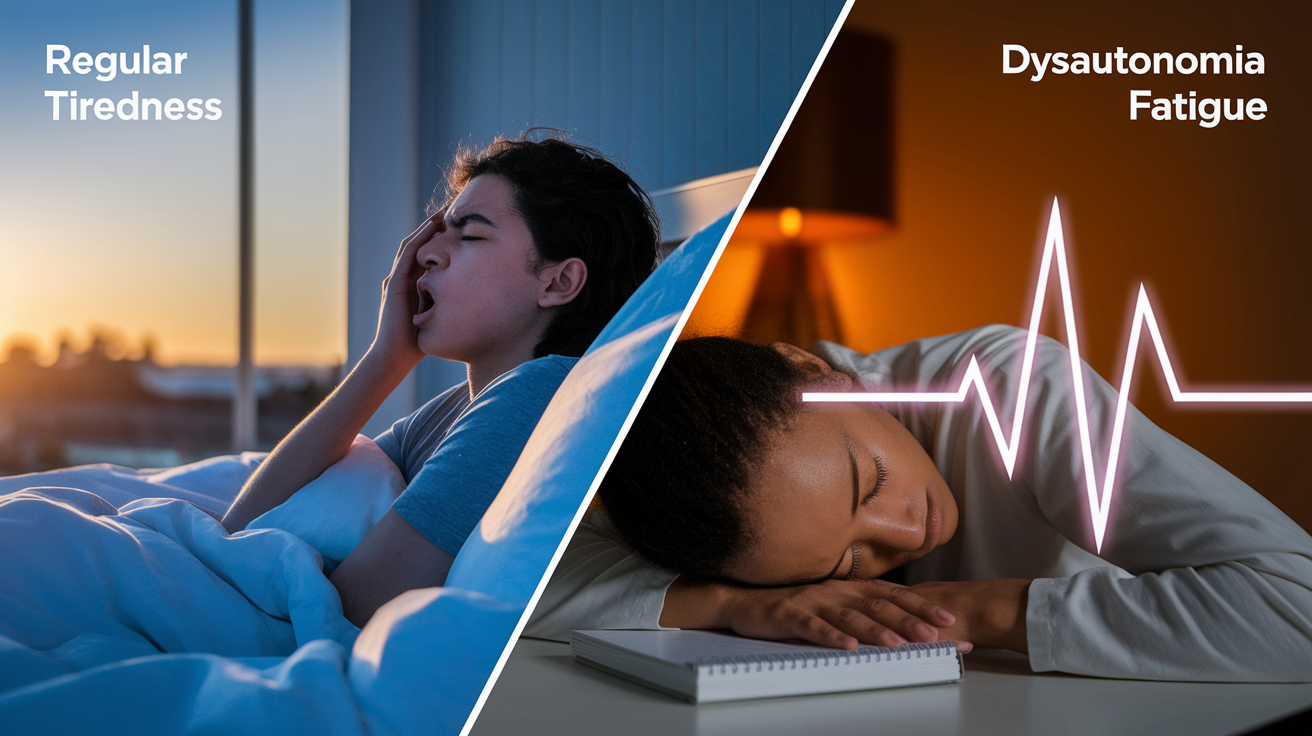
Regular tiredness plays by predictable rules. Work a long day, sleep well, wake refreshed. Dysautonomia fatigue ignores that script completely. You can sleep ten hours and wake feeling flattened. A twenty-minute walk might leave you bedbound for two days. Post-exertional malaise in autonomic disorders means your body overreacts to small stressors instead of adapting like it should.
Triggers are different too. Standing, heat, a warm shower, eating a meal, even sitting upright too long can all spark sudden exhaustion. The fatigue is disproportionate, unpredictable, and often severe enough to mess with work, relationships, and basic self-care. ME/CFS overlap with dysautonomia is common. Plenty of people carry both diagnoses because the patterns of orthostatic intolerance fatigue and post-exertional crashes look almost identical.
| Feature | Regular Tiredness | Dysautonomia Fatigue |
|---|---|---|
| Sleep response | Reliably improved by adequate rest | Often nonrestorative; wake exhausted |
| Triggers | Overwork, late nights, stress | Standing, heat, eating, minimal exertion |
| Severity | Proportional to activity | Disproportionate; small tasks cause crashes |
| Predictability | Fairly consistent day to day | Fluctuates hour to hour, often unpredictable |
Core Lifestyle Adjustments That Improve Dysautonomia Fatigue

Fatigue management in dysautonomia starts with pacing. Break activity into small chunks and rest before you crash, not after. Pacing techniques for chronic fatigue ask you to stop at 50 or 60 percent of your capacity, even when you feel okay, because pushing to your limit guarantees a setback. Set a timer for ten-minute task windows. Fold laundry for ten minutes, rest for fifteen, then check in with yourself. Planning errands ahead, keeping essentials within reach, and saying no to non-critical tasks are all part of energy conservation strategies for dysautonomia.
Hydration protocols for orthostatic symptoms are just as important. Most people with dysautonomia need way more fluids and salt than the general population to keep blood volume up. Aim for 2 to 3 liters of water daily, and think about adding electrolyte drinks or oral rehydration salts to help your body actually retain that fluid. Sip steadily all day instead of chugging large amounts at once. Electrolyte formulation matters. Look for options with sodium, potassium, and magnesium, not just sugar and flavoring.
Avoiding too much rest sounds backwards, but long stretches lying down can worsen deconditioning and make fatigue worse over time. Gentle stretching, recumbent exercise (stationary bike, rowing machine while seated), and short walks when you can handle them keep muscles and circulation working. Activity tracking to prevent crashes, using apps, timers, or simple logs, helps you learn your early warning signs and pull back before a full collapse.
Core pacing principles to reduce dysautonomia fatigue:
- Break tasks into 10 to 15 minute chunks with scheduled rest between
- Stop activity before symptoms spike, not when you’re already crashing
- Prioritize essential tasks, defer or delegate the rest
- Track patterns (time of day, food, posture, triggers) to refine your limits
- Include gentle movement daily to prevent deconditioning
- Plan higher-energy activities for your most stable windows (often mid-morning)
| Hydration Strategy | Target Range | Timing Notes |
|---|---|---|
| Daily water intake | 2–3 liters (individualized) | Sip steadily; front-load morning intake |
| Electrolyte drinks or ORS | 1–3 servings per day | With meals or before standing activities |
| Added dietary salt | Discuss amount with clinician | Throughout day; avoid large single doses |
Nutrition and Supplement Considerations for Supporting Energy

Nutrition strategies to boost energy in dysautonomia focus on stable blood sugar, adequate electrolytes, and key nutrients that support nerve and muscle function. Small frequent meals, eating every two to three hours, help you avoid big blood pressure drops that happen after large meals when blood pools in your digestive system. Choose easily digestible foods if you deal with nausea or gastroparesis. Lean protein, cooked vegetables, rice, toast, smoothies. Don’t go long stretches without eating. That worsens lightheadedness and fatigue.
Electrolytes deserve daily attention. Sodium helps retain fluid and supports blood volume. Potassium and magnesium help muscle and nerve signaling. A lot of people with dysautonomia benefit from electrolyte capsules, oral rehydration salts, or just adding table salt to meals. Vitamin B12 plays a role in energy production and nerve health. Some studies suggest people with dysautonomia may have lower B12 levels or trouble absorbing it. B12 testing in chronic tiredness makes sense, and supplementation is low-risk when guided by lab results. Iron deficiency and autonomic symptoms overlap too. Even borderline-low iron (ferritin under 50 ng/mL) can worsen fatigue, so check labs if you’re tired and pale or have heavy periods.
Key nutritional supports to discuss with your clinician:
- Consistent electrolyte intake (sodium, potassium, magnesium) through food, drinks, or capsules
- Vitamin B12 testing and supplementation if levels are low or absorption is impaired
- Iron panel (ferritin, hemoglobin) to rule out deficiency contributing to fatigue
- Small, frequent meals to stabilize blood sugar and reduce post-meal orthostatic stress
- Hydration reminders throughout the day to prevent dehydration impact on dysautonomia fatigue
Technology Tools and Tracking to Manage Dysautonomia Fatigue

Activity tracking to prevent crashes turns vague fatigue into data you can actually use. Apps designed for chronic illness, like symptom journals, pacing timers, or heart-rate monitors, help you spot patterns. Does fatigue spike two hours after breakfast? Is standing in a hot kitchen your biggest trigger? Do you crash every time you skip your afternoon electrolytes? Logging energy levels on a simple 0 to 10 scale, along with activities, meals, sleep quality, and symptoms, gives you and your clinician a clearer picture of what helps and what doesn’t.
Wearable monitors for heart rate and fatigue are especially useful in dysautonomia. Watching your heart rate climb 40 beats per minute when you stand, or seeing it stay elevated during a task that feels “fine,” can validate your experience and guide pacing decisions. Some people set heart-rate alarms to remind them to sit down before hitting a threshold that triggers a crash. Hydration reminders and apps can prompt regular sipping, and pacing apps with built-in timers help enforce rest intervals even when you’re tempted to push through.
Common tools that improve fatigue management:
- Heart-rate monitors or smartwatches to track orthostatic changes and exertion spikes
- Pacing apps with activity timers and rest reminders to prevent overexertion
- Hydration tracking apps or simple phone alarms every 30 to 60 minutes
- Symptom journals (paper or app-based) logging energy, triggers, food, sleep, and patterns for clinical visits
Medical Testing and When Dysautonomia Fatigue Requires Clinical Evaluation

Autonomic testing for chronic tiredness helps confirm whether fatigue stems from orthostatic intolerance, blood-volume issues, or other autonomic dysfunction. A tilt table test measures heart rate and blood pressure changes when you move from lying flat to upright, revealing patterns like POTS (heart rate increase of 30+ bpm without a large blood pressure drop) or orthostatic hypotension. An active stand test is a simpler version done in-office. You lie for five minutes, then stand while heart rate and blood pressure are recorded at one, three, five, and ten minutes. Both tests help clarify whether standing itself is a major fatigue trigger.
A Holter monitor worn for 24 to 48 hours tracks heart rhythm and rate throughout daily activities, catching intermittent tachycardia, bradycardia, or arrhythmias that standard EKGs miss. Blood work is essential to rule out overlapping causes. Electrolyte panels check sodium, potassium, and magnesium. A complete blood count screens for anemia. Thyroid tests (TSH, free T4) identify hypo or hyperthyroidism. B12 testing in chronic tiredness catches deficiency that worsens both energy and autonomic symptoms. Blood volume testing, though less widely available, can confirm low circulating volume in people with suspected hypovolemia.
Diagnostic criteria for dysautonomia-related fatigue require ruling out other causes. Sleep apnea, adrenal insufficiency, autoimmune disease, medication side effects. Your clinician may order additional labs or referrals. Differential diagnosis fatigue causes matter because treatments differ. Thyroid replacement for hypothyroidism, iron for anemia, CPAP for apnea, versus pacing and hydration for primary dysautonomia.
| Test | What It Evaluates | Why It Matters for Fatigue |
|---|---|---|
| Tilt table test | Heart rate and blood pressure response to upright posture | Confirms orthostatic intolerance (POTS, OH) driving fatigue |
| Active stand test | Simplified orthostatic vital signs at 1, 3, 5, 10 min standing | Office-based screening for orthostatic causes of exhaustion |
| Holter monitor | 24–48 hour heart rhythm and rate tracking | Detects tachycardia spikes, arrhythmias worsening fatigue |
| Bloodwork (CBC, electrolytes, thyroid, B12) | Anemia, electrolyte imbalance, thyroid dysfunction, vitamin deficiency | Rules out treatable contributors to fatigue and autonomic symptoms |
| Blood volume testing | Total circulating blood volume | Identifies low blood volume causing orthostatic fatigue |
Medication Options Sometimes Considered for Dysautonomia-Related Fatigue

Medication for dysautonomia fatigue is always individualized and prescribed based on your specific pattern of symptoms, test results, and response to lifestyle measures. Fludrocortisone is a mineralocorticoid that helps the kidneys retain sodium and water, expanding blood volume and reducing orthostatic fatigue in people with low circulating volume. Midodrine is a vasoconstrictor that tightens blood vessels, raising blood pressure and reducing blood pooling. Often used for people with orthostatic hypotension or severe lightheadedness on standing. Both can improve energy by stabilizing blood flow, but they require monitoring for side effects like high blood pressure when lying down or electrolyte shifts.
Pyridostigmine is sometimes used off-label to improve autonomic signaling, particularly in people whose fatigue is tied to poor nerve-to-muscle communication or gastrointestinal slowing. Beta-blockers like propranolol or metoprolol may reduce heart rate spikes in some people with POTS, which can lower the cardiac workload and improve stamina. But they can worsen fatigue in others. Response is highly individual. In cases of severe, disabling fatigue that hasn’t responded to other interventions, clinicians may cautiously trial stimulants such as modafinil or methylphenidate. These are reserved for select cases and require close supervision due to potential side effects and the need to rule out other untreated causes first.
No single medication fixes dysautonomia fatigue for everyone. Treatment is a process of careful adjustment, combining medications with lifestyle strategies, and regularly reassessing what’s helping. Beta-blocker considerations for tiredness must weigh potential benefits (lower heart rate, less adrenaline surges) against risks (worsening fatigue, low blood pressure). Your clinician will guide medication trials based on your dominant symptoms. Whether you need more blood volume, tighter blood vessels, a steadier heart rate, or support for severe crashes. They’ll adjust or stop medications that aren’t helping or causing problems.
Managing Coexisting Symptoms That Intensify Dysautonomia Fatigue

Sleep disturbances and autonomic dysfunction feed each other in a frustrating loop. Nighttime tachycardia, sweating, nausea, or needing to pee multiple times disrupt restorative sleep stages, leaving you exhausted before the day even starts. Nonrestorative sleep in dysautonomia is common even when total sleep hours seem adequate. You wake feeling like you never rested. Addressing nighttime symptoms (elevating the head of the bed, adjusting evening hydration and salt timing, treating reflux or nausea) can improve sleep quality and reduce morning fatigue.
Managing tachycardia-related fatigue during the day also helps preserve energy. Heart rate spikes, whether from standing, eating, stress, or heat, force your cardiovascular system to work harder, draining reserves quickly. Compression garments, lying down promptly when heart rate climbs, cooling strategies (fans, cool cloths, air conditioning), and avoiding known triggers all reduce the cumulative cardiac workload. Gastrointestinal symptoms like nausea, bloating, and early fullness sap energy both directly (from discomfort and poor nutrient absorption) and indirectly (by limiting food intake and hydration). Small frequent meals, anti-nausea medications when needed, and treating underlying gastroparesis or reflux can ease this burden.
Common coexisting symptoms that worsen dysautonomia fatigue:
- Nonrestorative sleep from nighttime autonomic instability, nausea, or frequent urination
- Tachycardia spikes during standing, eating, or heat exposure that exhaust the heart
- Gastrointestinal dysfunction (nausea, bloating, early fullness) limiting nutrition and hydration
- Heat intolerance triggering rapid energy depletion and need to lie down
- Vestibular symptoms (dizziness, imbalance) requiring constant compensation and draining focus
Realistic Expectations and Long-Term Outlook for Dysautonomia Fatigue

Prognosis and long-term expectations vary widely, but many people see meaningful improvement with consistent, tailored management combining hydration, pacing, gentle exercise progression, and symptom-targeted therapies. Improvement is usually gradual, measured in months, not weeks, and often follows a two-steps-forward, one-step-back pattern as you learn your body’s new limits and adjust strategies. Quality of life interventions such as compression garments, electrolyte protocols, heart-rate monitoring, and selective medication use can reduce crash frequency and severity, allowing more predictable function even if complete resolution isn’t guaranteed.
Early diagnosis and proactive management make a significant difference. The longer fatigue goes unrecognized and untreated, the more deconditioning, sleep disruption, and secondary complications pile up. Chronic illness rehabilitation plans, including supervised graded exercise, occupational therapy for pacing and energy conservation, and mental health support for coping with unpredictability, help rebuild capacity and resilience. Strategies for coping with unpredictability (flexible work or school arrangements, simplified routines, backup plans for bad days) reduce the stress and frustration that worsen autonomic instability and fatigue.
Realistic gains and timeline for dysautonomia fatigue management:
- Improved energy stability and fewer severe crashes within 3 to 6 months of consistent lifestyle adjustments
- Gradual increase in activity tolerance through pacing and recumbent exercise, though progress is slow
- Rehabilitation benefits from physical therapy, occupational therapy, and structured reconditioning programs
- Enhanced coping skills and quality of life through patient education, tracking tools, and peer or professional support
Final Words
You now have clear, practical steps: what drives the energy crashes, how it feels day to day, how it’s different from ordinary tiredness, and simple ways to pace, hydrate, test, and track.
Try one small change this week—small meals, an electrolyte drink, or a short pacing plan—and note what shifts. Bring that log to your clinician if things are severe or new.
With steady, manageable steps and good tracking, many people see real improvements. You can make progress with dysautonomia fatigue.
FAQ
Q: Can dysautonomia cause extreme fatigue?
A: Dysautonomia can cause extreme fatigue by disrupting blood pressure and heart responses, lowering brain blood flow, and triggering unpredictable crashes and post-exertional exhaustion.
Q: Is dysautonomia an autoimmune disease?
A: Dysautonomia is not always an autoimmune disease; some types are linked to autoimmune processes, while others come from nerve injury, genetic conditions, infections, or deconditioning.
Q: How serious is dysautonomia?
A: Dysautonomia ranges from mild to disabling and can significantly affect daily life; get prompt care for fainting, chest pain, severe shortness of breath, or sudden collapse.
Q: What does a dysautonomia episode feel like?
A: A dysautonomia episode feels like sudden lightheadedness, heart racing or pounding, heavy fatigue, sweating, nausea, brain fog, and sometimes fainting or a prolonged “crash.”
Comments are closed