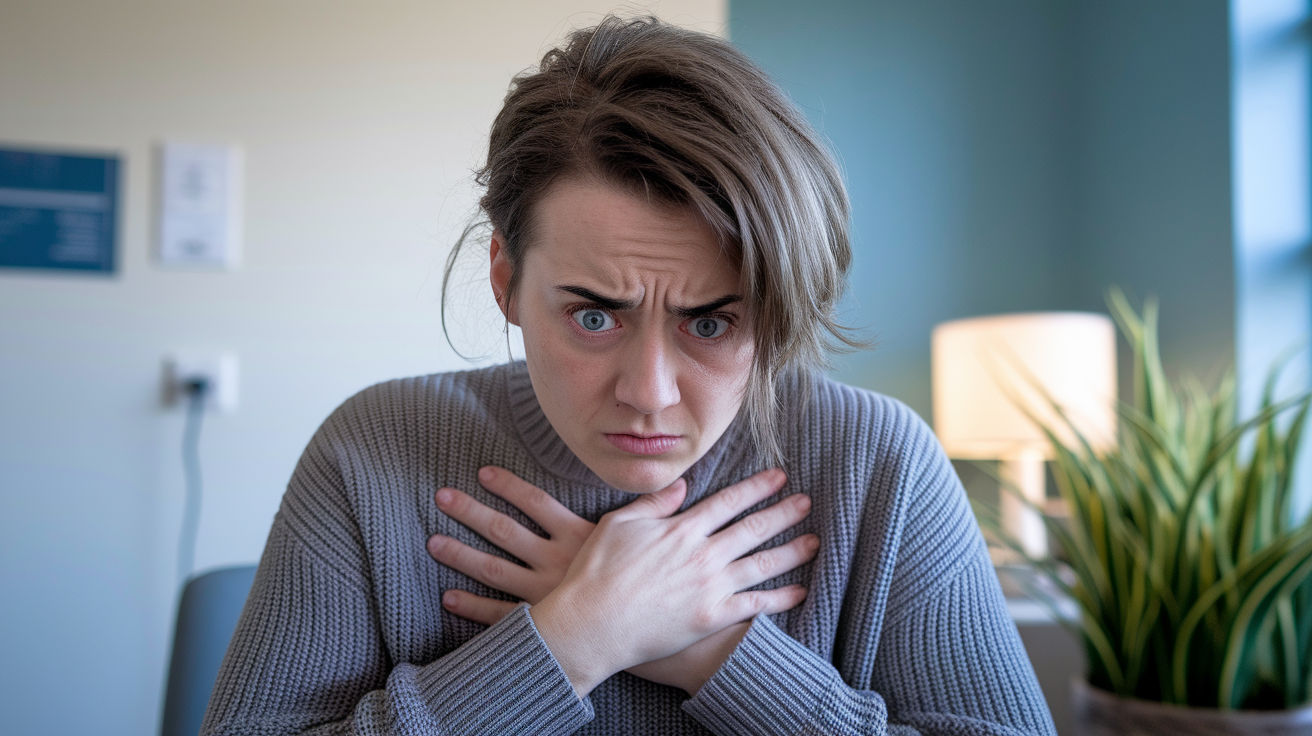
Is that sudden, terrifying wave a full-blown panic attack or just everyday anxiety?
They can feel similar, but timing and physical signs tell different stories, and panic hits fast and hard while anxiety builds and lingers.
This post shows the clear physical and timing differences, gives quick, low-risk steps to try now, and offers simple tracking tips to bring to a clinician.
If symptoms feel severe, or you have chest pain, fainting, or trouble breathing, get urgent medical help.
Clear Symptom Differences Between Panic and Anxiety Episodes
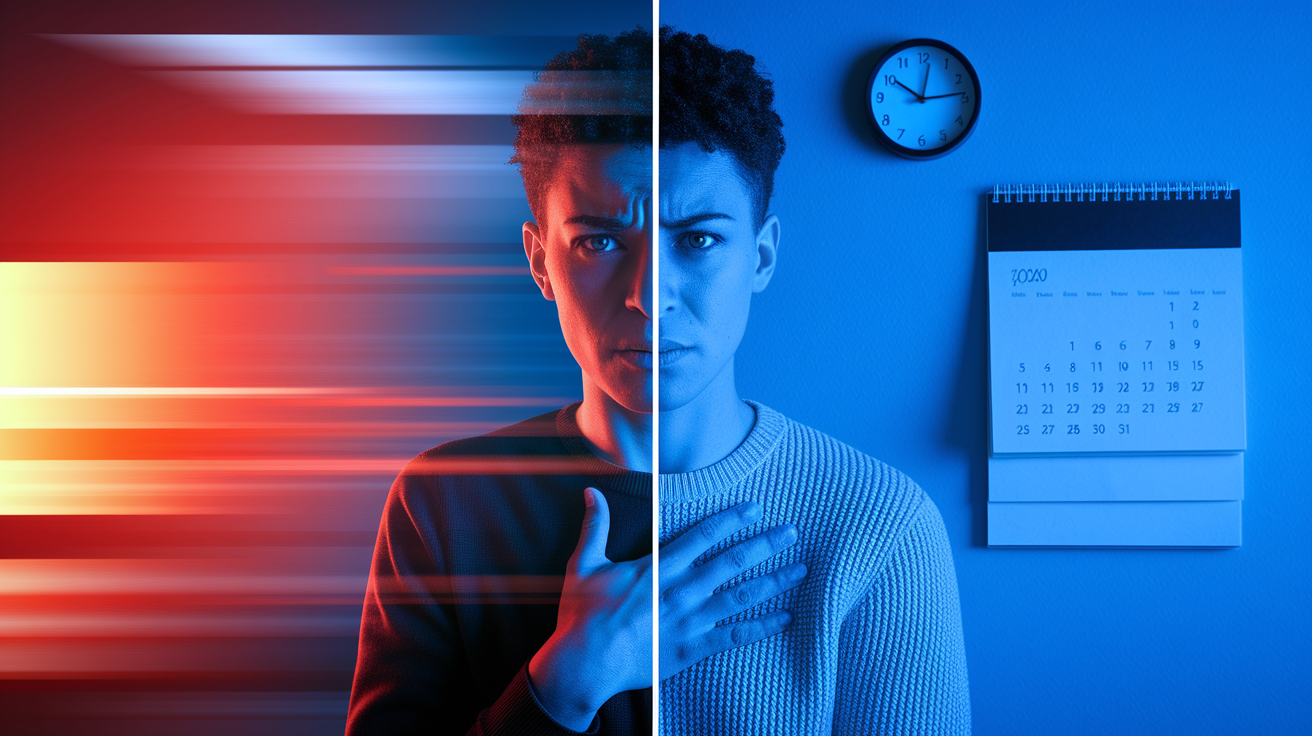
The fastest way to tell panic and anxiety apart? Watch how they start, how long they stick around, and how hard they hit.
A panic attack slams into you. We’re talking seconds, not minutes. It peaks at around 10 minutes and the worst of it usually wraps up in 20 to 30 minutes. You might feel shaky or totally wiped for a couple hours after, but the acute terror doesn’t last all day. Anxiety is different. It creeps in slowly and camps out for days, weeks, sometimes months.
Panic brings a wave of overwhelming physical stuff: heart pounding, chest pain, trouble breathing, choking feelings, sweating, shaking, dizziness, and this deep, terrifying conviction that you’re dying or losing your mind. Clinically, you need at least 4 out of 13 possible symptoms for it to count as a panic attack. Anxiety symptoms aren’t as sharp in the moment, but they don’t leave. Restlessness, muscle tension, exhaustion, irritability, trouble focusing, sleep problems. For a generalized anxiety disorder diagnosis, those symptoms need to show up more days than not for at least 6 months, plus 3 or more other signs in adults.
| Onset Speed | Duration | Physical Symptom Intensity | Psychological Features | Diagnostic Notes |
|---|---|---|---|---|
| Panic: Abrupt, peaks in ~10 minutes | 20–30 minutes of intense phase | Severe: palpitations, chest pain, shortness of breath, choking, dizziness, sweating, trembling, derealization, fear of dying | Intense, immediate fear focused on losing control or imminent catastrophe | Panic disorder requires recurrent attacks plus ≥1 month of worry or behavior change |
| Anxiety: Gradual buildup over hours to days | Days, weeks, or months | Moderate to severe, chronic: muscle tension, headaches, GI upset, restlessness, fatigue | Persistent, future-focused excessive worry and “what if” thinking | Generalized anxiety disorder requires ≥6 months of excessive worry plus ≥3 symptoms in adults |
Physical and Psychological Symptom Patterns in Panic vs Anxiety

Panic attacks flip your sympathetic nervous system into overdrive. That’s your fight or flight wiring. Your heart races or pounds like it’s trying to escape your chest. Your chest tightens. You might feel like you’re choking or can’t get enough air, and waves of dizziness, nausea, sweating, or shaking hit all at once. A lot of people get tingling or numbness in their hands, fingers, or face, plus sudden chills or heat flashes.
Two of the scariest parts? Derealization and depersonalization. Derealization makes the world feel unreal, like you’re in a dream or watching everything through a filter. Depersonalization makes you feel disconnected from your own body or thoughts. Both add to the terror because they make you feel like you’re losing your grip on reality or going crazy.
Anxiety disorder symptoms don’t spike like that. They build slowly and settle in. You get ongoing muscle tension that can turn into headaches, jaw clenching, or a stiff neck and shoulders. Your stomach stays upset for weeks. You feel tired even after sleeping well. Your mind goes blank when you’re trying to focus on work or hold a conversation. Restlessness becomes normal. You can’t sit still, you pace without realizing it. Sleep gets harder to fall into or stay in, and irritability sneaks up on you and everyone around you.
The psychological piece is just as different. During a panic attack, the fear is immediate and feels like a fact. You’re convinced something catastrophic is happening right now. A heart attack. Suffocation. Total loss of control. Imminent death. It’s not “what if.” It feels certain.
With general anxiety, the fear lives in the future. You worry constantly about things that might go wrong. Work stuff. Health scares. Relationship problems. Money stress. The “what if” thoughts loop endlessly, even when you know logically the worry is out of proportion.
A few distinctions that help separate the two:
- Heart palpitations in panic feel like sudden hard pounding or skipping beats. In anxiety they’re more like a persistent faster rhythm you notice all day.
- Shortness of breath during panic comes on fast and feels like smothering or choking. With anxiety it’s more like you can’t quite fill your lungs or you sigh a lot.
- Derealization during panic is sudden, terrifying, and peaks quickly. With anxiety it’s more like persistent brain fog or feeling disconnected in a slower, hazier way.
- Fear of dying is a core panic symptom and happens in the moment. Anxiety involves chronic worry about future illness or catastrophe but not an immediate sense of death.
- Nausea in panic is intense and hits hard. In anxiety it lingers as ongoing stomach upset, tension, or digestive trouble.
- Muscle tension in panic shows up as trembling or shaking during the acute episode. In anxiety it builds up as chronic tightness, aches, or soreness over weeks.
Triggers, Onset, and Duration Patterns in Panic vs Anxiety

Panic attacks can show up out of nowhere. No warning, no obvious reason. You might be sitting quietly, driving, or even asleep when your body suddenly floods with adrenaline and your fight or flight response kicks in. Other times, panic attacks get tied to specific places or situations. Crowded spaces, elevators, bridges, or spots where you’ve had an attack before. Either way, the onset is abrupt. One second you’re fine, the next your heart is racing and you’re convinced something is terribly wrong.
Anxiety builds gradually and usually connects to ongoing stressors or patterns of worry. Job pressure, relationship conflict, money strain, health concerns, or a packed schedule can all feed chronic anxiety. The worry doesn’t strike like lightning. It piles up over days and weeks, and your body stays in a state of low grade or moderate alert for long stretches. Some days are worse than others, but the baseline tension doesn’t fully go away.
Here’s how the typical episode timelines break down:
- Panic attack acute phase: peaks within about 10 minutes, with the most intense symptoms lasting 20 to 30 minutes. Some people feel lingering jitters, exhaustion, or shakiness for a few hours afterward.
- Panic attack frequency: can happen once and never again, or recur unpredictably. When attacks happen repeatedly and you start fearing the next one or avoiding situations because of past attacks, that pattern can point to panic disorder.
- General anxiety duration: symptoms stick around for months at a time. To meet the diagnostic threshold for generalized anxiety disorder, the excessive worry needs to be present more days than not for at least 6 months.
- Anxiety symptom fluctuation: intensity changes day to day based on stress levels, sleep, hormones, caffeine intake, or how much rest and support you’re getting. But even on better days, a baseline of tension and worry usually stays.
Recovery from a panic attack can feel sudden once the adrenaline surge passes. You might feel exhausted, shaky, or emotionally drained, but the acute terror lifts relatively quickly. Recovery from chronic anxiety takes longer because the underlying worry and tension don’t resolve in minutes. It requires sustained changes in stress management, thought patterns, sleep, and often professional support.
Diagnostic Context: How Clinicians Distinguish Panic vs Anxiety Symptoms

When a clinician evaluates whether you’re experiencing panic attacks or generalized anxiety disorder, they rely on specific criteria to make the call.
A panic attack is defined by the sudden onset of at least 4 out of 13 possible symptoms. Those symptoms include palpitations or pounding heart, sweating, trembling, shortness of breath, choking sensation, chest pain, nausea, dizziness, chills or heat sensations, tingling or numbness, derealization or depersonalization, fear of losing control, and fear of dying. The attack peaks rapidly, usually within 10 minutes, and the intense phase typically lasts 20 to 30 minutes. If you have recurrent unexpected panic attacks and spend at least a month afterward worrying about having another attack or changing your behavior to avoid them, that pattern may meet the criteria for panic disorder.
Generalized anxiety disorder has a different threshold. The core feature is excessive worry about multiple areas of life, happening more days than not for at least 6 months. Adults need to report at least 3 associated symptoms from a list that includes restlessness, fatigue, difficulty concentrating, irritability, muscle tension, and sleep disturbance. Children only need 1 associated symptom. The worry has to be hard to control and cause significant distress or problems in daily functioning.
Clinicians also consider medical rule outs, especially during a first panic attack. The physical symptoms of panic, particularly chest pain, shortness of breath, and dizziness, can look a lot like heart problems, thyroid disorders, blood sugar issues, or medication side effects. A thorough evaluation often includes checking your heart, thyroid function, and other physical health markers to make sure the symptoms aren’t coming from a medical condition that needs different treatment. Once medical causes are ruled out and the pattern of symptoms is clear, the diagnosis becomes more straightforward.
Overlapping Symptoms That Make Panic and Anxiety Hard to Tell Apart
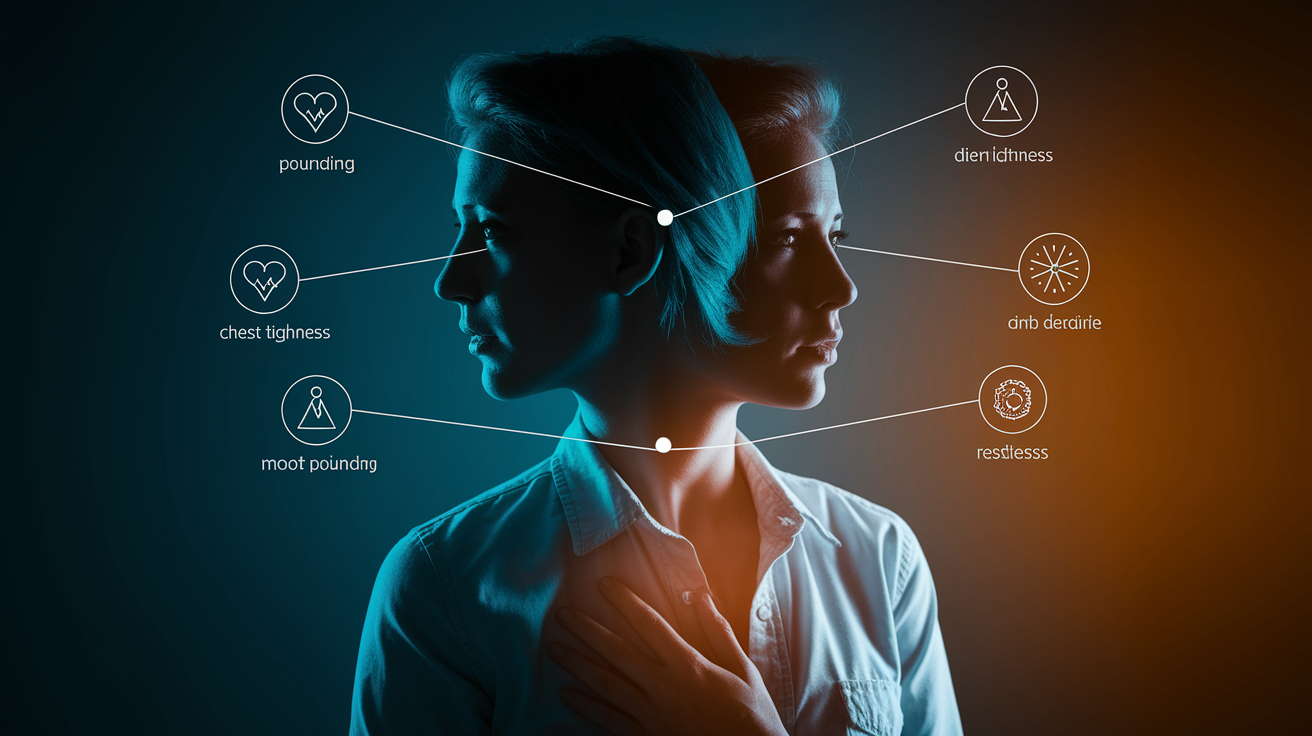
A handful of symptoms show up in both panic attacks and general anxiety, and they’re often the ones that cause the most confusion.
Chest pain or tightness, shortness of breath, a racing heart, dizziness or lightheadedness, tingling or numbness, nausea or stomach upset, dry mouth, and sweating can all appear in either condition. The main difference isn’t whether the symptom is present, but how suddenly it starts, how intense it feels, and how long it lasts.
Chest pain during a panic attack tends to be sharp, sudden, and severe enough to make people worry they’re having a heart attack. Chest tightness with chronic anxiety is usually duller, more persistent, and fluctuates throughout the day based on stress levels. Shortness of breath in panic feels like you’re choking or suffocating and comes on in seconds. With anxiety, it’s more like you can’t quite take a full breath or you feel the need to sigh frequently over hours or days.
Here are the overlapping symptoms that most commonly trip people up:
- Heart palpitations or increased heart rate: sudden and pounding in panic. Faster than normal and noticeable throughout the day in anxiety.
- Dizziness or lightheadedness: acute and intense during panic, sometimes leading to fear of fainting. Milder and more persistent with anxiety, often linked to shallow breathing or muscle tension.
- Tingling or numbness: comes on fast and feels alarming during panic, often in the hands, face, or feet. Can also happen with chronic anxiety due to hyperventilation or prolonged muscle tension.
- Derealization: sudden, terrifying, and peaks quickly during a panic attack. Slower, foggier, and less dramatic with ongoing anxiety.
Practical Self-Assessment Steps for Distinguishing Panic vs Anxiety

One of the most useful things you can do when you’re trying to figure out whether you’re dealing with panic attacks or general anxiety is to track the details of what you’re experiencing. Counting symptoms, noting the timing, and paying attention to triggers and patterns will give you concrete information to share with a clinician and help you see the differences more clearly.
Start by counting how many symptoms you experience during an acute episode. If you suddenly have 4 or more symptoms from the panic list, all hitting within a few minutes and peaking quickly, that pattern suggests a panic attack. If your symptoms build more slowly and include chronic restlessness, irritability, muscle tension, fatigue, and worry that sticks around for weeks or months, that points toward generalized anxiety.
Notice how long episodes last and whether they come in waves or stay steady. A panic attack usually has a clear beginning, middle, and end within 20 to 30 minutes. Anxiety symptoms fluctuate but don’t resolve that quickly.
| What to Track | Panic Pattern | Anxiety Pattern |
|---|---|---|
| Onset | Abrupt, often within seconds; peaks in ~10 minutes | Gradual buildup over hours, days, or weeks |
| Duration | Acute intense phase lasts 20–30 minutes; some lingering symptoms for hours | Persistent for days, weeks, or months; fluctuates but does not fully resolve quickly |
| Physical symptoms | 4+ sudden, severe symptoms: palpitations, chest pain, shortness of breath, sweating, trembling, dizziness, nausea, choking, tingling | Chronic moderate symptoms: muscle tension, fatigue, restlessness, headaches, GI upset, sleep disturbance |
| Cognitive symptoms | Immediate, intense fear of dying, losing control, or going crazy; derealization or depersonalization | Persistent excessive worry, “what if” thinking, difficulty concentrating, mind going blank, irritability |
| Triggers | May have no clear trigger or be linked to specific situations; can happen during sleep | Usually tied to ongoing stressors: work, finances, health, relationships, schedule |
When Panic or Anxiety Symptoms Require Professional or Emergency Care

If you experience chest pain that feels like it could be a heart attack, severe difficulty breathing that doesn’t ease with calming techniques, fainting or loss of consciousness, or thoughts of harming yourself or ending your life, get emergency medical care immediately. Those symptoms need to be evaluated right away to rule out cardiac issues, respiratory problems, or urgent mental health risk.
You should seek professional mental health care if you’ve had more than one panic attack, if you spend weeks worrying about having another attack, or if you’ve started avoiding places or situations because you’re afraid of triggering an episode. Recurrent panic that lasts for a month or more, especially when it starts to change your behavior or limit your daily activities, is a clear signal to see a therapist or psychiatrist.
Similarly, if you’ve been dealing with excessive worry, restlessness, irritability, muscle tension, or sleep problems for 6 months or longer, and those symptoms are interfering with work, relationships, or your ability to function, it’s time to reach out for an assessment and evidence based treatment like cognitive behavioral therapy or medication.
Here are the urgent red flags that mean you shouldn’t wait:
- Chest pain with other signs that could point to a heart problem, such as pain radiating to your arm or jaw, shortness of breath, or sweating.
- Severe breathing difficulty that doesn’t improve after a few minutes of slow breathing or grounding techniques.
- Fainting, loss of consciousness, or confusion that comes on suddenly and doesn’t resolve quickly.
Final Words
You can now spot the difference: panic hits fast and hard, usually peaking in about 10 minutes, while anxiety builds slowly and stays with you.
Use the quick checks from the post—count symptoms, note how fast it starts, track how long it lasts, and try simple breathing and grounding.
If you have sudden chest pain, fainting, or trouble breathing get emergency care; if chronic worry lasts months, see a clinician. This clear guide to panic vs anxiety symptoms gives you practical next steps and confidence moving forward.
FAQ
Q: How to know if it’s anxiety or panic?
A: To know if it’s anxiety or panic, check timing and intensity: panic is sudden, peaks in about 10 minutes with intense symptoms (heart racing, chest pain, breathlessness); anxiety builds gradually with ongoing worry, muscle tension, and stomach upset.
Q: What do people with panic disorder experience?
A: People with panic disorder experience repeated unexpected panic attacks—sudden surges of intense fear with palpitations, chest pain, shortness of breath, dizziness, or derealization—plus at least one month of worry or behavior change after attacks.
Q: What does anxiety feel like physically?
A: Anxiety feels physically like persistent tension, muscle aches, headaches, tiredness, upset stomach, mild heart racing, or shortness of breath that comes on slowly and fluctuates rather than peaking suddenly.
Q: How to calm down anxiety?
A: To calm down anxiety, try paced breathing (longer exhales), a 5–10 minute walk, grounding (name 5 senses), sip water and eat a snack, and progressive muscle relaxation; seek help if it’s frequent or disabling.
Comments are closed