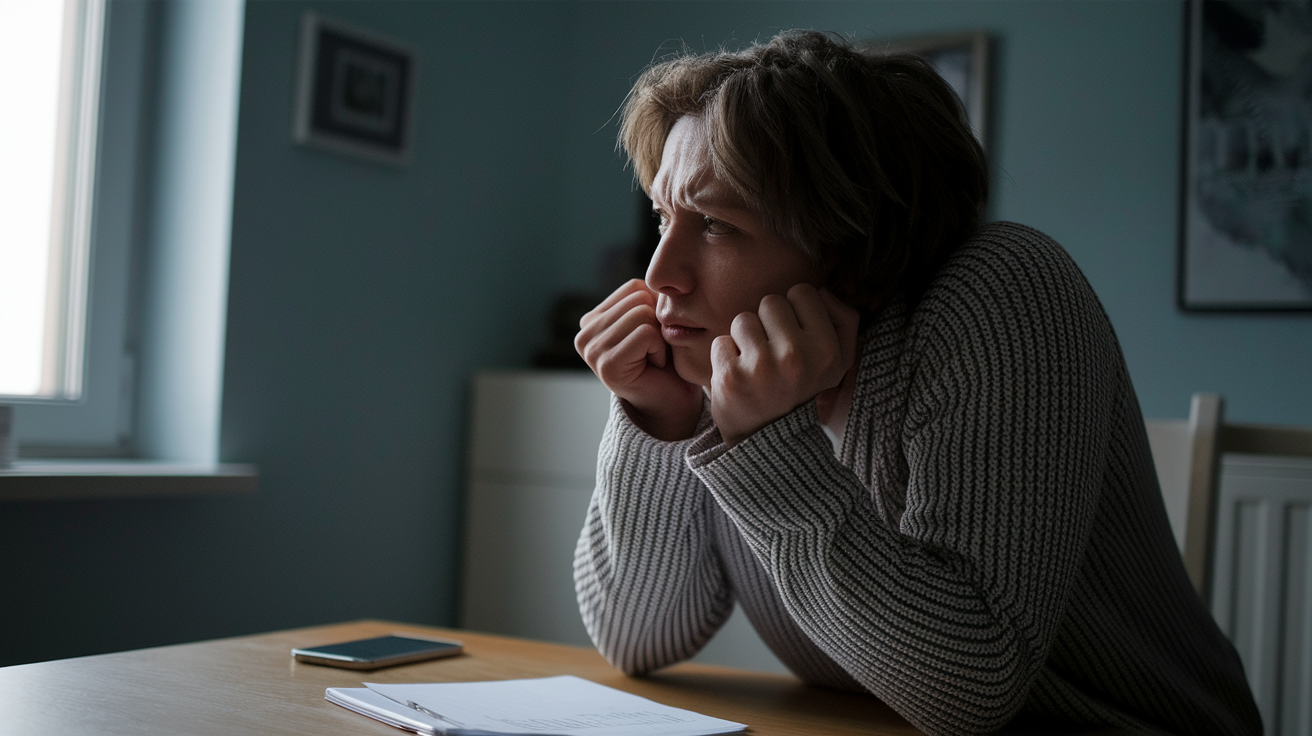
Ever wondered why anxiety can feel like a punch in the stomach and a storm in your head at the same time?
It shows up as physical sensations, such as a racing heart, tight chest, or queasy stomach, and as mental noise that makes decisions impossible.
This article breaks down those body and mind sensations, explains common triggers and patterns, gives easy low-risk steps to try now, offers what to track for a clinician, and points out the clear signs that mean it’s time to get help.
You’re not overreacting — these sensations are real.
What Anxiety Feels Like in Your Body and Mind
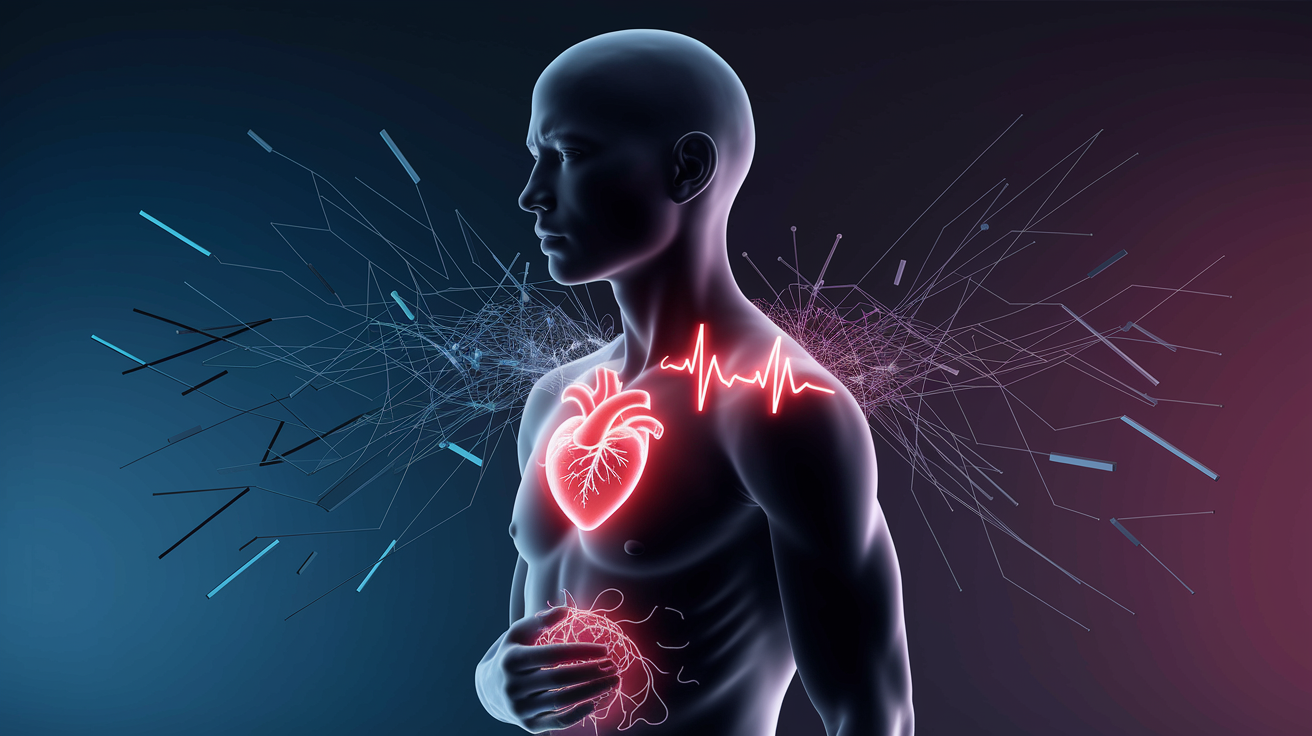
Anxiety shows up in your body first. Sometimes it’s a flutter in your chest, a tight knot in your stomach, tension crawling across your shoulders. Other times it’s just noise in the background. And then there are the days when it’s the only thing you can feel.
Your body acts like something’s wrong even when nothing around you has changed. You feel switched on. Alert. But there’s nothing to be alert about.
Inside your head, thoughts move faster than you can keep up with. They get louder, sharper, harder to shake. You’re bracing for something you can’t name. Concentration goes out the window. Small decisions suddenly feel impossible. Sending an email. Showing up somewhere. Trying to fall asleep. All of it takes more energy than it should.
The weight of it is exhausting, even when your day looks totally normal from the outside.
The intensity shifts around. Mild anxiety feels like nervous energy or a quick wave of worry that passes. The heavier stuff doesn’t pass. It just sits there. Your body’s stuck in alarm mode and you can’t find the reset button. For some people it builds slowly. For others it hits out of nowhere.
Here’s what it often looks like:
- Physical discomfort that feels very real but doesn’t have a clear medical reason
- Emotional pressure or dread you can’t quite explain
- Restless energy mixed with total exhaustion
- Mental static that makes it hard to settle
- A feeling that both your body and brain are running too fast
- A strong urge to escape or avoid whatever feels overwhelming
Physical Sensations Linked to Anxiety and Panic
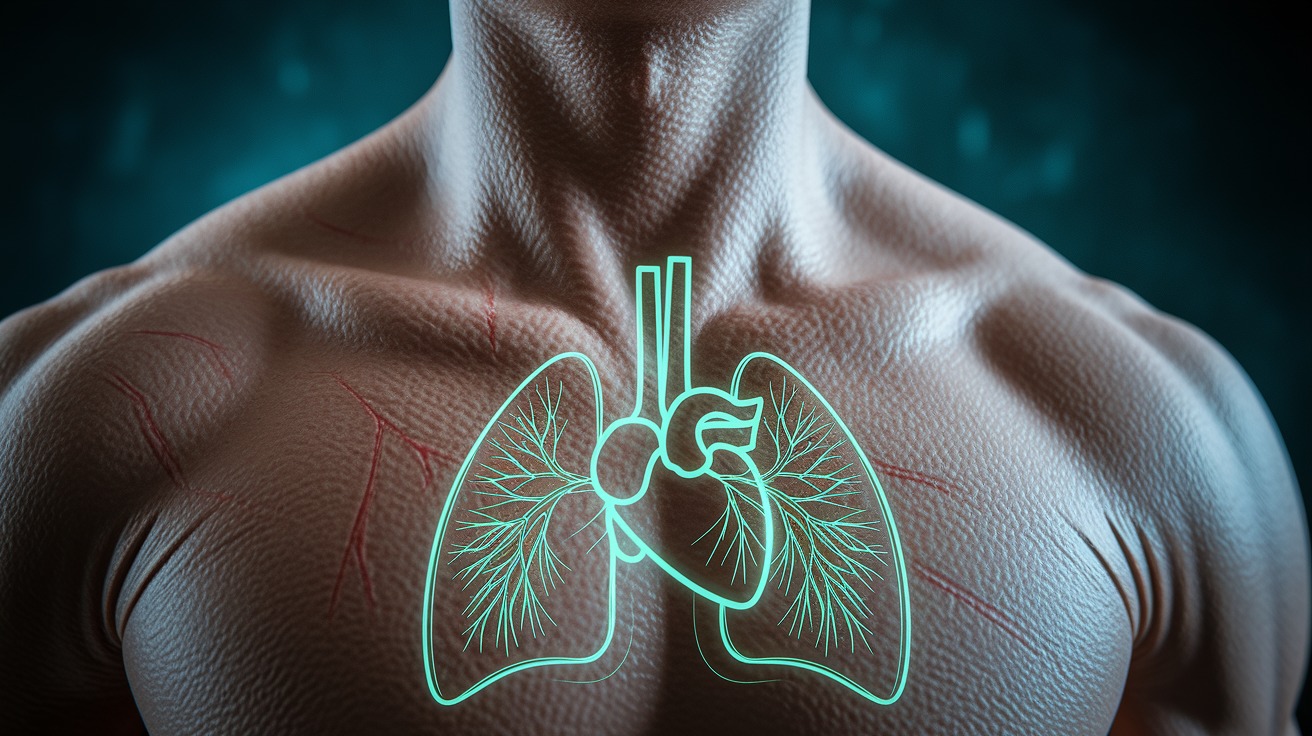
Your body reads anxiety as danger. So it reacts like you’re facing an actual threat. Heart speeds up. Breathing picks up. Blood flow changes. Muscles tighten. Digestion either slows way down or speeds way up. These changes are supposed to help you react fast, but when there’s no real emergency, they just feel awful. Or scary.
You might feel your heart racing or pounding, shortness of breath, sweating, shaking hands, dizziness, nausea, dry mouth, tingling fingers or toes, chest tightness, muscle tension that won’t let go. Some people get a lump in the throat or a choking feeling that makes swallowing hard. Others feel hot flashes, cold chills, waves of lightheadedness. None of this is imaginary. It’s your nervous system doing exactly what it’s wired to do. It just doesn’t know there’s no bear in the room.
Panic attacks crank all of that up to maximum volume. They come on suddenly: chest pain, pounding heart, sweating, shaking, trouble breathing, nausea, overwhelming dread that something terrible is about to happen. It can feel like a heart attack, which makes the fear spike even harder. Most panic attacks peak in a few minutes, but the aftermath can leave you shaky and wiped out for hours.
| Symptom | How It Shows Up |
|---|---|
| Racing heart or palpitations | Feels like your heart is pounding, skipping, or fluttering in your chest |
| Nausea or stomach discomfort | Queasy, rumbling, tight stomach; sometimes vomiting or diarrhea |
| Dizziness or lightheadedness | Unsteady, faint feeling; like the room is tilting or you might pass out |
| Muscle tension and pain | Tight jaw, sore neck and shoulders, aching back, or headaches from chronic clenching |
Emotional and Cognitive Effects of Feeling Anxious
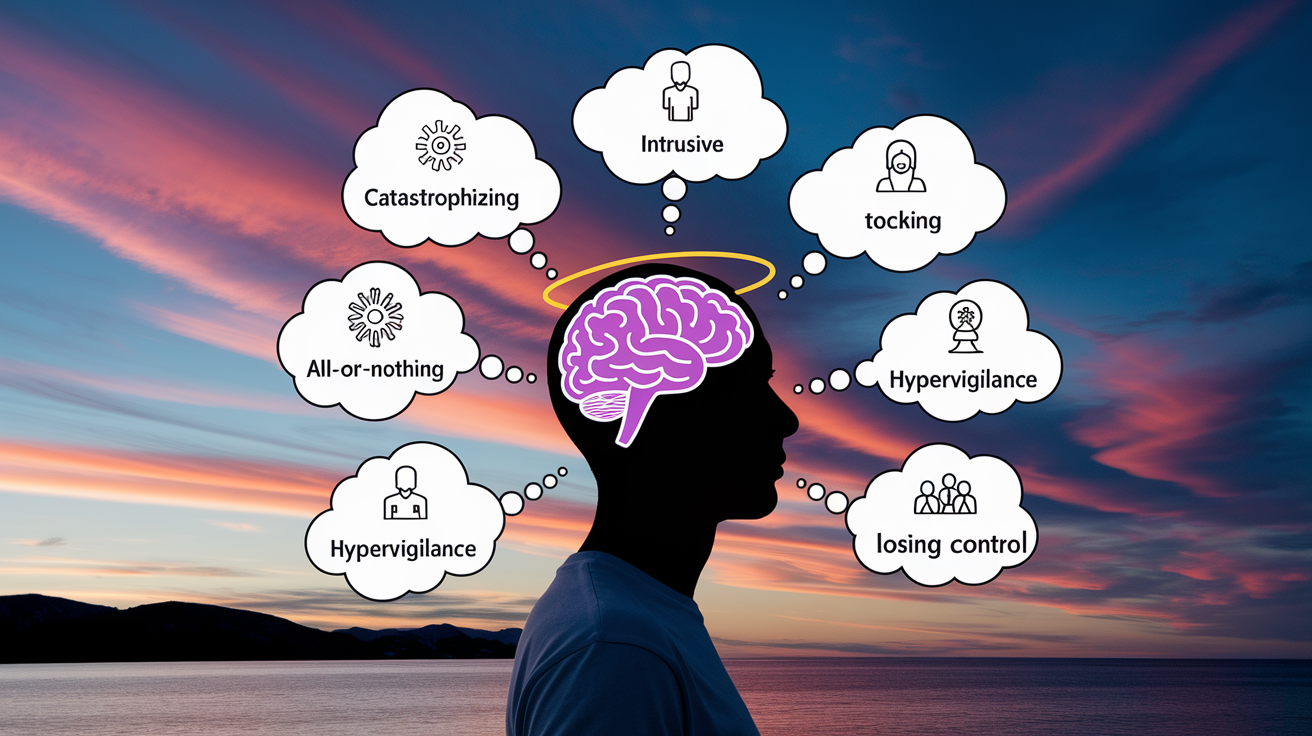
Anxiety doesn’t only live in your body. It takes over your thoughts and emotional state just as hard. You might feel on edge constantly, irritable for no clear reason, or like you’re one minor annoyance away from snapping. Emotional regulation gets harder. Things that wouldn’t usually bother you suddenly feel unbearable.
Your mind gets stuck in overdrive. Worries loop. Worst case scenarios feel more real than they are. You picture everything that could go wrong in vivid detail, even when the rational part of your brain knows it’s unlikely. Concentration suffers. You read the same paragraph three times and absorb nothing. Simple decisions feel paralyzing. Your brain feels cluttered, loud, impossible to quiet.
Five thought patterns that show up a lot:
-
Catastrophizing. Jumping straight to the worst possible outcome, even when there’s no evidence pointing that way. “If I mess up this presentation, I’ll lose my job, and then I won’t be able to pay rent.”
-
Intrusive thoughts. Unwanted, repetitive worries that pop up uninvited and won’t leave, often about things you can’t control.
-
All or nothing thinking. Seeing situations in extremes with no middle ground. “If I’m not perfect, I’m a total failure.”
-
Hypervigilance. Constantly scanning for threats or things that might go wrong, which keeps your nervous system on high alert.
-
Fear of losing control. A terrifying sense that you might do something embarrassing, dangerous, or unpredictable, even though you almost certainly won’t.
Why Anxiety Creates These Feelings: The Body’s Fight or Flight Response
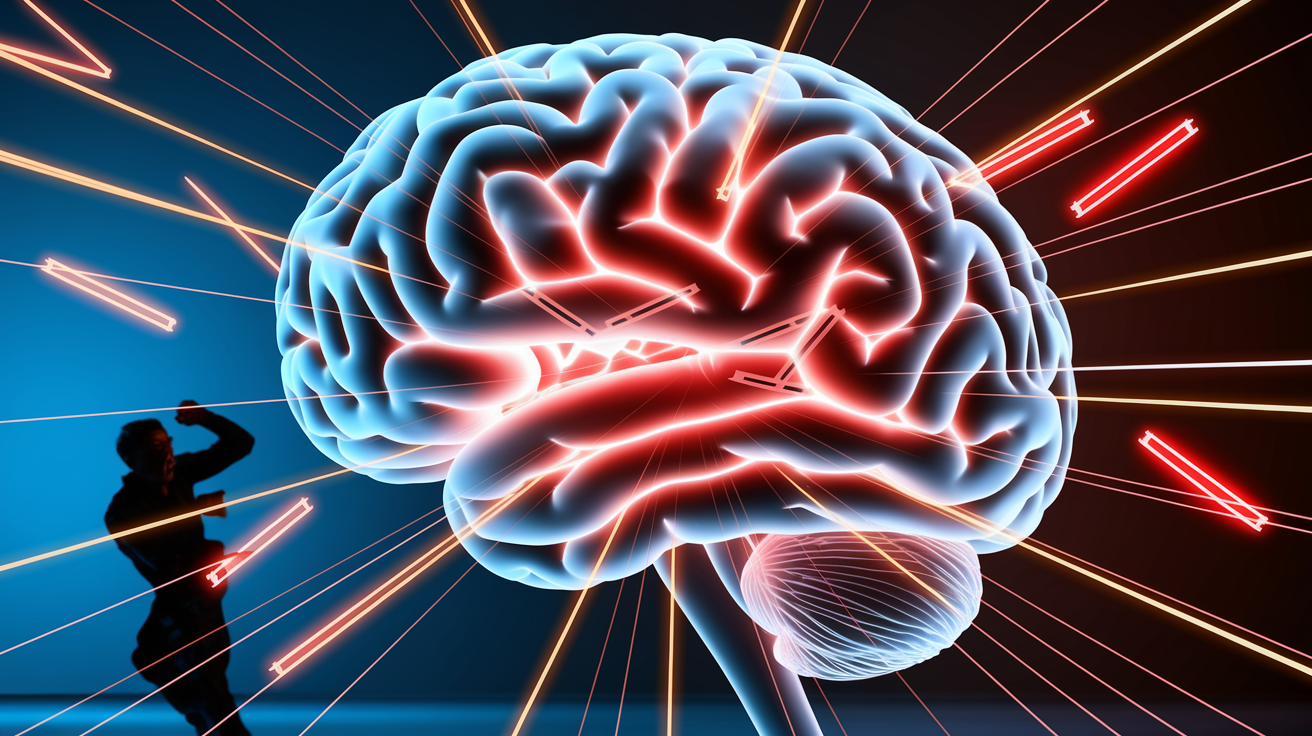
When your brain senses a threat (real or imagined), it activates your sympathetic nervous system. That’s the fight or flight system, designed to help you survive immediate danger. Stress hormones like adrenaline and cortisol flood your bloodstream. Heart rate climbs. Blood moves away from your stomach and toward your muscles. Pupils dilate. Breathing quickens. All of this happens automatically, without you deciding anything.
The problem? Your brain doesn’t distinguish well between a physical threat (like a car swerving into your lane) and a social or psychological one (like worrying about an upcoming deadline or replaying an awkward conversation). So your body prepares for a fight even when there’s nothing to punch and nowhere to run. The result is a buildup of physical tension, discomfort, and symptoms that feel way out of proportion to what’s actually happening around you.
Over time, chronic activation of the stress response can weaken your immune system, increase inflammation, raise blood pressure, and contribute to long term health issues like headaches, digestive problems, and cardiovascular strain. It also makes you more sensitive to physical sensations, so you notice every flutter, ache, or twinge and sometimes interpret them as signs that something is seriously wrong. Which just feeds the anxiety cycle.
What happens in your nervous system during an anxiety response:
- Adrenaline release increases heart rate, blood pressure, and energy supply to muscles
- Cortisol surge keeps your body on alert and suppresses non-essential functions like digestion and immune response
- Shallow, rapid breathing reduces carbon dioxide levels, which can cause dizziness, tingling, and lightheadedness
- Muscle tension prepares you to move quickly but can lead to pain, trembling, and fatigue when sustained
How Anxiety Differs From Stress, Fear, and Panic
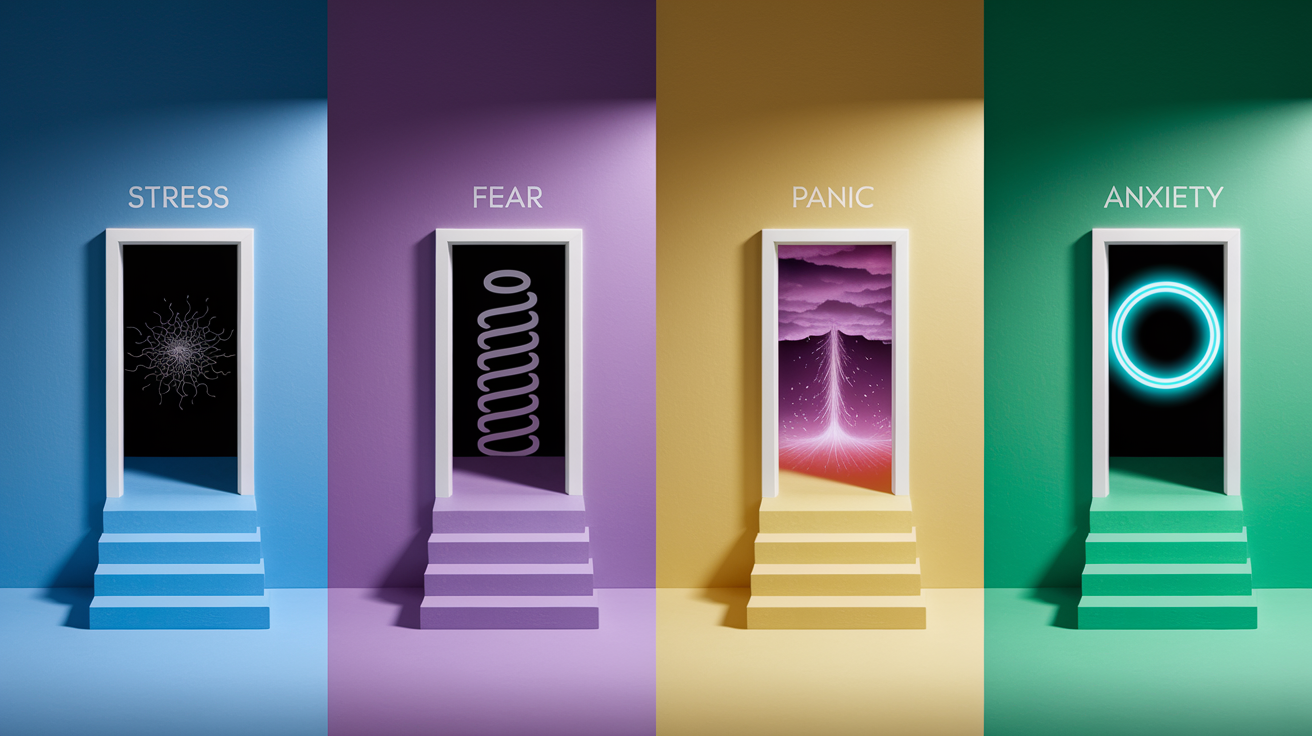
Stress and anxiety overlap, but they aren’t the same. Stress is your body’s reaction to a specific demand or pressure. A deadline, a conflict, a busy week. It usually has a clear cause and fades when the situation resolves. Short bursts of stress can even be helpful. They sharpen focus, speed up reaction time, help you perform under pressure. Anxiety doesn’t need a specific trigger. It can linger long after the stressor is gone, or show up when there’s no obvious reason for it. There are no performance benefits. It just drains you.
Fear is immediate. It’s what you feel when you see a snake on the trail or a car running a red light. It’s tied to a present, identifiable threat. Anxiety is anticipatory. It’s worry about what might happen, even when the threat is distant, unlikely, or entirely hypothetical. Fear says, “I’m in danger right now.” Anxiety says, “Something bad could happen, and I won’t be able to handle it.”
Panic is anxiety at its most intense. A panic attack is a sudden surge of overwhelming fear that includes physical symptoms: chest pain, sweating, shaking, shortness of breath, nausea, a pounding heart, and a sense of impending doom. It peaks quickly, usually within minutes, and can feel like you’re dying or losing your mind. The attack itself isn’t dangerous, but it’s terrifying. One isolated panic attack can happen to anyone under extreme stress. Repeated, unexpected attacks, especially if you start avoiding situations because you’re afraid of having another one, suggest a panic disorder.
How Anxiety Can Make You Feel in Daily Situations
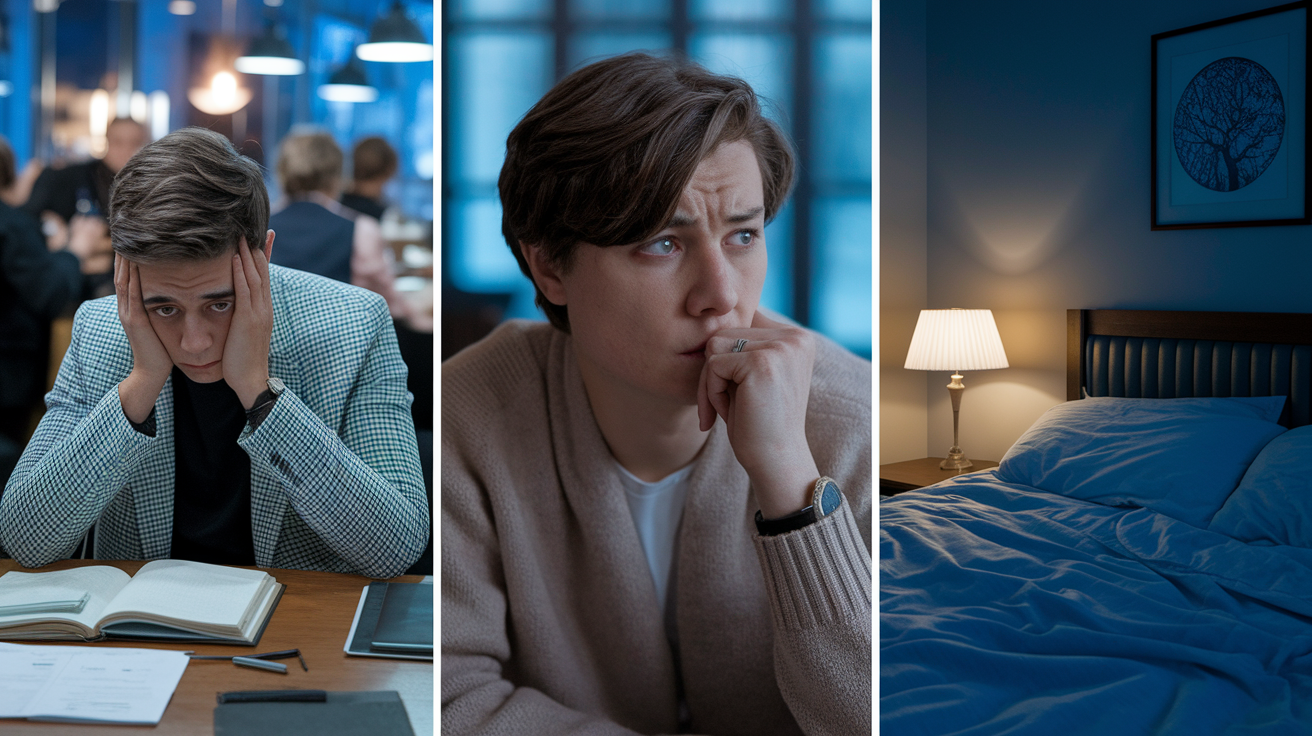
Anxiety doesn’t stay abstract. It shows up in your day to day life in specific, often predictable ways. At work, it might look like procrastination driven by fear of failure, trouble making decisions because you’re second guessing everything, or physical symptoms that make it hard to focus during meetings. You might avoid speaking up, skip opportunities, or overwork yourself trying to prevent mistakes that probably won’t happen.
In social settings, anxiety can make you feel like everyone is watching and judging you. Your mind might go blank mid conversation. You might rehearse what you’ll say, then freeze when it’s time to talk. Afterward, you replay every interaction, convinced you said something wrong. Physical symptoms (sweating, blushing, trembling, nausea) can make the whole experience feel unbearable, so you start declining invitations or leaving early.
In relationships, anxiety can show up as constant need for reassurance, fear of conflict, or worry that the other person will leave. You might overanalyze texts, avoid difficult conversations, or feel irritable and snappy without meaning to be. Sleep suffers. You lie awake replaying the day or running through tomorrow’s to do list. Your body feels wired, your mind won’t settle, and you wake up already tired.
Common situations that trigger or amplify anxiety:
- Public speaking, presentations, or being the center of attention
- Social gatherings, especially with people you don’t know well
- Performance reviews, tests, or high stakes deadlines
- Health concerns or medical appointments
- Relationship conflicts or uncertainty about the future
When the Way Anxiety Makes You Feel Suggests a Disorder
Not all anxiety is a disorder. Short term anxiety in response to a real challenge (a job interview, a move, a health scare) is normal. It’s uncomfortable, but it usually fades once the situation resolves. An anxiety disorder is different. The worry is persistent, excessive, and out of proportion to the situation. It interferes with your ability to work, sleep, enjoy things, or maintain relationships. It doesn’t ease up when the stressor passes.
Three questions to help you assess whether your anxiety might be more than situational:
-
Does anxiety interfere with important activities? Are you skipping work, avoiding social events, canceling plans, or pulling back from things you used to enjoy because of how you feel?
-
Is your anxiety constant, severe, or overwhelming? Does it feel like it’s always humming in the background, or does it spike into panic attacks that leave you shaky and scared?
-
Is your anxiety out of proportion to the actual risk? Are you catastrophizing about everyday situations, feeling terrified of things that are statistically very unlikely, or reacting to minor stressors as if they’re life threatening?
If you answered yes to one or more of these, it’s worth talking to a clinician. Some anxiety disorders have specific patterns. Generalized anxiety disorder involves chronic, excessive worry about multiple areas of life (health, money, relationships, work), often with physical symptoms like muscle tension, fatigue, and trouble concentrating. Panic disorder includes recurrent, unexpected panic attacks and fear of having more. Social anxiety disorder centers on intense fear of judgment or embarrassment in social situations. Health anxiety involves persistent worry about having a serious illness, often triggered by normal body sensations.
| Situation | When to Seek Urgent Evaluation |
|---|---|
| Chest pain during a panic attack | If you’re not sure it’s anxiety, or if it’s your first time, get checked. Chest pain can signal a heart problem. |
| Severe shortness of breath | If you can’t catch your breath or your lips or fingers turn blue, call 911. |
| Thoughts of self-harm or suicide | Call 988 (Suicide and Crisis Lifeline) or go to an emergency room immediately. |
| Sudden, severe confusion or inability to function | Seek emergency care. This could indicate a medical crisis unrelated to anxiety. |
Practical Ways to Calm How Anxiety Makes You Feel
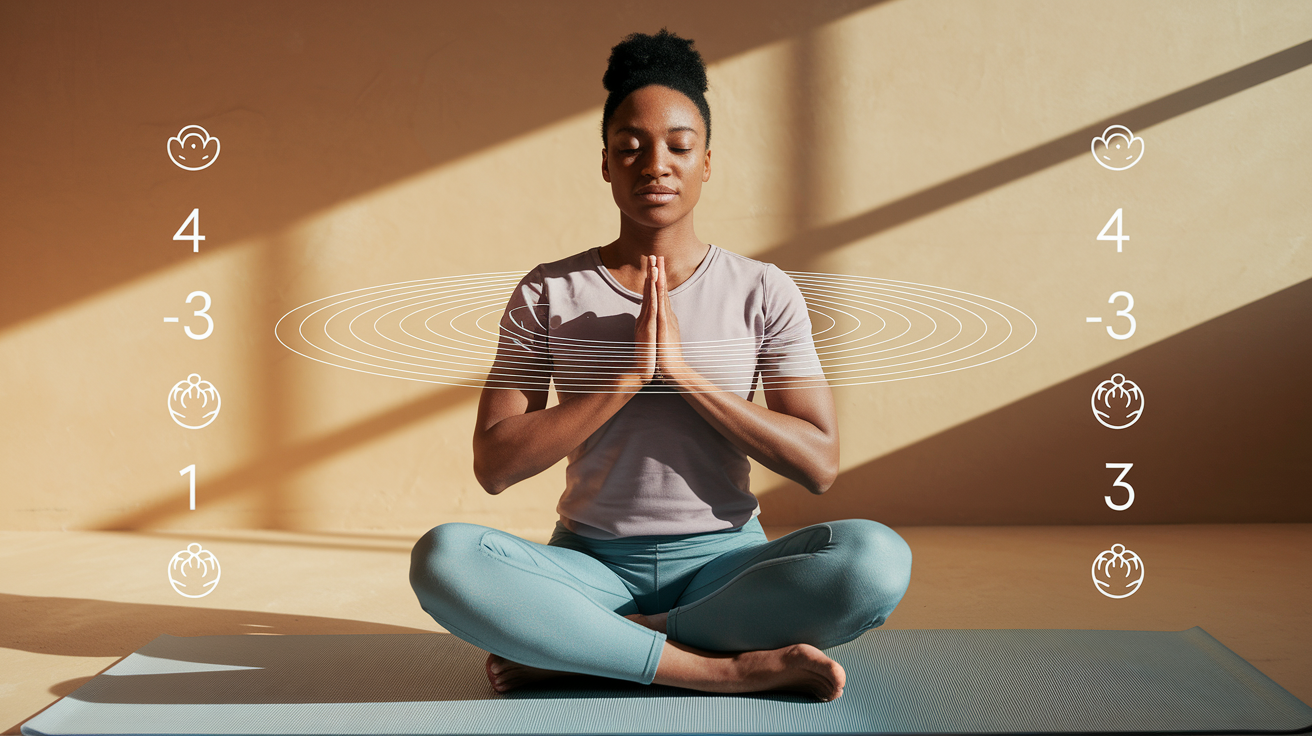
When anxiety spikes, your body needs help shifting out of fight or flight mode. Deep, slow breathing is one of the fastest ways to signal safety to your nervous system. Try breathing in for a count of four, holding for four, and exhaling for six or eight. The longer exhale activates your parasympathetic nervous system, which calms your heart rate and eases muscle tension. You can do this anywhere. At your desk, in your car, before a meeting.
Grounding techniques pull your attention out of racing thoughts and back into the present moment. One common method is the 5-4-3-2-1 exercise: name five things you can see, four you can touch, three you can hear, two you can smell, and one you can taste. It sounds simple, but it interrupts the anxiety loop and gives your brain something concrete to focus on. Progressive muscle relaxation works similarly. Tense and release each muscle group, starting with your toes and working up to your shoulders, to release stored physical tension.
Routine matters, especially around sleep. Anxiety often spikes at night when your mind has nothing else to do. A calming pre-bed routine (dim lights, no screens for 30 minutes, a warm shower, light stretching, or a few minutes of slow breathing) can help your body recognize that it’s time to downshift. Regular movement during the day, even a 10 minute walk, helps burn off excess adrenaline and cortisol. Journaling before bed can offload worries onto paper so they’re not circling in your head all night.
Six calming practices to try when anxiety feels high:
-
Box breathing. Inhale for 4 counts, hold for 4, exhale for 4, hold for 4, repeat for 2 to 3 minutes.
-
Body scan meditation. Lie down and mentally scan from your toes to your head, noticing tension without trying to fix it.
-
Cold water on your face. Splashing cold water or holding a cold pack to your face can activate the dive reflex and slow your heart rate.
-
Bilateral stimulation. Tap your knees alternately, walk slowly while focusing on each step, or hold an ice cube in each hand to engage both sides of your brain and calm the nervous system.
-
Gentle movement. Yoga, stretching, Tai Chi, or slow walking help release muscle tension and lower stress hormones.
-
Distraction with purpose. Call a friend, play a simple game, organize a drawer, or do a small task that requires just enough focus to interrupt the worry spiral.
Long Term Options for Reducing How Anxiety Feels

If anxiety is persistent, interfering with your daily life, or not responding to self-care strategies, treatment can make a real difference. Cognitive behavioral therapy (CBT) is one of the most effective approaches. It helps you identify and change thought patterns that fuel anxiety (like catastrophizing or assuming the worst) and teaches you how to respond to anxious feelings in healthier ways. Exposure therapy, often part of CBT, involves gradual, controlled exposure to the situations or sensations you fear, which reduces the anxiety response over time. Both are usually short term, focused interventions, not lifelong commitments.
Medications can be helpful, especially when anxiety is severe or when therapy alone isn’t enough. Antidepressants, particularly SSRIs (selective serotonin reuptake inhibitors), are the most commonly prescribed medications for anxiety disorders. They take a few weeks to build up in your system, but they can reduce baseline anxiety and make it easier to engage in therapy and daily life. Benzodiazepines work quickly and are effective for panic attacks, but they carry a high risk of dependence and are generally not recommended for long term use or for generalized anxiety. Your prescriber can help you weigh options based on your symptoms, history, and goals.
Lifestyle changes support both therapy and medication. Regular exercise, consistent sleep, reduced caffeine and alcohol, and stress management practices like meditation or yoga can lower your overall anxiety load. These aren’t cures, but they create a foundation that makes other treatments more effective. Many people find that a combination of therapy, medication (when needed), and lifestyle adjustments works better than any single approach alone.
| Treatment | What It Helps | Key Notes |
|---|---|---|
| Cognitive behavioral therapy (CBT) | Targets anxious thoughts, avoidance behaviors, and coping skills | Evidence based; usually 12 to 20 sessions; skills you can use long term |
| SSRIs and antidepressants | Reduce baseline anxiety, improve mood stability | Takes 4 to 6 weeks to work; generally safe for long term use |
| Benzodiazepines | Fast relief for panic attacks or acute anxiety | High dependence risk; not for daily use or GAD |
| Lifestyle and self-care | Lowers stress hormones, improves sleep and resilience | Works best combined with therapy or meds; not a standalone fix for disorders |
Final Words
You notice your chest tightening, sleep getting ragged, and your mind racing — this piece walked through what anxiety feels like in body and mind, its physical signs, and emotional impact so you can spot patterns.
We explained the body’s stress response, how anxiety shows up in daily life, when to consider evaluation, quick calming steps to try now, and longer-term options.
If you’re asking how does anxiety make you feel, tracking what happens and trying a few low-risk strategies often helps. If things worsen, seek care. Small steps add up and steadier days are possible.
FAQ
Q: What is life like for someone with anxiety, and can anxiety make you feel unwell?
A: Life with anxiety often feels like ongoing physical and mental unease; yes, anxiety can make you feel unwell, causing fatigue, sleep problems, stomach changes, and low energy. Track patterns and seek help if it interferes.
Q: Can anxiety flare?
A: Anxiety can flare. Flares often follow stress, poor sleep, skipped meals, caffeine, or hormonal shifts. During a flare use 5-4-3-2-1 grounding, slow exhale breathing, hydrate, and note what triggered it.
Q: How to deal with chronic anxiety?
A: To deal with chronic anxiety, start with steady routines: sleep, gentle daily movement, limit caffeine, and brief breathing or journaling. Track frequency and severity, try CBT for skills, and see a clinician if it affects daily life.
Comments are closed