
Can you stop bloating and gas in 15 minutes?
Yes — this post gives safe, fast steps to ease pressure now.
You’ll get simple, low-risk tactics: warm sips, a heating pad, gentle walking or yoga poses, a short belly massage, simethicone or herbal tea, and breathing tricks that often help within 10 to 30 minutes.
We also show what to track for your clinician and which signs need prompt care.
Read on for clear, practical moves that actually reduce discomfort quickly.
Fast-Acting Relief Methods for Bloating and Gas

Bloating usually happens when gas gets trapped in your digestive tract or things slow down too much. Somewhere between 10% and 25% of people deal with it now and then, and about 18% say it shows up at least once a week. You’ll feel it as tightness, swelling, or that “about to burst” sensation across your belly. Sometimes your stomach actually looks bigger or rounder.
Fast relief matters because the longer gas sits there, the more pressure builds. And the more uncomfortable you get. Taking immediate steps to get things moving, relax your abdominal muscles, or cut down on swallowed air can shift that pressure pretty quickly. You might notice relief in 10 to 30 minutes. Small changes can stop the cycle before it gets worse.
Quick fixes work three ways: they help trapped gas move along and exit, they relax muscle tension that’s holding gas in place, or they prevent new air from getting into your system. These aren’t permanent solutions, but they’ll reduce the immediate pressure while you figure out what’s really going on.
Things you can do in the next 10 to 15 minutes:
- Sip something warm slowly. Plain warm water or herbal tea works.
- Put a warm compress or heating pad on your lower belly.
- Take an over-the-counter simethicone product like Gas-X with a little water.
- Use activated charcoal if you’ve tried it before and know it’s safe for you.
- Stand up and walk gently for five to ten minutes, inside or outside.
- Try a light clockwise belly massage with gentle pressure, starting at your lower right side.
- Slow down your breathing with a longer exhale. Breathe in for four counts, out for six.
- Skip carbonated drinks, sparkling water, or chewing gum until the bloating gets better.
Dietary Adjustments That Help With Gas and Bloating Fast
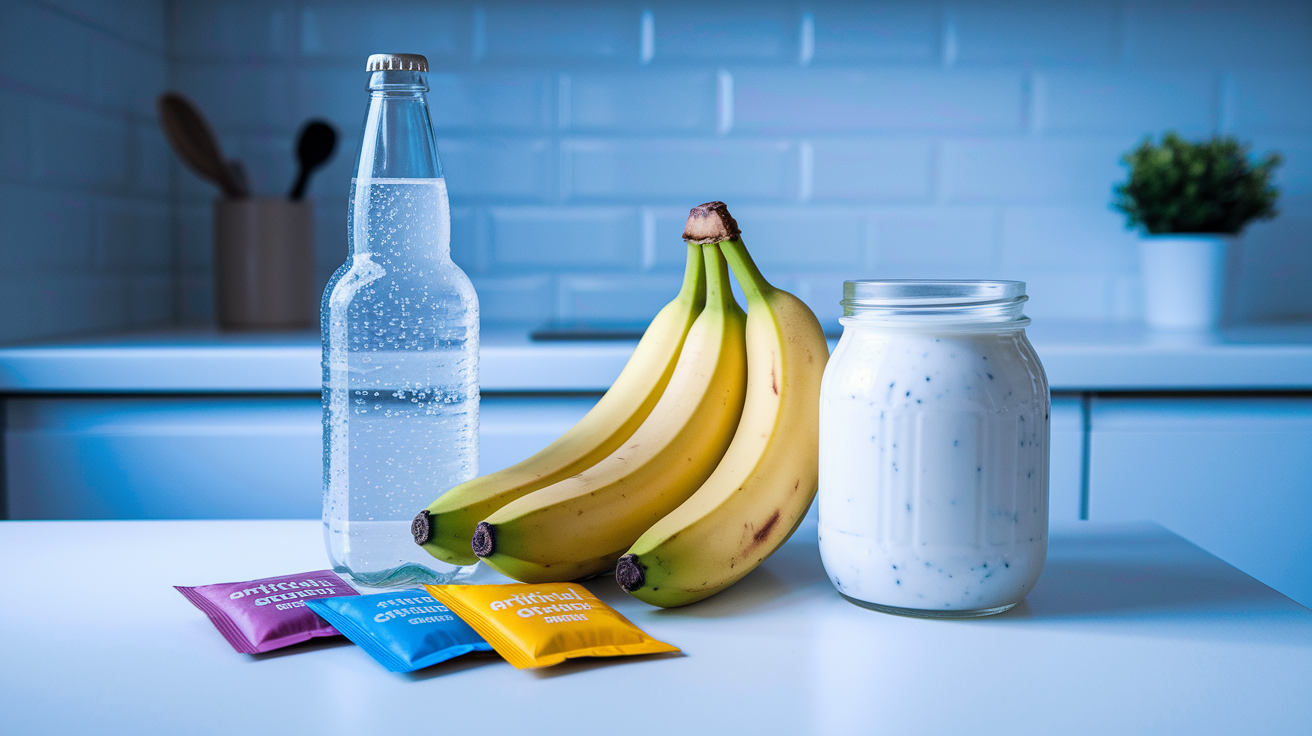
Some foods add gas to your system or slow everything down. Others actually help by supporting smoother digestion or offsetting fluid retention. High-salt meals pull water into your tissues and make your abdomen feel heavier. High-fat meals take forever to digest, so gas just sits there longer. Carbonated drinks release gas straight into your stomach. Artificial sweeteners and sugar alcohols often cruise right through your small intestine undigested, and when they hit your colon, bacteria ferment them into gas. Changing what and how you eat can reduce symptoms in a few hours.
Chewing slowly and thoroughly cuts down on how much air you swallow. Smaller, more frequent meals keep your stomach from getting overstretched, which lowers that pressure and fullness feeling. A food diary helps you spot patterns. You’ll see which specific ingredients consistently set you off.
| Food or Drink | Effect on Bloating |
|---|---|
| Carbonated drinks | Add gas bubbles directly to the stomach; worsen bloating and distension |
| Bananas | High in potassium, which offsets sodium and reduces fluid retention |
| Yogurt with live cultures | Probiotics support balanced gut bacteria and may reduce gas production |
| Artificial sweeteners (sorbitol, xylitol, maltitol) | Fermented by gut bacteria in the colon, producing excess gas and cramping |
Helpful Movements and Positions for Rapid Gas Relief

Moving your body gets the muscles lining your digestive tract working. That’s called peristalsis. When those muscles contract in waves, trapped gas moves along and can exit more easily. Light activity also cuts water retention and gets your circulation going, both of which help with that tight, swollen feeling. You don’t need anything intense. A short walk, gentle stretching, or simple yoga poses can give you noticeable relief in 10 to 20 minutes.
Certain positions compress or stretch your abdomen in ways that create pathways for gas to move. Gentle pressure from a yoga pose or pulling your knees in can shift pockets of trapped air. Diaphragmatic breathing, where you breathe deeply into your belly instead of shallowly into your chest, massages your intestines from the inside and reduces tension.
Movements and positions to try now:
- Child’s pose: Kneel on the floor, sit back on your heels, and fold forward with your arms extended or resting alongside your body. Hold for one to two minutes.
- Spinal twist: Lie on your back, bring one knee across your body toward the opposite side, and hold for 30 to 60 seconds on each side.
- Knee-to-chest: Lie flat, pull one or both knees gently toward your chest, and hold for 30 seconds to one minute.
- Gentle walk: Walk at a comfortable pace for five to ten minutes, ideally after a meal.
- Diaphragmatic breathing: Sit or lie down, place one hand on your chest and one on your belly, breathe in slowly so your belly rises, then exhale fully. Repeat for three to five minutes.
Over-the-Counter Options That Work Quickly for Bloating and Gas
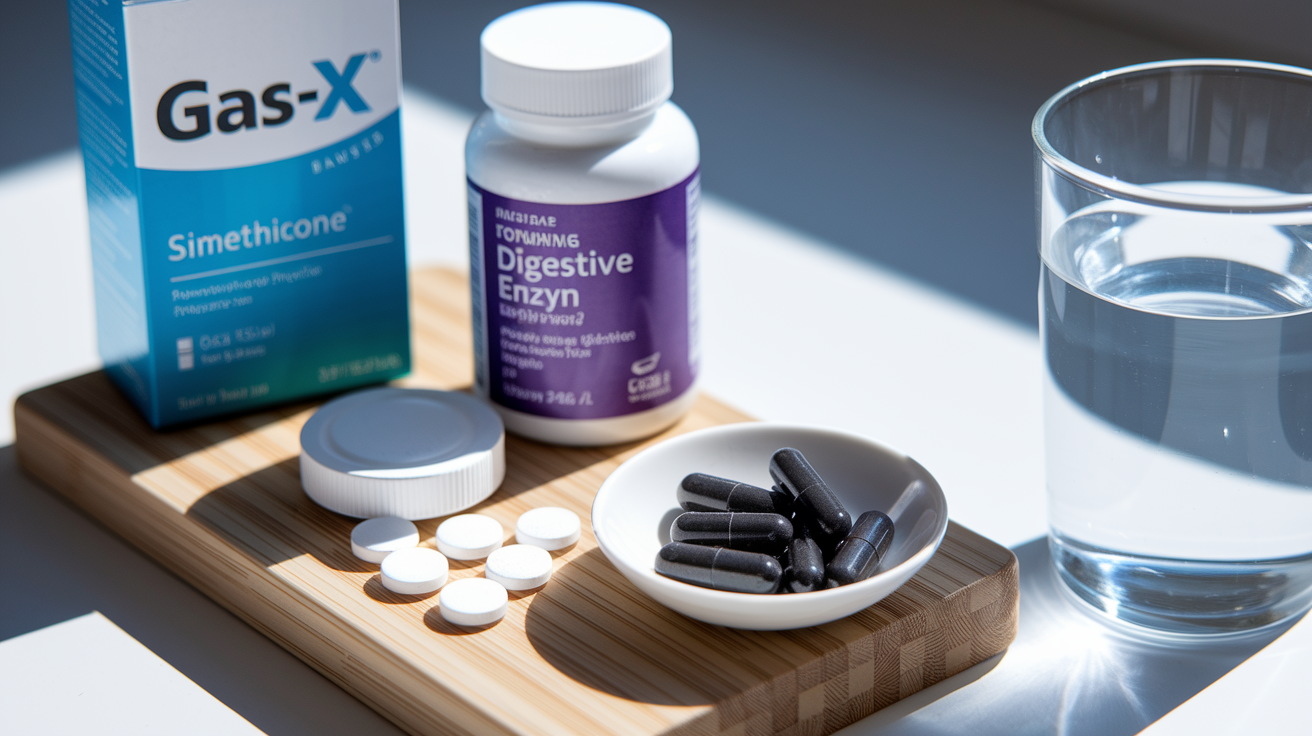
Several over-the-counter products go after gas and bloating in different ways. Simethicone, the stuff in Gas-X and most store brands, breaks up gas bubbles in your stomach and intestines so it’s easier for the gas to pass. Antacids like Tums or Pepto-Bismol reduce stomach acid and can help when bloating’s tied to acid reflux or indigestion. Digestive enzyme supplements help break down fats, proteins, and carbs, which might reduce gas if your body struggles with certain foods. Activated charcoal absorbs excess gas in your digestive tract, though you need to be careful because it can also absorb medications and nutrients.
These work best when you combine them with basic behavior changes. If you’re bloated after a big meal and you take simethicone but then immediately chug a large soda, the relief won’t last. Use these as part of a bigger approach that includes slower eating, smaller portions, and movement.
Common over-the-counter remedies and what they do:
-
Simethicone (Gas-X): Breaks up gas bubbles so they’re easier to get rid of. Acts quickly, usually within 30 minutes. Safe for most people when used as directed.
-
Antacids (Tums, Pepto-Bismol): Neutralize stomach acid and reduce inflammation in your digestive tract. Helpful when bloating comes with heartburn or a sour stomach.
-
Digestive enzyme supplements: Contain enzymes that help break down lactose, fats, or complex carbs. Useful if you think you have a specific food intolerance or slow digestion.
-
Activated charcoal: Absorbs gas molecules in your intestines. Take it at least two hours away from medications and meals to avoid interference. Use sparingly and only if you’ve tried it before without issues.
Herbal Teas and Natural Carminatives for Quick Gas Relief

Some herbs relax the smooth muscle tissue in your digestive tract and reduce spasms, which helps trapped gas move through more easily. They’re called carminatives. Peppermint tea is one of the most studied. Peppermint has menthol, which relaxes your gastrointestinal muscles and reduces cramping. Ginger tea reduces inflammation and supports motility, those rhythmic contractions that push food and gas along. Chamomile has mild anti-inflammatory and antispasmodic properties and can calm a tense, crampy stomach.
Warm liquids in general feel soothing. The heat relaxes your abdominal muscles and can ease that tight sensation. Sipping slowly keeps you from gulping air, which would just add more gas. Brew a cup of peppermint, ginger, or chamomile tea, let it cool slightly so it’s comfortably warm, and drink it over five to ten minutes. A lot of people notice less bloating and a calmer stomach within 15 to 30 minutes. Fennel seeds, either chewed plain or steeped as a tea, also work as a carminative. They’ve been used traditionally to relieve gas and bloating.
Hydration, Fiber Timing, and Constipation-Linked Bloating

Dehydration slows everything down. When your body doesn’t have enough water, your intestines absorb more fluid from the stool. That makes it harder and slower to move. The backup creates bloating and a heavy, uncomfortable feeling. Drinking enough water throughout the day keeps things moving and helps prevent constipation, which is one of the most common reasons for persistent bloating. Plain water’s your best bet. Sparkling water and carbonated drinks add gas, which makes bloating worse even if you’re trying to hydrate.
Fiber’s important for digestive health, but timing matters. If you suddenly increase your fiber without drinking more water, the fiber can sit in your intestines and ferment, making more gas. Gradual increases with consistent hydration reduce that risk. If you’re dealing with constipation-related bloating right now, focus on hydration first, then gentle movement. A short walk plus a tall glass of water often gets a bowel movement going within a few hours.
If bloating shows up regularly and you think a food intolerance might be the culprit, try a two-week elimination test. Dairy’s a common trigger. Remove all milk, cheese, yogurt, and ice cream for two weeks and use lactose-free milk instead. If bloating improves during that window, lactose intolerance’s likely. Reintroduce dairy slowly and watch for symptoms to come back. This simple test gives you useful information to bring to a clinician if you need more help.
Identifying Trigger Foods and Eating Patterns That Cause Fast-Onset Bloating
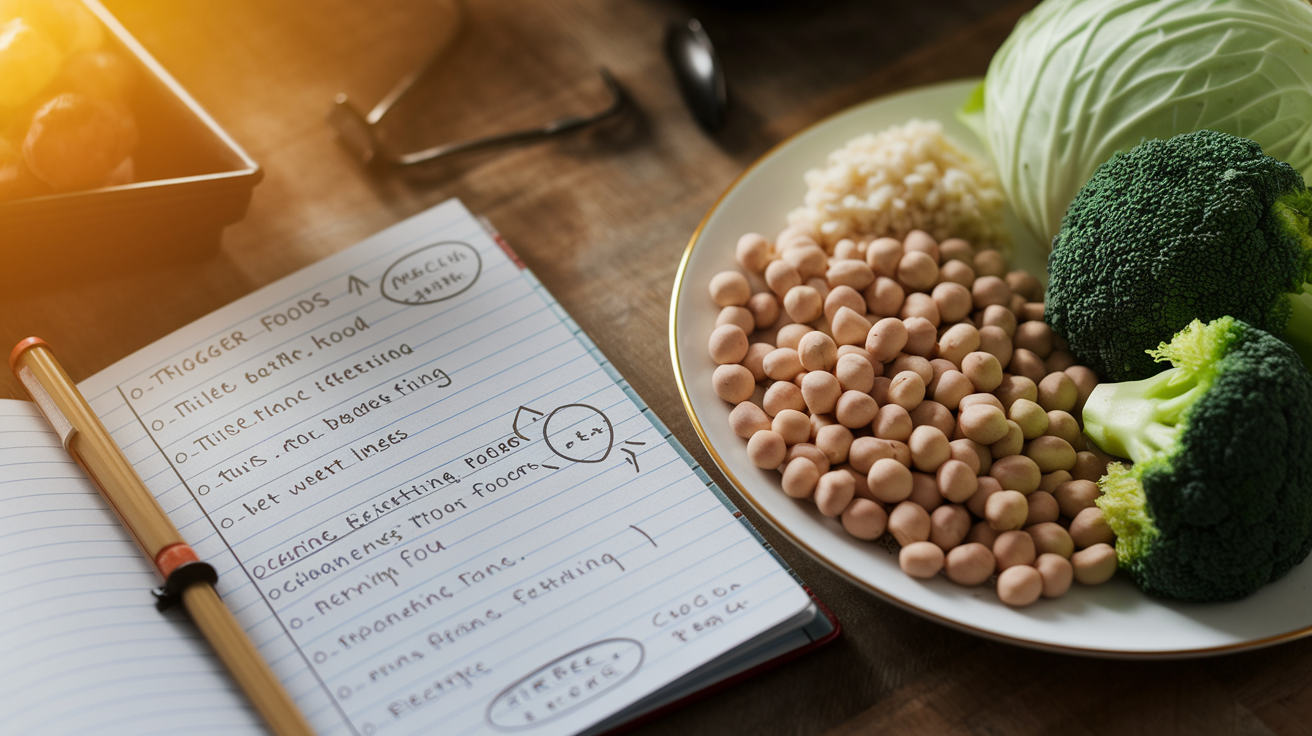
Certain foods are notorious for producing gas because they contain carbs that are tough to digest or because they encourage fermentation in the colon. Beans, broccoli, cabbage, and Brussels sprouts all have complex sugars that gut bacteria break down into gas. Artificial sweeteners, especially sugar alcohols like sorbitol, xylitol, and maltitol, cruise through your small intestine mostly undigested and ferment in your colon. Diet sodas and sugar-free gum are common sources. Carbonated drinks add gas straight to your stomach, and chewing gum makes you swallow extra air with every chew.
Keeping a food diary helps you spot patterns. Write down what you ate, when you ate it, and when bloating started. After a week or two, you’ll often see clear connections. Maybe bloating always shows up an hour after dairy. Or only on days when you had a large lunch. Or consistently after sugar-free snacks. Once you identify the pattern, you can test it by removing the suspected trigger for a few days and watching what happens.
Common fast-trigger foods and drinks to watch:
- Beans (black beans, kidney beans, chickpeas, lentils)
- Cruciferous vegetables (broccoli, cabbage, cauliflower, Brussels sprouts)
- Carbonated beverages (soda, sparkling water, beer)
- Sugar alcohols (sorbitol, xylitol, maltitol, erythritol, found in sugar-free products)
- Chewing gum (increases swallowed air and often contains sugar alcohols)
Stress, Breathing, and Nervous-System Factors Behind Gas and Bloating

Stress directly messes with digestion. When your nervous system flips into “fight or flight” mode, blood flow gets redirected away from your digestive organs and toward your muscles. Digestion slows down. Food and gas sit longer in your intestines, and bloating increases. Shallow, rapid breathing, which often comes with stress, leads to more swallowed air and can make bloating worse.
Deep, slow breathing activates your parasympathetic nervous system, which supports rest and digestion. Diaphragmatic breathing, where you breathe deeply into your belly rather than your chest, has a direct calming effect on your digestive tract. It also gently massages your intestines and encourages trapped gas to move. Warm herbal tea, gentle movement, and a few minutes of intentional breathing can shift your nervous system and give you relief even when the bloating has a stress-related piece.
Simple diaphragmatic breathing exercise:
Sit comfortably or lie on your back. Place one hand on your chest and one hand on your belly. Breathe in slowly through your nose for a count of four, letting your belly rise while your chest stays relatively still. Hold for a count of two. Breathe out slowly through your mouth for a count of six, feeling your belly fall. Repeat for three to five minutes. This calms your nervous system, reduces abdominal tension, and often gives noticeable relief from gas and bloating within a few minutes.
When Gas and Bloating Need Medical Attention

Most bloating’s uncomfortable but not dangerous. It goes away with basic changes to eating, movement, and stress management. But some symptoms point to a more serious underlying condition and need prompt medical evaluation. Severe, sudden abdominal pain that doesn’t ease with movement or gas relief can signal an obstruction, perforation, or another acute problem. Persistent vomiting or diarrhea, especially when paired with bloating, might point to an infection, inflammatory bowel disease, or another digestive disorder.
Chronic bloating that doesn’t improve despite consistent lifestyle changes needs further investigation. Conditions like irritable bowel syndrome (IBS), small intestinal bacterial overgrowth (SIBO), celiac disease, gastroesophageal reflux disease (GERD), and food intolerances can all cause persistent bloating. A primary care provider or gastroenterologist can order tests, review your symptom pattern, and guide you toward the right diagnosis and treatment plan.
Get immediate medical attention if you experience any of these:
- Severe, unrelenting abdominal pain that gets worse over time
- Persistent vomiting or diarrhea lasting more than 24 hours
- Blood in your stool or vomit
- Unexplained weight loss over several weeks alongside bloating
- Severe abdominal distension with a hard, rigid stomach that doesn’t soften with gas relief measures
Final Words
In the action, you learned short, fast steps—sip a warm drink, try a gentle walk or abdominal massage, take simethicone, or use a warm compress—to ease tightness quickly. You also saw quick diet swaps, simple movements and breathing tips, herbal-tea options, and safe over-the-counter choices.
Track what you eat, when symptoms start, and what makes them better or worse.
If symptoms persist or you see red flags, contact a clinician. For a quick reminder of what helps with bloating and gas fast, start with the simple starter kit above—small moves often bring relief.
FAQ
Q: How can I stop gas and bloating fast?
A: Stopping gas and bloating fast means moving trapped air and relaxing your belly; try sipping warm tea, a warm compress, a gentle walk, light abdominal massage, slow deep breaths, simethicone, and avoid carbonation.
Comments are closed