
What if your morning routine is making your chronic fatigue worse?
Most routines ask you to do more when your body needs less.
This piece gives a short, low-effort plan that helps you get up without crashing, with simple steps like staged transitions, bedside hydration, gentle seated movement, and low-stimulus starts.
You’ll learn how to pace the first 30 to 60 minutes, pick a minimal version for bad days, and track what helps so you can protect your energy.
Read on for a calm, practical routine you can try tomorrow.
A Quick Morning Routine for Low-Energy Days (Start Here)

When you’re dealing with chronic fatigue, your morning can’t be about doing more. It’s about getting yourself upright without crashing before 10 a.m.
A good low-energy routine isn’t a productivity system. It’s a survival tool. You need a short sequence of minimal-effort steps that let your body wake up gradually, without sudden movements, complex decisions, or tasks that demand focus before your nervous system has stabilized. The goal is to reduce physical and cognitive load during the first 30 to 60 minutes after waking.
Here’s a simple five-step routine that conserves energy and supports slow activation:
1. Stay horizontal for 5 to 10 minutes after waking. Let your eyes adjust to light, take a few slow breaths, and give your heart rate and blood pressure time to stabilize before sitting up. This prevents dizziness and reduces the sudden demand on your cardiovascular system.
2. Drink water from your bedside. Hydration first thing helps counteract overnight fluid loss and supports blood volume, which matters if you deal with orthostatic symptoms. Keep a filled water bottle within arm’s reach so you don’t have to get up.
3. Sit on the edge of the bed for 1 to 2 minutes before standing. This staged transition gives your body time to adjust to position changes and reduces the risk of lightheadedness or muscle fatigue from moving too quickly.
4. Do light seated stretches or a few slow ankle circles. Gentle, low-effort movement promotes circulation without overexertion. You’re not trying to “wake up” your muscles. Just encouraging gentle blood flow.
5. Limit sensory input during the first 15 minutes. Keep lights dim, avoid checking your phone immediately, and skip the news or anything that requires active processing. Reducing early sensory load protects cognitive energy for the tasks that actually matter.
Each of these steps works with your body’s limited energy reserves rather than against them. You’re creating a predictable structure that your nervous system can follow without extra decision-making, and you’re pacing physical demands so you don’t drain your battery before the day has even started.
Foundational Pacing Strategies to Prevent Overexertion

Pacing is the practice of regulating your activity to match your available energy. It’s one of the most effective tools for managing chronic fatigue symptoms. In the morning, pacing means accepting that your body needs time to “boot up” and that rushing or pushing through early fatigue often leads to post-exertional crashes later in the day.
The “80 percent rule” is a common pacing guideline. It suggests stopping an activity when you’re at about 80 percent of your perceived capacity, rather than waiting until you feel exhausted. Applied to mornings, this means you don’t keep moving just because you technically can. You pause, rest, and allow recovery time between small tasks.
Micro-breaks are another essential pacing tool. After each small morning action (brushing your teeth, making coffee, getting dressed), pause for 30 seconds to two minutes. Sit down, breathe, and let your heart rate settle before moving to the next step. These brief pauses add up to meaningful energy conservation and help prevent the cumulative fatigue that builds when you chain tasks together without rest.
Here are four practical pacing strategies you can use in the morning:
Set a timer for 10-minute task windows. Work within short, defined intervals and rest for at least half that time before the next task.
Use low-stimulus warm-ups. Start with the easiest, least-demanding task first to allow your body and brain to ease into activity gradually.
Chunk tasks into single actions. Instead of “get ready,” break it into “wash face,” then rest, then “brush teeth,” then rest.
Track how you feel after each step. Notice if you’re breathing faster, feeling shaky, or starting to feel “wired but tired.” Those are early signals to pause.
Energy-Saving Hygiene and Grooming Shortcuts

Personal hygiene can be one of the most draining parts of a morning routine when you’re managing chronic fatigue. Standing in a hot shower, lifting your arms to wash your hair, and staying upright for extended periods all require sustained energy output that may not be available on low-energy days.
Seated routines are a game-changer. You can brush your teeth, wash your face, and do most grooming tasks while sitting on a stool, the edge of the tub, or a shower chair. Sitting eliminates the postural demand of standing and frees up energy for the actual task. If a full shower feels like too much, a seated partial wash (face, underarms, and key areas) using a washcloth or no-rinse cleansing wipes is a reasonable alternative that still leaves you feeling fresher.
Dry shampoo, leave-in conditioner, and products that don’t require rinsing reduce the time and physical effort required for hair care. Avoid routines that involve holding your arms above your head for long stretches, like blow-drying or intricate styling, unless you’re on a higher-energy day. On low-energy mornings, a simple pulled-back style or a quick spritz of dry shampoo is enough. The goal is to feel clean and comfortable without burning through your energy reserves before you’ve even left the bathroom.
Simple Morning Nutrition When Energy Is Limited

When energy is scarce, the idea of cooking a full breakfast can feel overwhelming or completely off the table. The key is to focus on easy, reliable options that provide stable fuel without requiring much prep, cleanup, or decision-making.
Pre-made or minimal-prep options work well for chronic fatigue. Think overnight oats prepared the night before, a protein shake or smoothie made in under two minutes, a hard-boiled egg kept in the fridge, or nut butter on a piece of toast. These choices deliver a mix of protein, fat, and slow-release carbohydrates that support steady energy without spiking and crashing your blood sugar. Eating something small and balanced also supports cardiovascular stability and helps prevent the lightheadedness or shakiness that can come from skipping food in the morning.
| Food Option | Why It Helps | Prep Time |
|---|---|---|
| Overnight oats with nut butter | Slow-release carbs, protein, and fat for stable energy; no morning cooking required | 5 minutes the night before |
| Pre-made protein shake or smoothie | Quick hydration and nutrition; minimal effort; easy to sip slowly while resting | 2 to 3 minutes |
| Hard-boiled eggs and toast | Portable protein and simple carbs; eggs can be prepped in batch; very little morning effort | 1 minute (if eggs are pre-cooked) |
Keep your breakfast options simple, repeatable, and low-effort. If decision fatigue is an issue, eat the same thing every morning for a week or two. Consistency reduces cognitive load, and your body will appreciate the predictable fuel.
Prioritization Frameworks for Low-Energy Mornings
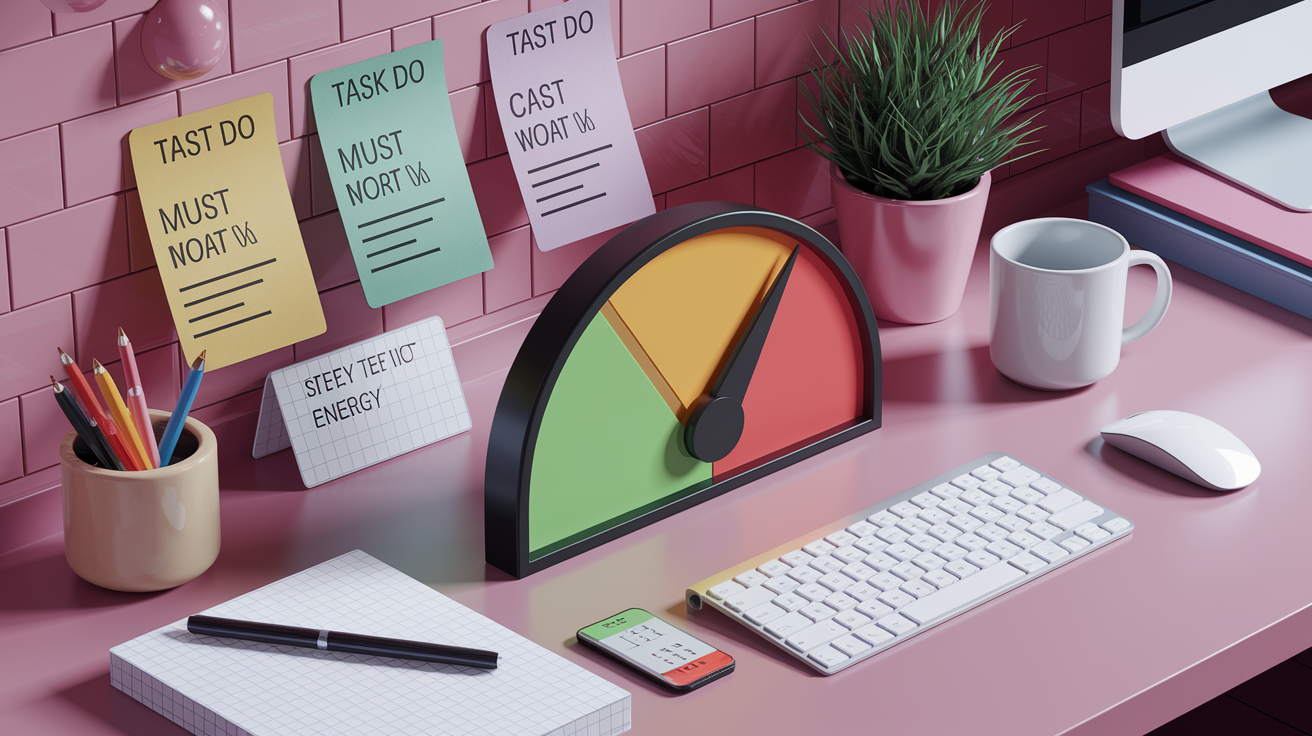
One of the biggest sources of morning overwhelm when you’re dealing with chronic fatigue is the sense that everything needs to be done right now. The reality is that most tasks can wait, and trying to do them all at once is a fast track to a crash.
A useful prioritization method is the “must-do versus can-wait” framework. Each morning, identify one or two things that truly need to happen that day (taking medication, a necessary appointment, or feeding yourself). Everything else goes into the “can-wait” category. This doesn’t mean those tasks disappear. It just means you’re not spending limited energy on them during your lowest-energy window.
Here are four simple prioritization tools that help reduce morning cognitive overload:
The one-priority rule. Pick a single task that matters most today. If that’s the only thing you accomplish, the day is still a success.
Energy budgeting. Estimate how much energy each task will cost and decide in advance which ones fit within your available budget for the morning.
Pre-written task lists. Keep a standing morning checklist so you don’t have to reinvent the plan every day. Refer to it instead of thinking through every step from scratch.
Defer non-urgent decisions. If something doesn’t need an answer or action before noon, write it down and return to it later when your cognitive energy is higher.
Customizing Your Routine Based on Symptom Severity
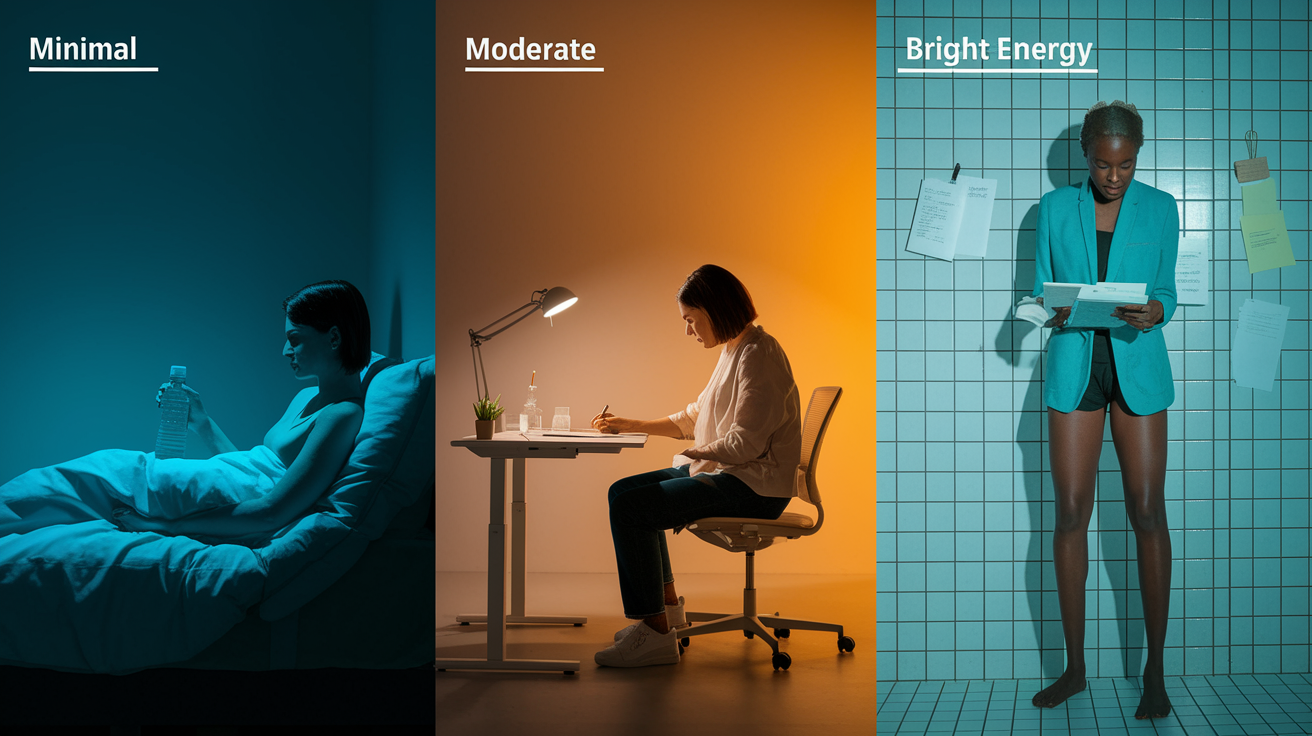
Chronic fatigue doesn’t follow a predictable pattern, so your morning routine shouldn’t be rigid. Some days you’ll have a bit more capacity. Other days, getting out of bed is the main event. Building a tiered routine lets you match your actions to your actual energy level without feeling like you’ve failed when you can’t do the “full” version.
A tiered routine has three versions: minimal, moderate, and higher-energy. You choose the version that fits how you feel when you wake up, not how you wish you felt or how you think you “should” feel. This removes the pressure to perform and replaces it with a realistic, sustainable approach.
The key is to treat the minimal version as fully legitimate. It’s not a backup plan. It’s a complete routine for a low-capacity day.
Minimal-Energy Days
On your lowest-energy mornings, your routine might include just two or three steps: stay in bed for 10 to 15 minutes after waking, drink water from your bedside, and sit up slowly when you’re ready. If you can manage a trip to the bathroom and a few sips of something with calories (a protein shake, a piece of toast), that’s enough. The rest can wait.
Moderate-Energy Days
When you have a bit more capacity, you can add a few steps: a seated partial wash or quick face rinse, a simple breakfast, and maybe one small task like checking your schedule or starting a load of laundry. You’re still pacing and resting between actions, but you can handle a slightly longer sequence without triggering a crash.
Higher-Energy Days
On days when your energy feels more stable, you can include a full shower, a more involved breakfast, light stretching, and a short planning session for the day ahead. Even on higher-energy mornings, the rule is to stop at 80 percent. Don’t use all your energy just because it’s there. Save some for the rest of the day and avoid the boom-and-bust cycle that leads to longer recovery periods.
Final Words
You now have a short, ready-to-use low-energy morning routine, simple pacing strategies, hygiene shortcuts, quick nutrition ideas, prioritization tools, and a way to scale the plan to your symptom level.
Try the 5-step routine for a few mornings—hydrate, gentle stretch, low-sensory wake-up, energy-saving grooming, and a simple breakfast. Use micro-breaks and tiered routines when needed, and jot down what helps.
Treat this as a practical guide to how to plan a low-energy morning routine for chronic fatigue. Small, steady changes often make mornings easier.
FAQ
Q: How to wake up in the morning with chronic fatigue?
A: Waking up with chronic fatigue works best with a gentle, predictable routine: drink water, sit up slowly, do three to five minutes of light stretching or breathing, eat a small snack, and delay big decisions.
Q: What are the 4 P’s of fatigue?
A: The 4 P’s of fatigue are predisposing, precipitating, perpetuating, and protective factors—predisposing: long-term vulnerability; precipitating: the trigger; perpetuating: what keeps it going; protective: coping supports.
Q: Can arthritis cause you to be tired?
A: Arthritis can make you tired by causing inflammation, chronic pain, poor sleep, and extra effort for daily tasks; some arthritis medications also cause fatigue, so tracking patterns and talking with your clinician helps.
Q: How to cure chronic fatigue naturally?
A: Curing chronic fatigue naturally isn’t guaranteed; lifestyle steps that often help include pacing activity, consistent sleep, gentle movement, balanced snacks and hydration, stress reduction, and checking iron, thyroid, and medications with your clinician.
Comments are closed