
What if most quick fixes for a bloated stomach actually ignore the real cause?
This post gives simple, natural ways that often ease bloating in minutes and cut down how often it comes back.
Try gentle belly massage, warm peppermint, a short walk after meals, and small food swaps that lower gas.
I’ll also show what foods usually trigger bloating, easy daily habits to prevent it, and clear signs that you should see a clinician.
Practical, low-risk steps you can start today.
Quick Relief for Bloating (Do These First)

These are the fastest ways to ease bloating in minutes. No prescription needed.
• Gentle clockwise belly massage for 2 to 5 minutes to move trapped gas along
• Walk slowly for 10 to 15 minutes after eating so digestion keeps moving
• Sip 1 to 2 cups of warm peppermint tea to relax stomach muscles
• Drink 250 to 300 ml of plain still water to support digestion and reduce fluid retention
• Take an over-the-counter simethicone tablet (follow the label) to break up gas bubbles
• Lie on your back and pull your knees gently to your chest for 1 to 3 minutes to release trapped air
These work because they address what’s actually causing the bloat. Movement and massage help gas travel through your digestive tract instead of sitting there. Warmth and peppermint relax tight muscles in your abdomen. Water keeps food moving smoothly and prevents constipation, which can make bloating worse. Simethicone breaks apart tiny gas bubbles so they’re easier to pass. The knees-to-chest position uses gentle pressure to nudge gas toward your colon.
Combining 2 or 3 of these usually gets faster results than sticking with just one. A solid sequence: tea first, then a short walk, then belly massage. You can repeat every hour or two if the bloating comes back.
Common Causes of a Bloated Stomach
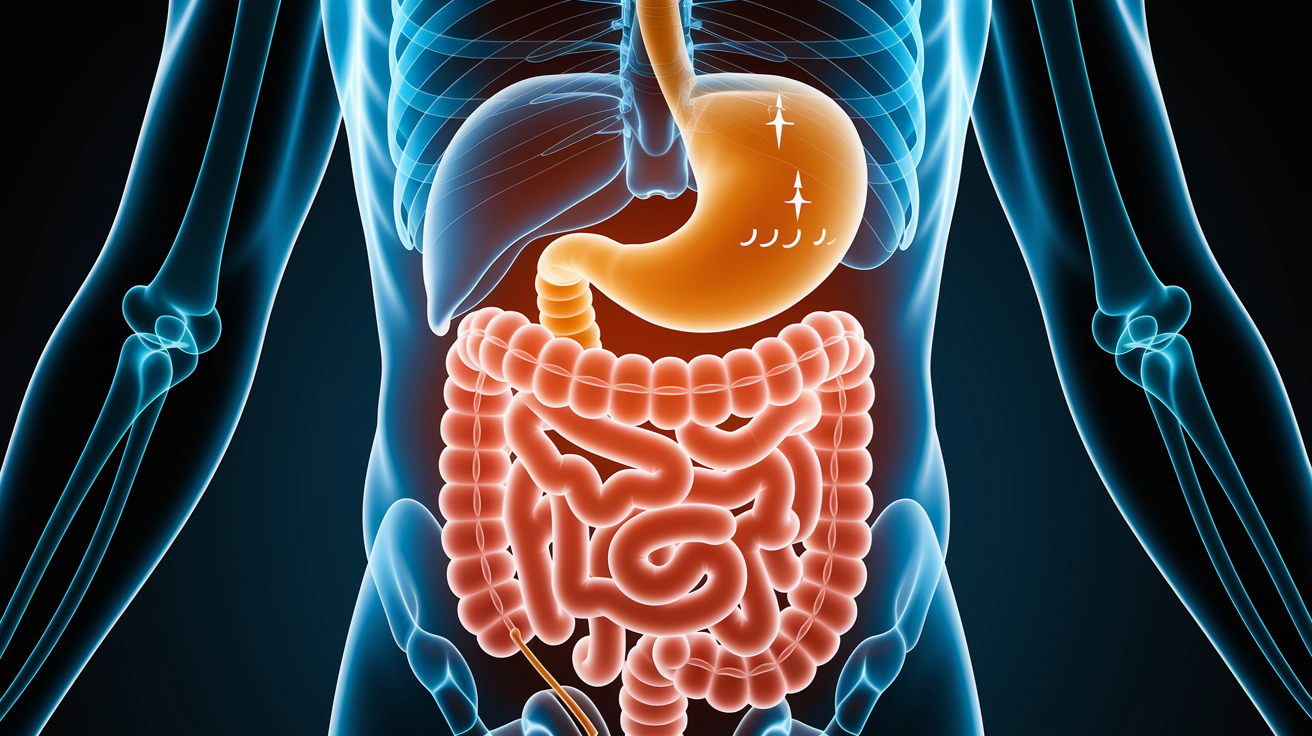
Bloating usually happens when extra gas builds up in your intestines or when food crawls through your system too slowly. Gas comes from swallowed air, bacterial breakdown of food, or carbonation. Constipation slows everything down and creates pressure. Overeating stretches your stomach and delays digestion.
Food triggers are super common. If you’re lactose intolerant, dairy bloats you. Beans, lentils, and cruciferous veggies like broccoli and cabbage produce gas when they’re being digested. High-salt meals make your body hang onto water, which puffs up your belly. Artificial sweeteners like sorbitol and xylitol pass undigested into your colon, where bacteria ferment them and create gas.
Hormones and stress matter too. Lots of people feel bloated the week before their period or during menopause because hormones slow digestion and cause fluid retention. Stress messes with gut motility, the rhythmic muscle contractions that push food along. Digestive disorders like IBS, SIBO (small intestinal bacterial overgrowth), celiac disease, and gastroparesis can turn bloating into a frequent thing. Some medications, including certain antacids, pain relievers, and fiber supplements, might worsen bloating if you start them too fast.
Foods That Commonly Trigger Bloating
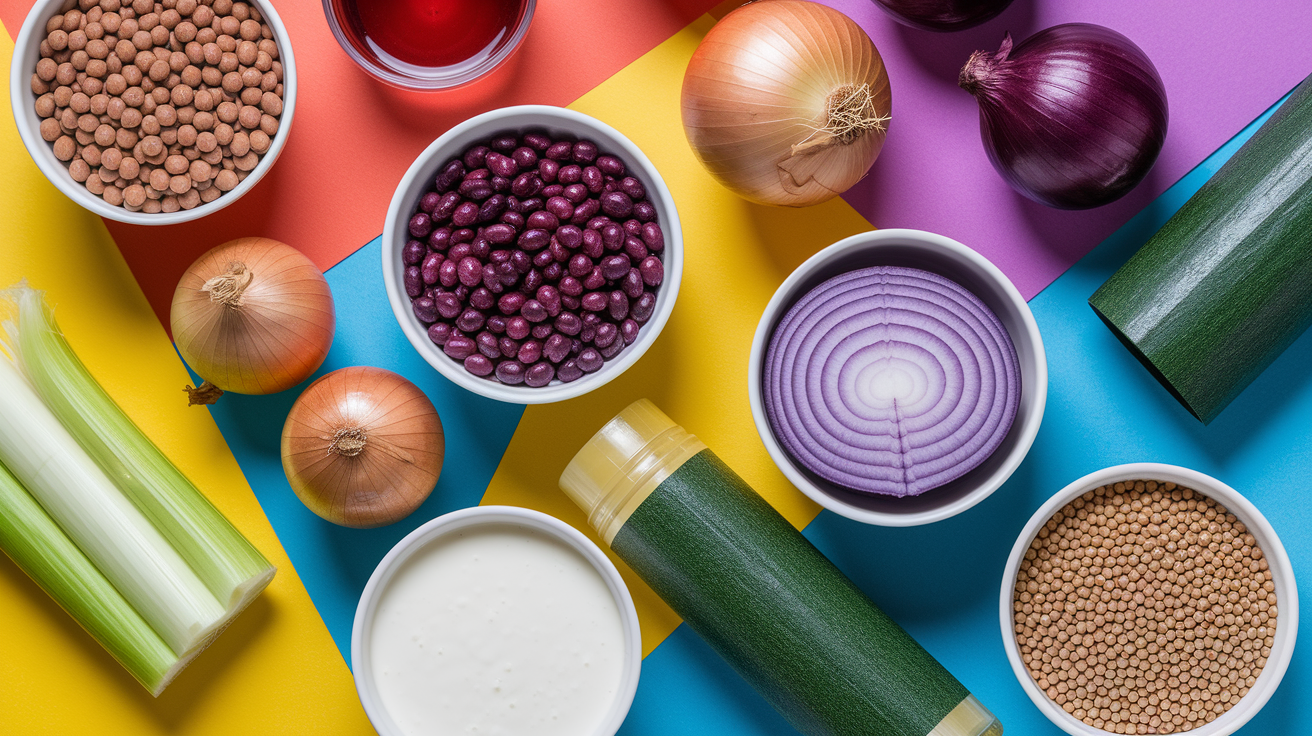
These foods and drinks are frequent bloating culprits, especially in larger portions or when you eat too quickly.
• Beans and lentils (they contain hard-to-digest sugars called oligosaccharides)
• Carbonated drinks including seltzer, soda, and sparkling water (the bubbles release gas in your stomach)
• Cruciferous vegetables like broccoli, cauliflower, cabbage, and Brussels sprouts (high in fiber and sulfur compounds)
• Onions and garlic (they contain fructans that many people don’t digest well)
• Dairy if you’re lactose intolerant (undigested lactose ferments in the colon)
• High-salt processed foods and snacks (they trigger water retention and slow digestion)
• Sugar alcohols in sugar-free gum, candy, and diet products (sorbitol, xylitol, maltitol pass undigested to the colon)
• Large fatty meals (they slow stomach emptying and delay digestion)
Foods and Drinks That Help Reduce Bloating
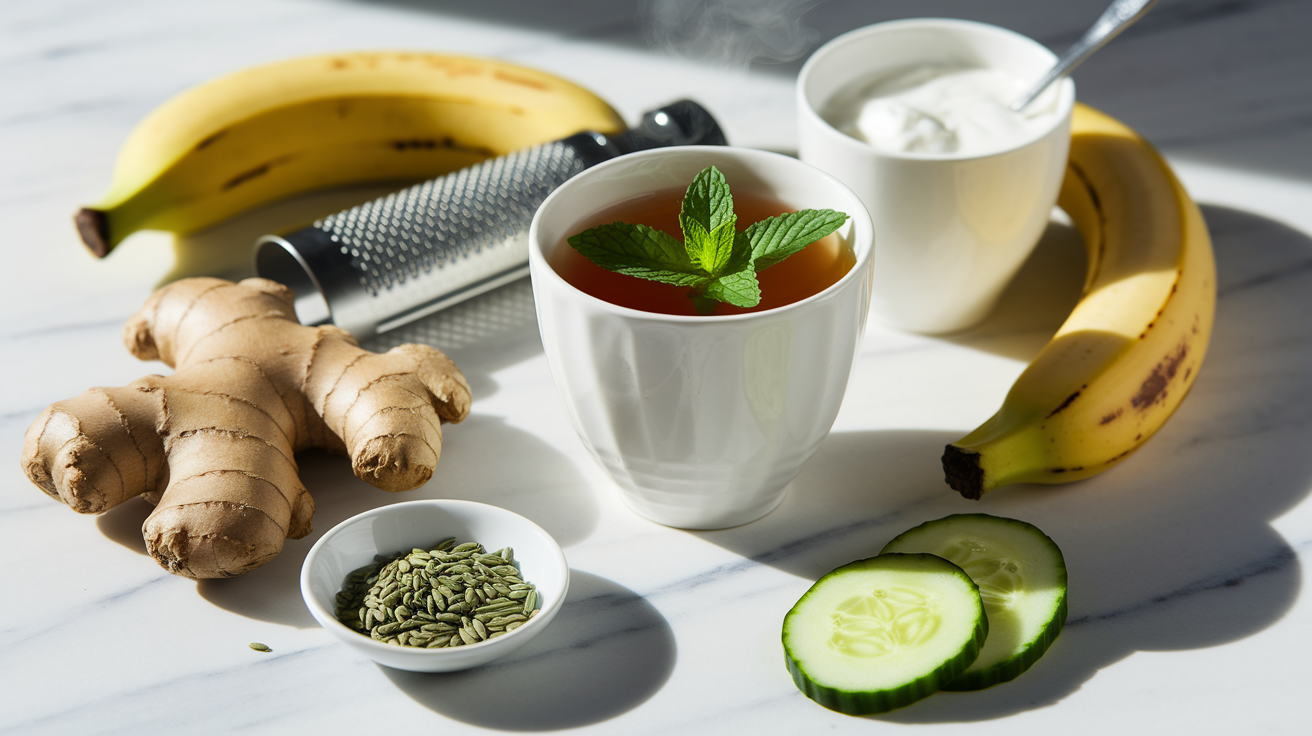
Some foods actively calm bloating by supporting digestion, reducing inflammation, or helping your body release extra fluid. Ginger has compounds called gingerols that relax intestinal muscles and speed up how fast your stomach empties. Peppermint does something similar for smooth muscle. Bananas give you potassium, which helps balance sodium and reduce water retention. Cucumbers are hydrating and naturally low in sodium. Yogurt with live active cultures (look for “contains probiotics” on the label) delivers helpful bacteria that support gut balance.
Warm water first thing in the morning can jump-start digestion and ease constipation. Fennel seeds, often chewed after meals in some cultures, reduce gas and cramping. Kiwi has an enzyme called actinidin that helps break down protein and moves food through faster.
• Fresh ginger (1 to 2 teaspoons grated in warm water or tea)
• Peppermint tea (1 to 2 cups between meals)
• Bananas (1 medium per day)
• Plain yogurt with probiotics (1/2 to 1 cup)
• Cucumbers (sliced, fresh, lightly salted)
• Warm water with lemon (first thing in the morning)
Simple At-Home Treatments That Support Digestion

A warm compress, hot water bottle, or heating pad on your belly for 10 to 15 minutes relaxes tense muscles and improves blood flow to your digestive organs. Heat works best when you’re also lying down and breathing slowly. If you don’t have a heating pad, a warm bath can do something similar.
Probiotics (live beneficial bacteria) might reduce bloating over time, especially if yours is linked to IBS or an imbalance in gut flora. Typical trial periods run 2 to 8 weeks. Look for multi-strain formulas with at least 1 billion CFUs (colony-forming units). Keep your expectations realistic. Probiotics help some people and do almost nothing for others. Fermented foods like sauerkraut, kimchi, kefir, and miso offer natural probiotics in smaller, food-based doses.
Herbal teas are gentle digestive aids. Chamomile reduces inflammation and calms the nervous system. Fennel and ginger teas ease gas and cramping. If you’re adding fiber to your routine (psyllium husk, ground flaxseed, or a fiber supplement), increase it slowly. 3 to 5 grams per day every few days. And drink plenty of water with it. A sudden fiber jump causes gas and makes bloating worse.
Daily Habits That Prevent Bloating

Small, consistent changes to how you eat and move can stop bloating before it starts.
• Eat slowly and chew each bite thoroughly to avoid swallowing extra air
• Choose 4 to 5 smaller meals instead of 2 to 3 large ones to reduce stomach pressure
• Avoid chewing gum, hard candy, and smoking (all increase swallowed air)
• Drink 1.5 to 2 liters of water throughout the day to prevent constipation and support digestion
• Move your body daily. Even a 10-minute walk after meals helps keep things moving
• Limit high-salt and high-fat foods that slow digestion and cause water retention
• Track meals and symptoms in a simple food diary for 1 to 2 weeks to spot your personal triggers
Spreading fiber intake across meals instead of loading it all at breakfast reduces gas. Staying active supports motility, the natural muscle contractions that push food and gas through your system. You don’t need intense workouts. Gentle stretching, yoga, or regular walking all help.
When Bloating Signals Something More Serious

Most bloating is temporary and harmless. But persistent or worsening bloating can point to a digestive disorder or other medical condition. If you’re bloated most days for more than two weeks, it’s worth talking to your provider. Conditions like IBS, celiac disease, SIBO, inflammatory bowel disease, or food intolerances often show up as chronic bloating paired with changes in bowel habits, cramping, or fatigue.
Women should know that bloating can sometimes be an early sign of ovarian issues, especially when it’s new, constant, and comes with pelvic pressure or changes in urination. Get evaluated if bloating started suddenly and won’t go away.
• Severe or sharp belly pain that doesn’t ease
• Vomiting that persists or includes blood
• Unintentional weight loss over a few weeks
• Blood in your stool or very dark, tar-like stools
If bloating comes with difficulty breathing, chest tightness, or swelling in your face or throat, get urgent care. These can signal a severe allergic reaction or another emergency.
Final Words
Start with the quickest fixes: gentle abdominal massage, a 10–15 minute walk, warm peppermint tea, 250–300 ml water, OTC simethicone, or the knees‑to‑chest position. These often move gas and relax digestive muscles within minutes.
Then pay attention to patterns: trapped gas, slow digestion, certain foods, salt, or hormones are common causes. Try soothing foods, heat, probiotics, and small daily habits like eating slowly and staying hydrated. Get checked if pain, weight loss, or vomiting show up.
To build a simple plan for how to cure bloated stomach, combine a couple of quick fixes with habit changes and track what helps. You’ll likely notice steady improvement.
FAQ
Q: How do you get rid of bloating fast?
A: Getting rid of bloating fast means using quick, low-risk steps to move gas and relax your gut: try a 10–15 minute walk, gentle belly massage, warm peppermint or ginger tea, 250–300 ml water, or OTC simethicone.
Q: How can I flush gas out of my stomach?
A: Flushing gas out of your stomach often works with movement and position changes: try knees-to-chest, a short walk, gentle abdominal massage, slow deep breaths, or an OTC simethicone to break up gas bubbles.
Q: What drink helps with bloating?
A: A drink that helps with bloating is warm peppermint or ginger tea; both relax digestion and ease gas. Plain warm water or 250–300 ml of water also helps hydrate and reduce bloating.
Q: What are 5 signs of bloating?
A: Five signs of bloating are a visibly swollen or tight belly, abdominal pressure or discomfort, feeling unusually full after small meals, burping or passing gas, and clothes feeling tighter than usual.
Comments are closed