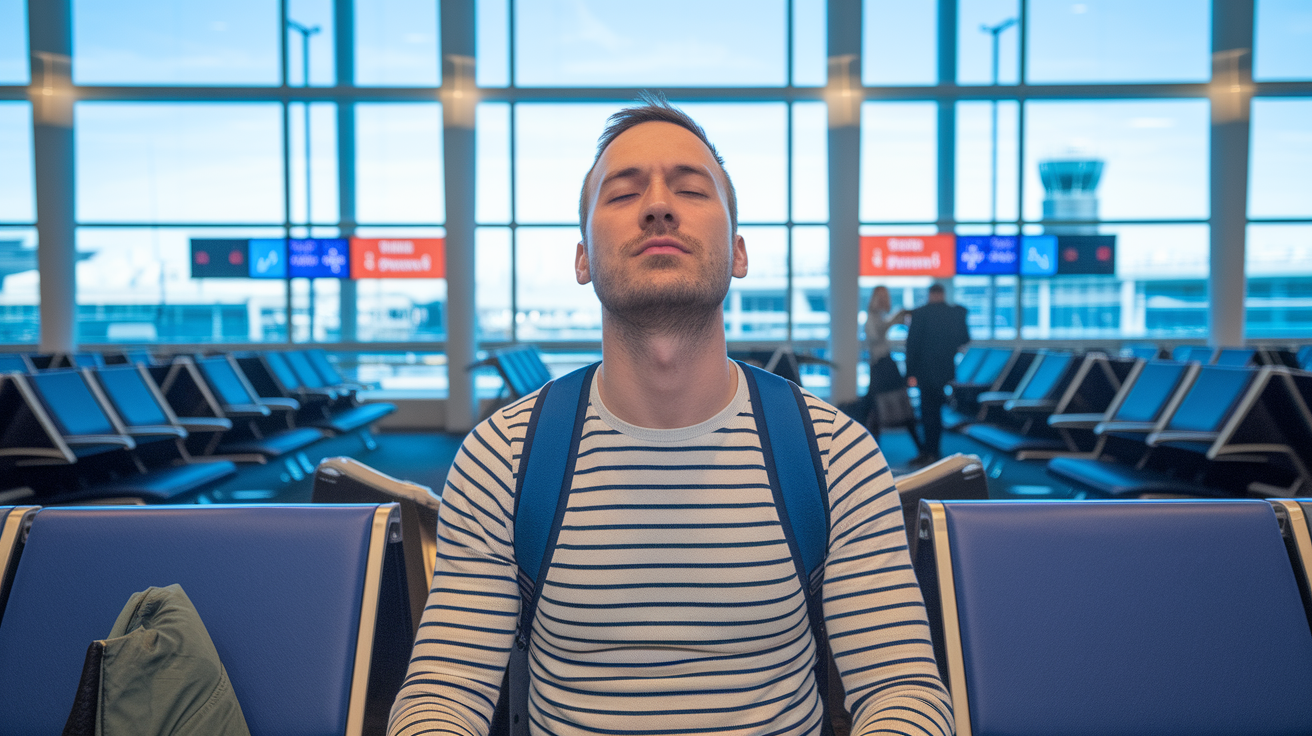
You know that spiral where you imagine every disaster before you even zip your suitcase? Delayed flights, forgotten passports, nightmare hotel rooms. Pre-travel anxiety doesn’t wait until you arrive. It shows up days or weeks early, hijacking your sleep and turning packing into a full-body stress event. The good news is that you don’t have to white-knuckle through it. Simple grounding techniques, early prep habits, and a few sensory tools can lower the temperature before you leave and keep you steadier while you’re moving.
Fast-Acting Strategies That Reduce Pre-Travel Anxiety Right Now
Pre-travel anxiety builds days or weeks before you leave. Shows up as racing worst-case thoughts, stomach tension, restlessness, sleep going sideways. The stress peaks right before you start packing or the night before an early flight, when your brain runs through every possible disaster scenario. This anticipatory stress is common. And manageable once you recognize it and have quick tools ready.
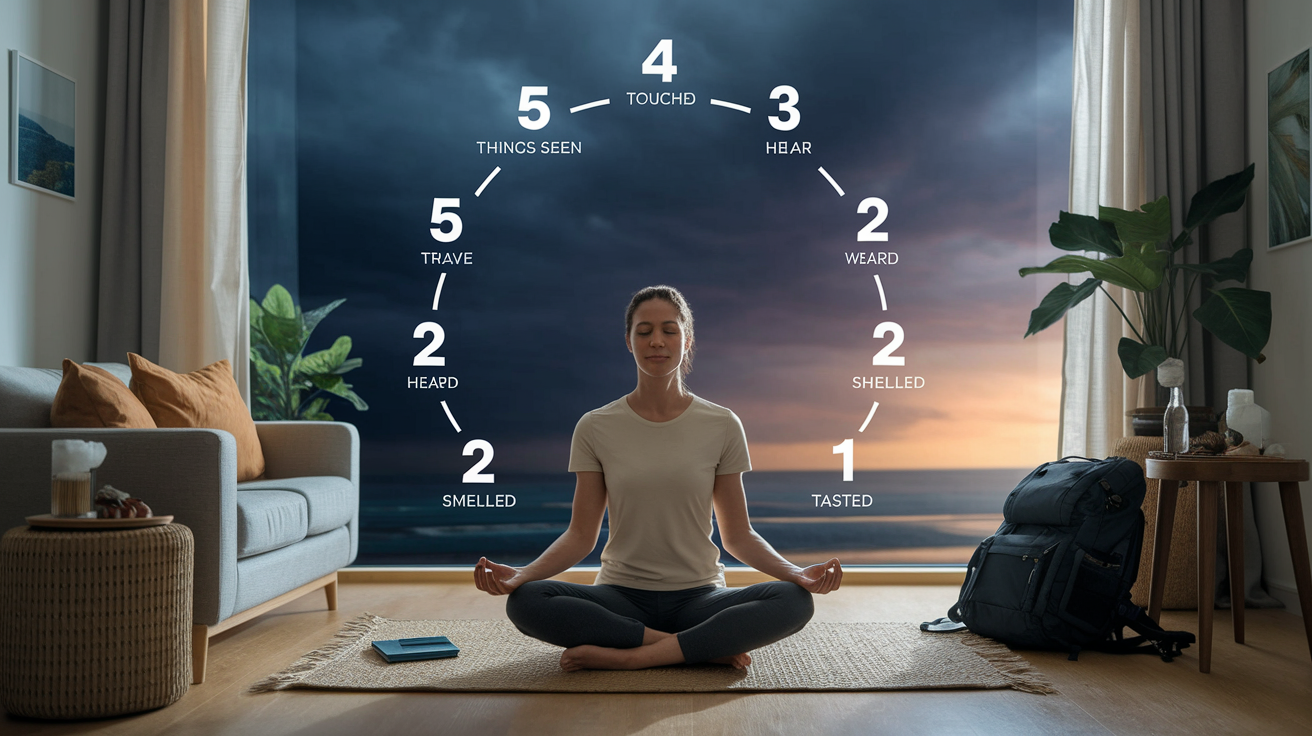
Grounding and breathing techniques regulate your nervous system by pulling you out of fight-or-flight mode into something calmer. The 5–4–3–2–1 grounding method works like this: name 5 things you see, 4 you can touch, 3 you hear, 2 you smell, and 1 you taste. Anchors your attention in the present moment instead of future worry. For breathwork, try inhaling for 4 counts and exhaling for 6 counts (longer exhale calms the nervous system), or use box breathing: inhale 4 seconds, hold 4 seconds, exhale 4 seconds, pause 4 seconds, repeat. Both patterns slow your heart rate and reduce hyperventilation within a few rounds.
Quick 10-minute guided meditations can reduce anxiety by up to 31 percent, especially when you practice them in the morning or just before bed. Sensory-guided imagery works similarly. Close your eyes and imagine 3 to 5 vivid sensory details from a calm place. Sound of water, scent of lavender, feeling of warm sun on your face. Hold that mental picture for 30 to 60 seconds, gives your mind a break from the worry loop and helps reset your nervous system.
- 5–4–3–2–1 grounding – Name things in each sensory category out loud or silently to anchor attention in the present.
- 4-in/6-out breathing – Inhale for 4 counts, exhale for 6 counts, repeat until your heart rate slows and your shoulders drop.
- Box breathing – Inhale 4, hold 4, exhale 4, pause 4, repeat for 2 to 3 minutes.
- 1-minute mini-meditation – Sit quietly, close your eyes, focus only on your breath for 60 seconds without trying to control it.
- 30–60 second guided-imagery prompt – Picture yourself at a safe, peaceful place and name 3 sensory details (what you see, hear, feel) to shift focus away from worry.
Practical Pre-Travel Preparation Habits That Lower Anxiety in Advance

Early preparation reduces cognitive overload by spreading tasks across days rather than cramming them into the night before you leave. When you try to pack, clean, organize documents, and make last-minute decisions all at once, your nervous system treats it like an emergency. Breaking the work into smaller steps over a longer window lowers the pressure. Gives you time to catch anything you forgot without panic.
Pull your suitcases out 1 to 2 weeks before your trip and pack in short 10-minute chunks whenever you have a few minutes free. Use laundry day about one week before travel to sort clean clothes directly into your luggage so you’re not scrambling the night before. For road trips, stage dry goods and gear into a cooler bag several days early so you can see what you have and know what’s still missing. This method also works for special equipment like snow gear or water sports supplies. Seeing the physical pile tells your brain the job is progressing.
Keep a short Notes-app list for items you need but don’t pack every time. Chargers, adapters, sunscreen, medications. Pair that with a must-have document checklist: passport or ID, boarding passes, reservation confirmations, copies of prescriptions. You can print these or keep digital backups, but having a checklist you review once the day before travel prevents the 3 a.m. “did I pack my passport” spiral. Simple safety research also helps. Check local emergency numbers, know where the nearest clinic or pharmacy is located, confirm your credit card has travel notifications turned on.
Build a “do-nothing” buffer the night before travel. Don’t schedule packing, errands, or major cleaning for that evening. Instead, finish most tasks two nights before, then use the final night to double-check your checklist, set out your travel clothes, wind down early. This buffer keeps you from staying up late, missing sleep, and starting the trip already exhausted and anxious.
- Pull suitcases out 1 to 2 weeks early and pack in 10-minute sessions rather than one long stressful block.
- Use laundry day about one week before departure to sort clean clothes directly into luggage.
- Keep a Notes-app packing list for special gear and a must-have document checklist (passport, meds, confirmations, chargers).
- Research basic safety info (local emergency numbers, nearest clinic, credit card travel notifications) a few days before you leave.
- Build a do-nothing buffer night before travel. Finish tasks two nights early and use the final evening to review, rest, wind down.
- Keep your itinerary simple: limit yourself to one structured activity per day and leave open time on travel days to reduce scheduling pressure.
Building Sustainable Calming Routines Before and During Travel
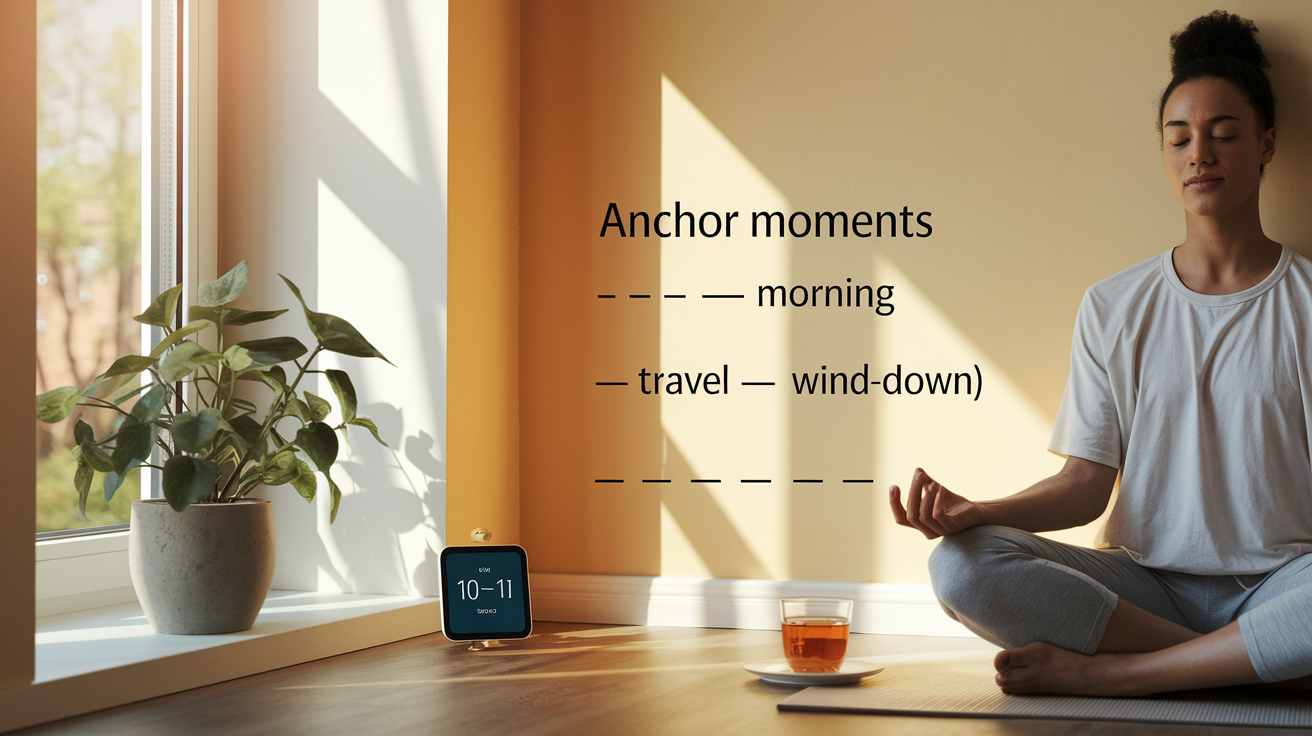
Routine sequencing helps keep anxiety lower across days by creating predictable moments your nervous system can rely on. When you pair a calming practice with a consistent time (such as 10 minutes of meditation in the morning, a brief breathing reset before bed, or a short wind-down ritual the night before departure), you train your body to expect and enter a calmer state. This structure works better than waiting until you feel anxious and then trying to remember what to do.
Integrate short practices into moments that already exist in your day without reteaching yourself new techniques. If mornings feel rushed, slot a 10-minute meditation right after your coffee or before you check your phone. If evenings are chaotic, use a pre-bed wind-down that includes one breathing exercise and a few minutes of low-stimulation activity like reading or gentle stretching. The key is linking the practice to an existing anchor. Wake up, meditate, shower. So it becomes automatic rather than another thing you have to remember to do. App-based tools make this easier because you can queue up a guided session and let it run without planning the steps yourself.
During travel days, adapt timing and simplify habits so they fit into small gaps. A 10-minute meditation becomes a 3-minute breathing reset in the airport gate area. A full evening wind-down becomes an eye mask and 5 minutes of slow breathing on the plane. Keep one or two simple routines you can do anywhere (breathwork, a short body scan, or a grounding sequence) and use them during layovers, before boarding, or in the hotel room at night. The consistency of having something familiar to return to reduces the feeling that travel is completely out of your control.
Anxiety-Friendly Packing Strategies That Make Travel Feel More Manageable
Early packing and staging items reduce decision fatigue by letting you see what you have and adjust over several days instead of making every choice under time pressure. When you pull your suitcase out early and add items incrementally, your brain can review the pile calmly and catch gaps without the adrenaline spike of realizing you forgot something at 11 p.m. the night before. Staging road-trip gear in a cooler bag or grouping flight essentials in a small carry-on pouch serves the same purpose. It externalizes the mental list so you’re not holding everything in your head.
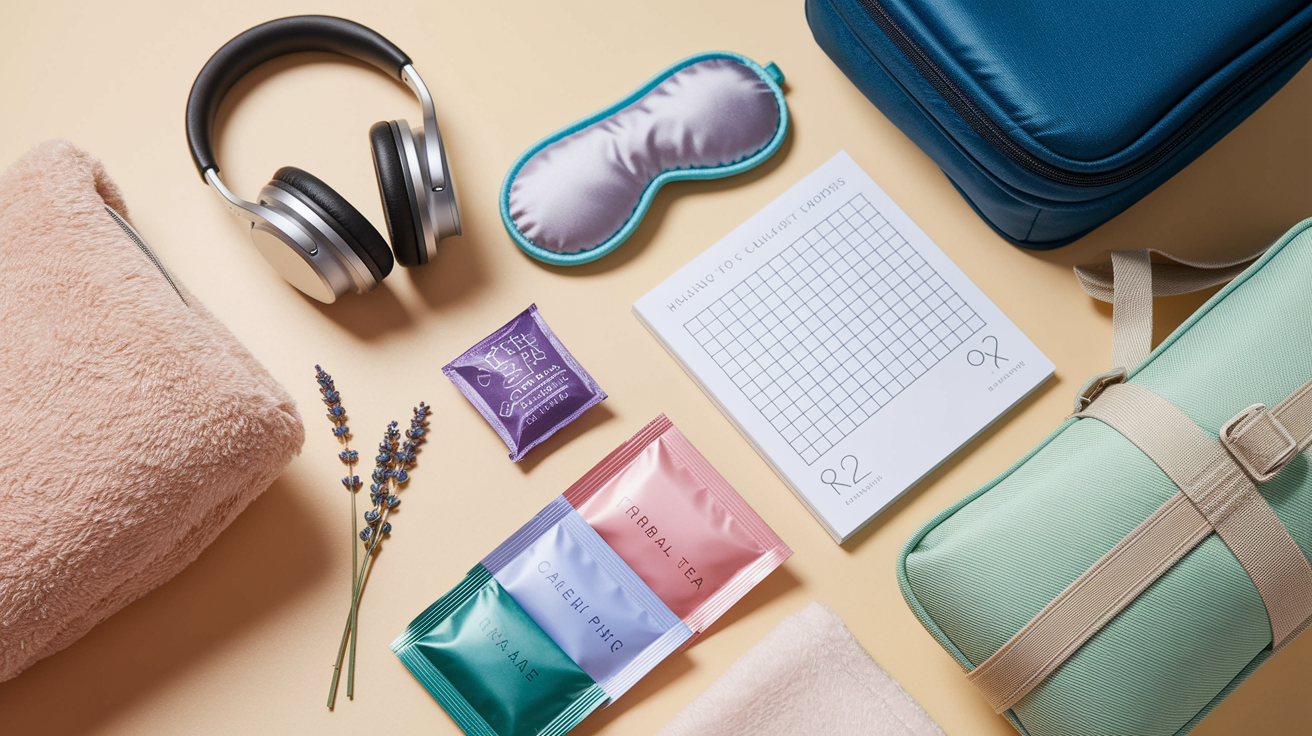
Sensory and comfort tools for planes, cars, and trains give you reliable ways to regulate overstimulation and create small pockets of calm during transit. Noise-cancelling headphones or earbuds with a calming playlist block out chaotic airport sounds. An eye mask and travel pillow help you rest even if the environment is bright or uncomfortable. A lavender sachet, herbal tea bags, or a soft layer like a hoodie or wrap provides sensory grounding when you need to feel safer or more settled. Packing at least one full change of clothes in your carry-on means you have a backup if luggage is delayed, which removes one common source of travel-day panic.
| Item | Purpose |
|---|---|
| Noise-cancelling headphones or earbuds | Blocks chaotic sounds in airports, planes, transit hubs; pair with a calming playlist or white noise. |
| Eye mask and travel pillow | Helps you rest in bright or uncomfortable environments; signals to your body it’s time to wind down. |
| Lavender sachet or calming scent | Provides sensory grounding and a familiar scent anchor when surroundings feel overwhelming. |
| Herbal tea bags | Offers a soothing ritual you can repeat in hotel rooms or rest stops to create predictability. |
| One full change of clothes in carry-on | Backup in case checked luggage is delayed or lost; removes one major travel-day worry. |
| Soft layer (hoodie, wrap, or light blanket) | Acts as a portable comfort item and regulates temperature on cold planes or in overly air-conditioned spaces. |
Cognitive and Mindset Tools for Travel Anxiety
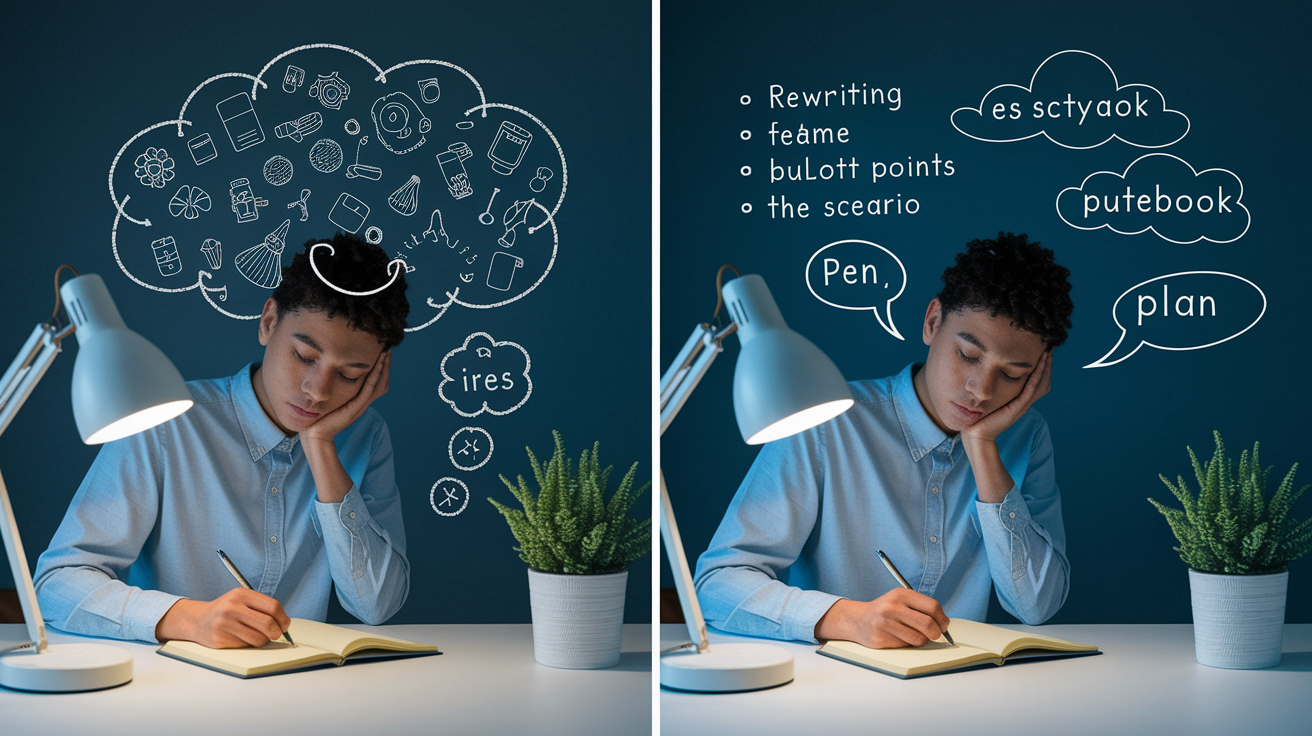
Cognitive reframing helps you shift how you interpret travel stressors by replacing catastrophic assumptions with more balanced, evidence-based thoughts. For example, instead of “If I miss this connection, the whole trip is ruined,” you might reframe it as “If I miss the connection, I’ll rebook the next flight and adjust the first day’s plan.” The situation is still inconvenient, but the reframe removes the sense of total collapse and reminds you that you have options. Reframing doesn’t eliminate worry, but it reduces the intensity and makes the problem feel solvable rather than catastrophic.
The “complete the story” technique for worst-case thinking involves taking your fear all the way to the end instead of letting it loop in vague, unfinished dread. Ask yourself, “What’s the actual worst thing that could happen, and what would I do?” If you get sick on the trip, you’d find a local clinic, use travel insurance if you have it, rest for a day, adjust plans. If you miss a flight, you’d contact the airline, rebook, possibly lose some money, and still reach your destination a few hours later. Running the scenario to completion shows you that even difficult outcomes have steps you can take. Restores a sense of control and shrinks the fear from enormous and paralyzing to specific and manageable.
Post-trip reflection builds resilience by helping you recognize that you successfully navigated challenges, which reduces anticipatory anxiety for future trips. After you return, take a few minutes to write down or mentally review one or two things that went wrong and how you handled them. Missed a turn and used a map, felt anxious at the airport and used grounding, dealt with a delayed flight and stayed calm. Collecting these “we got through that” moments over time trains your brain to trust that you can handle uncertainty. Each successful trip makes the next one feel a little less threatening.
Travel Day Confidence Strategies and Airport Coping Tools
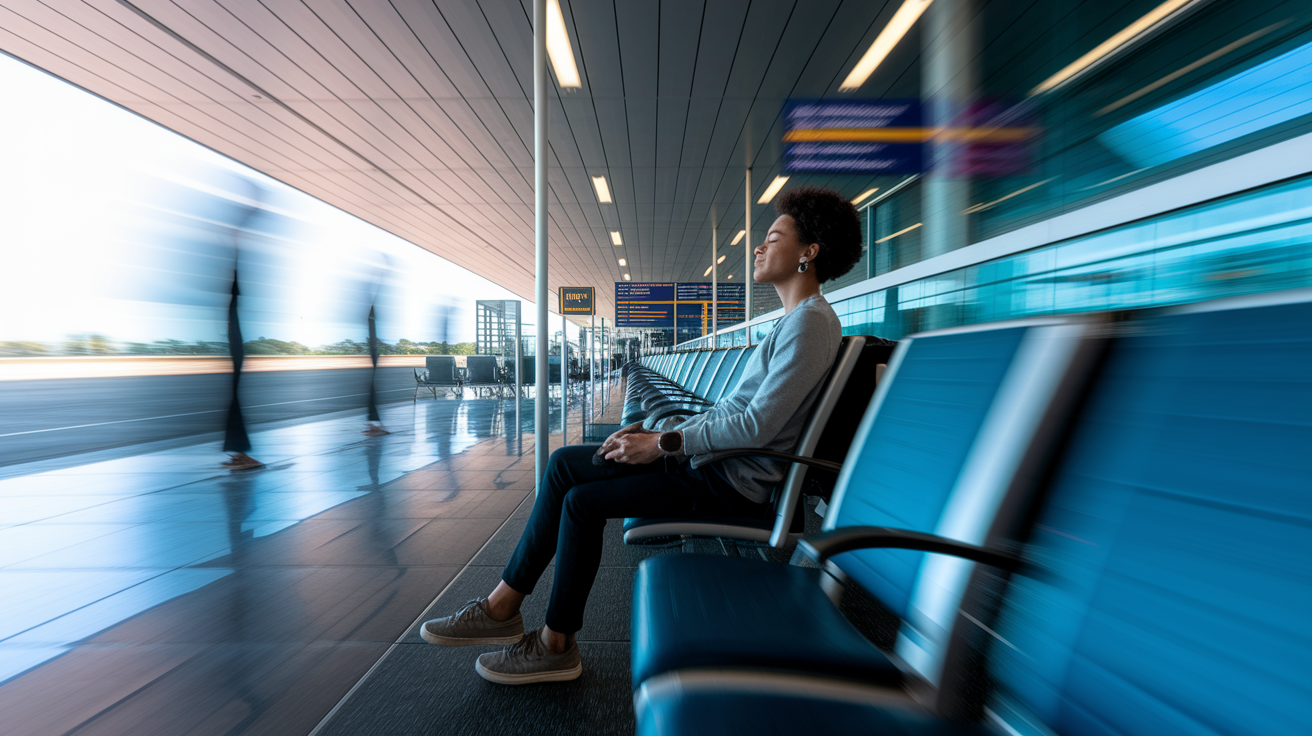
Typical airport triggers include crowded spaces, long security lines, gate changes, boarding announcements you’re not sure you heard correctly, and the general sensory overload of noise, screens, movement. Time pressure makes it worse. If you’re cutting it close, every delay feels like a crisis. Arriving early removes most of the time pressure and gives you space to move slowly, find your gate without rushing, use a few calming strategies before boarding. Even an extra 20 to 30 minutes can make the difference between feeling frantic and feeling steady.
Calming strategies during airport or transit environments include short walking breaks to release tension, sensory grounding to anchor your attention, breathwork to slow your heart rate, distraction audio like a podcast or audiobook to give your mind something else to focus on. You don’t need to use all of them. Pick one or two that feel most accessible in the moment and repeat them as needed. The goal isn’t to eliminate all stress but to keep your nervous system from tipping into full panic mode.
Quick Regulation Tools to Use at the Gate
Grounding steps work well in gate areas because they require no equipment and you can do them while sitting or standing. Use the 5–4–3–2–1 method by naming things around you out loud or silently: 5 things you see (gate number, a red jacket, a coffee cup, a window, a screen), 4 things you can touch (your seat, your phone, your water bottle, your shoes), 3 things you hear (announcements, footsteps, someone talking), 2 things you smell (coffee, someone’s perfume), 1 thing you taste (gum, water, a mint). This pulls your attention into the present and interrupts the loop of future-focused worry.
- 5–4–3–2–1 sensory grounding – Name items in each category to anchor yourself in the present moment and interrupt racing thoughts.
- 4-in/6-out breath counts – Inhale for 4 seconds, exhale for 6 seconds, repeat for 2 to 3 minutes to slow your heart rate and calm your nervous system.
- Short walking breaks – Walk to the restroom, get water, or take a lap around the gate area to release physical tension and reset your focus.
- Distraction audio – Queue up a favorite podcast, audiobook, or calming playlist to give your mind something else to focus on while you wait.
When Pre-Travel Anxiety Is Severe: Signs You May Need Extra Support

Common signs anxiety has become overwhelming include frequent panic attacks (rapid heart rate, chest tightness, dizziness, or a sense of losing control), persistent symptoms that show up days or weeks before every trip, avoidance that prevents you from traveling even when you want to, interference with daily functioning such as trouble sleeping, eating, or concentrating in the week leading up to travel. If you notice these patterns repeating, or if self-help strategies aren’t lowering the intensity enough to make travel feel possible, it may be time to check in with a clinician.
Therapy approaches such as cognitive behavioral therapy and mindfulness-based therapy are effective for travel anxiety because they teach you how to challenge catastrophic thoughts, tolerate uncertainty, regulate your nervous system in real time. A pre-trip counseling session can help you prepare specific coping scripts, practice grounding exercises with guidance, identify which triggers are most likely to show up during your trip. Scheduling one or two sessions in the weeks before travel gives you a chance to rehearse strategies with support and adjust them based on what feels most helpful.
Ask a clinician about short-term medication or travel-day supports if your anxiety is severe enough to cause panic attacks, prevent sleep for several nights before travel, or make it hard to function during the trip itself. Some people benefit from a low-dose anti-anxiety medication for flight days or high-stress travel situations, while others may need a longer-term medication plan if anxiety is frequent and debilitating. This conversation is worth having if non-medication strategies alone aren’t enough, and your clinician can help you weigh the options based on your history, symptoms, and travel frequency.
Final Words
Pack a little each day, practice a 4-in/6-out breath, and use a quick 5–4–3–2–1 grounding break when your mind races. These are the fast actions that work right before you leave.
Keep simple routines—10-minute meditations, staged packing, and a short checklist—to lower build-up stress. Use mental rehearsal and easy airport tools like noise-cancelling headphones and short walks to stay steady.
Try these steps, track what helps, and ask for support if anxiety feels overwhelming. Small, steady pre-travel anxiety tips can really make travel feel easier.
FAQ
Q: Why does travel anxiety peak before packing or departure?
A: Travel anxiety peaks before packing or departure because you’re imagining unknowns, replaying past problems, and feeling rushed; this builds nervous-system tension, sleep disruption, stomach upset, and racing thoughts.
Q: What quick techniques calm pre-travel anxiety right now?
A: Quick techniques that calm pre-travel anxiety right now include grounding (5–4–3–2–1), breathwork (inhale 4 / exhale 6 or box 4–4–4–4), a one-minute body scan, and sensory imagery to shift focus.
Q: How should I prepare ahead to reduce travel stress?
A: Preparing ahead to reduce travel stress means staging luggage 1–2 weeks early, packing in 10-minute chunks, keeping a must-have document checklist in Notes, researching basic safety, and building a buffer night before travel.
Q: What simple packing items reduce anxiety on the road?
A: Simple packing items that reduce anxiety on the road include noise-cancelling headphones, an eye mask, travel pillow, calming scent (lavender), spare clothes in carry-on, and herbal tea bags for comfort.
Q: How can I build a calming routine before and during travel?
A: You can build a calming routine before and during travel by sequencing morning and evening habits, adding a predictable 10-minute meditation, using short resets at key times, and relying on apps for consistency when schedules change.
Q: What mindset tools help me build long-term travel confidence?
A: Mindset tools that build long-term travel confidence include cognitive reframing (seeing mishaps as learning), “complete the story” worst-case planning, mental rehearsal, and brief post-trip reflection to notice growth and reduce future fear.
Q: What helps at the airport when I feel overwhelmed?
A: At the airport, arriving early and simplifying your routine helps; use 5–4–3–2–1 grounding, breath counts (4 in / 6 out), short walking breaks, and noise-free audio or podcasts to reduce overstimulation.
Q: When should I seek professional help for travel anxiety?
A: You should seek professional help for travel anxiety when panic attacks occur, avoidance stops you from traveling, symptoms persist or worsen, or daily functioning is impaired; consider scheduling CBT or asking about short-term medication support.
Comments are closed