
Is sudden sharp neck tension just bad posture, or something that needs quick attention?
It often comes from a muscle spasm (the muscle clamps down) after long scrolling, a weird pillow, or a sudden twist.
This post shows simple, low-risk steps you can try right away to ease that stabbing, locked-up feeling.
You’ll learn common triggers, quick relief actions to try now, what to track for your clinician, and the red flags that need prompt care.
Immediate Ways to Ease Sudden Sharp Neck Tension
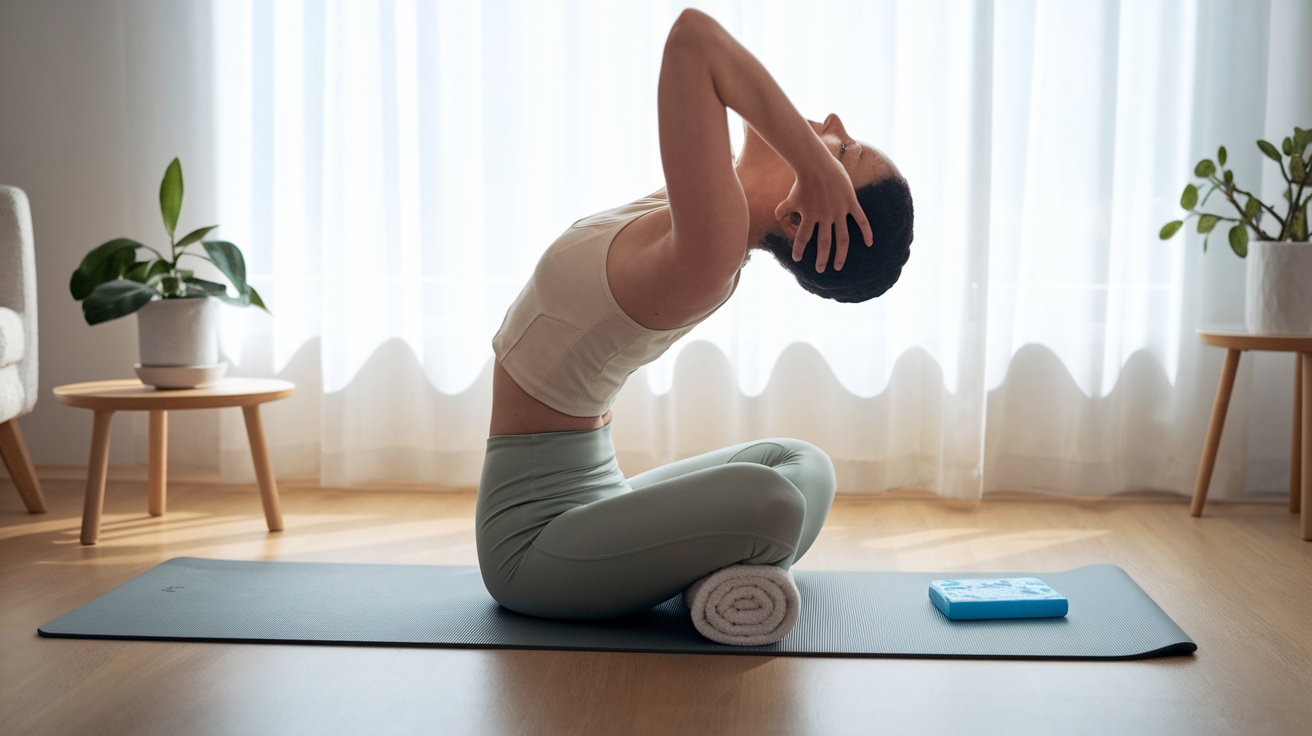
Sharp neck tension usually means a muscle spasm, where the tissue clamps down and won’t release. It can hit after scrolling too long, waking up on a weird pillow, or twisting fast to check your blind spot. Your body tries to protect the area by tightening everything around it. That makes the pain worse and limits how much you can move.
Getting some relief in the first hour or two matters. It stops that guarding cycle before it digs in deeper.
A few simple things can calm the muscle without forcing it. Gentle movement, a little rest in a neutral position, and smart use of temperature all help dial down that rigid, stabbing feeling. You’re not trying to push through pain. You’re coaxing the tissue back to normal tension. Most people notice real relief within 20 to 30 minutes.
If the sharp pain comes with arm numbness, a sudden severe headache, or hand weakness, stop and get medical attention. Those signs point to something beyond tight muscle.
-
Gently tilt your head side to side, holding each stretch for 10 to 15 seconds. Move slowly, breathe through it, and stop at the first hint of sharp pain instead of pushing past it.
-
Apply ice for the first 48 hours if the tension came on suddenly, using 15 to 20 minutes on, then 40 minutes off. After two days, switch to moist heat for the same duration to relax deeper muscle layers.
-
Lie on your back with a rolled towel under your neck to keep your spine neutral. This takes load off the muscles and lets them release without you holding your head up.
-
Perform slow neck rotations, 5 reps each direction, moving through a pain-free range. These small movements remind the muscle it’s safe to lengthen.
-
Pause any activity that brings the sharp sensation back. Driving, lifting, or holding your phone at chest level can all re-trigger the spasm before it settles.
Common Reasons This Type of Neck Tension Happens

Most sudden sharp neck tension starts with mechanics. Holding your head forward while you’re working at a screen shifts several pounds of weight onto the small muscles at the back of your neck. Eventually they give out. Sleeping with your head twisted or propped too high does the same thing overnight. A quick movement can catch those muscles off guard and trigger a sharp protective spasm. Think turning to grab something off the passenger seat or looking up at a high shelf.
Poor desk setup keeps your neck in a strained position all day until something snaps into tension. Your monitor sits too low, your chair doesn’t support you right, and the small strains add up.
Stress and fatigue play a direct role too. When you’re under pressure, your shoulders creep up and your neck muscles stay partially contracted even when you’re sitting still. Add a night of broken sleep or a week of high-demand work, and those muscles don’t get a recovery window. The tissue gets tight, irritable, and ready to lock up at the smallest thing. Sometimes it’s not one bad movement but dozens of small strains that finally cross a threshold.
- Muscle strain from repetitive or sudden awkward positioning
- Poor setup at your desk or in your car
- Sudden twisting movement that catches the neck unprepared
- Stress-driven muscle tightening that never fully releases
Warning Signs That Need Medical Care

Most sharp neck tension gets better within a few days with rest and simple care. But certain symptoms mean the problem involves more than muscle.
If you notice numbness, tingling, or weakness traveling down your arm or into your hand, that points to nerve involvement rather than pure muscle spasm. A sudden severe headache that feels different from your usual tension headache can signal something more urgent, especially if it comes with neck stiffness.
Fever alongside neck pain and stiffness raises concern for infection. Vision changes, trouble with balance, or difficulty coordinating your movements are red flags for nervous system issues. If your symptoms started after a fall, car accident, or any real impact, get checked even if the pain feels mild at first.
- Numbness or tingling radiating into your shoulder, arm, or fingers
- Arm weakness or trouble gripping objects
- Sudden severe headache that feels unlike prior headaches
- Fever combined with neck stiffness
- Vision problems or sensitivity to light
- Loss of balance or difficulty walking steadily
How to Prevent Sharp Neck Tension Episodes
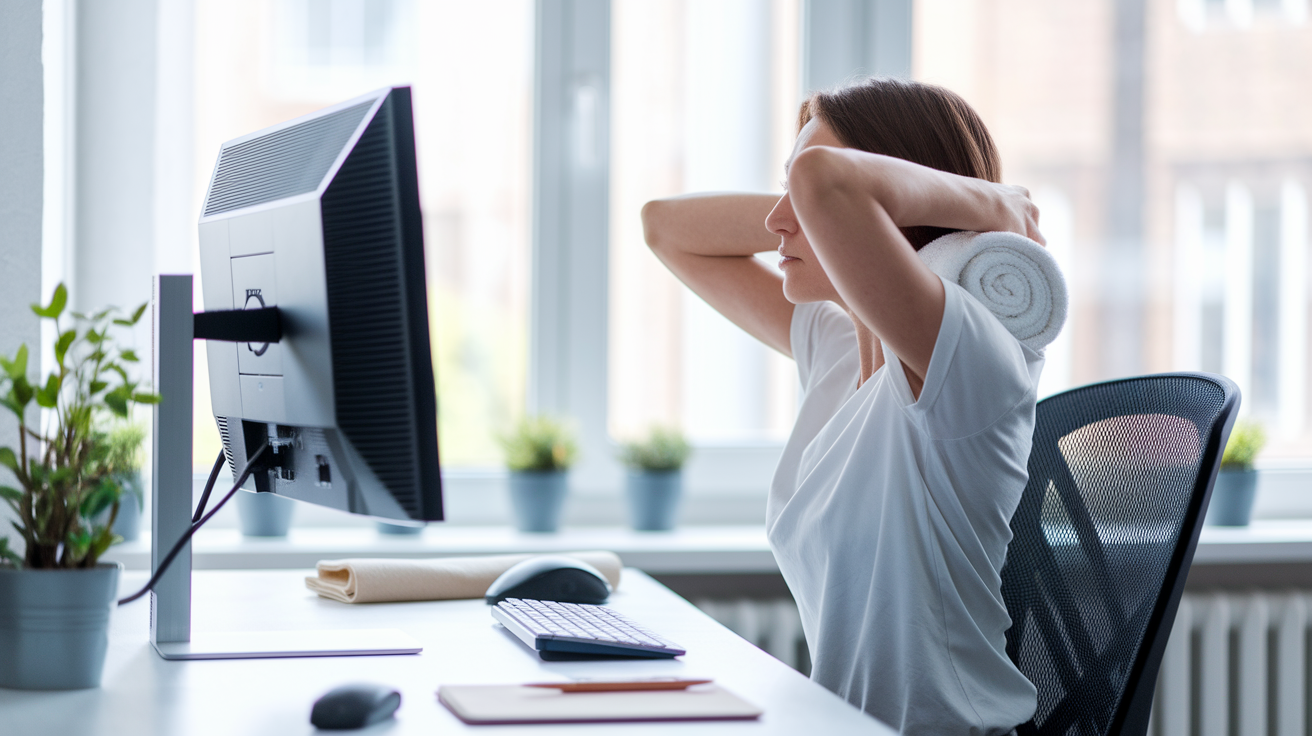
Prevention comes down to changing the patterns that load your neck unevenly.
Start with your workspace. Raise your monitor so the top third of the screen sits at eye level. That keeps your head balanced over your spine instead of jutting forward. Position your keyboard and mouse close enough that you’re not reaching. Use a chair that supports your lower back so you’re not slouching into a forward curve. These things remove hours of daily strain.
At home, check your pillow height. Your neck should stay in a straight line with your spine when you’re lying on your side, not tilted up or sagging down.
Daily mobility and stress management make a bigger difference than most people expect. Set a timer to stand, roll your shoulders back, and gently move your neck through its full range every 30 to 40 minutes. Even 10 seconds of movement resets muscle tension before it builds. Breathing exercises, a short walk, or five minutes of stretching at the end of your workday all help your nervous system downshift. That stops background muscle guarding.
Strengthening the small stabilizing muscles in your neck gives the area more resilience so it doesn’t lock up as easily under load. A physical therapist can show you exercises that actually work.
- Adjust your desk and screen height to support neutral head position
- Do gentle neck mobility exercises daily, especially during long sitting sessions
- Use breathing techniques or short movement breaks to manage stress before it tightens your muscles
- Sleep with a pillow that keeps your neck aligned, and avoid stomach sleeping with your head turned
- Strengthen deep neck stabilizers through guided exercises to build tolerance for sustained postures
Frequently Asked Questions About Sudden Sharp Neck Tension
Is sudden sharp neck pain normal, or does it mean something is seriously wrong?
It’s common and usually not serious. Most episodes come from muscle spasm, poor posture, or a quick awkward movement. Your muscles guard the area, which creates that sharp, stabbing feeling. If the pain stays in your neck, doesn’t radiate into your arms, and starts easing within a day or two with rest and simple care, it’s typically a mechanical issue that’ll resolve on its own.
How long does sharp neck tension usually last?
Most muscle-related sharp tension improves noticeably within 24 to 72 hours and resolves fully in one to two weeks. The first day or two tend to feel the worst, then the intensity drops as the muscle relaxes. If your pain isn’t improving at all after three days, or if it’s getting worse, that’s a reasonable time to check in with a clinician.
Can sharp neck tension be related to stress even if I didn’t do anything physically strenuous?
Yes. Stress keeps your neck and shoulder muscles in a low-grade contraction all day. You might not notice the tightness building until one small movement triggers a sharp spasm. Turning your head, reaching for something. It’s the accumulation of tension rather than a single event. Managing stress through breathing, movement breaks, or other practices can prevent that background tightness from reaching a breaking point.
Does sharp neck pain mean a nerve is pinched?
Not always. True nerve compression usually causes symptoms that travel down your arm. Tingling, numbness, or weakness in your hand. Sharp, localized neck pain without arm symptoms is more often pure muscle spasm or joint irritation. If you do start feeling radiating symptoms, that’s when to pursue medical evaluation to check for nerve involvement.
Final Words
Start with quick relief: gentle stretches, heat or cold for 10-20 minutes, and a short rest to ease muscle guarding.
Then notice patterns: adjust your desk, move regularly, and manage stress. If you get numbness, arm weakness, a severe headache, or symptoms that last past 72 hours, see a clinician.
Track timing, triggers, and what helps so you can explain sudden sharp neck tension causes and what to do. Small, steady changes often cut down episodes. You’ll likely feel better with these simple steps.
FAQ
Q: How to release extreme tension in neck?
A: Releasing extreme tension in your neck involves gentle stretches, 15–20 minutes of heat or cold, slow deep breathing, short rest with a neutral spine, and frequent movement; seek care if pain or numbness worsens.
Q: What are the 5 D’s for neck pain?
A: The 5 D’s for neck pain are dizziness, double vision, slurred speech, difficulty swallowing, and sudden loss of balance or fainting—signs that usually require urgent medical evaluation.
Q: Why did my neck get tight all of a sudden?
A: Your neck can get tight suddenly from a muscle spasm due to abrupt movement, poor posture, awkward sleep, or stress; less commonly from nerve or joint irritation—track triggers and watch for red flags.
Q: What does stroke neck pain feel like?
A: Stroke-related neck pain often feels sudden, sharp, or ripping and is usually one-sided, occurring with dizziness, vision changes, slurred speech, numbness, or weakness—seek emergency care right away.
Comments are closed