
What if you could ease tension headaches without reaching for pills?
It sounds hopeful, but studies and therapists report real results: regular targeted massage can cut how often these headaches happen and how much they hurt.
By releasing tight neck and shoulder muscles, improving blood flow, and calming the body’s stress response, massage often breaks the cycle that keeps headaches coming.
This article explains which techniques work, who benefits most, how quickly to expect change, simple things to try now, and when to check in with a clinician.
Evidence on Massage Therapy’s Effectiveness for Tension Headaches

Research shows massage can reduce how often tension headaches happen and how much they hurt. A 2002 study in the American Journal of Public Health found that people getting regular massage sessions had fewer chronic tension headaches compared to control groups. Clinical trials since then have documented improvements in muscle tightness, circulation markers, and self-reported pain after consistent massage sessions over four to six weeks.
The body changes that explain these benefits include less muscle guarding in the neck and shoulders, better oxygen delivery to tissues around the skull, lower stress hormone levels, and higher pain thresholds. When therapists apply sustained pressure to chronically tight muscles, the nervous system starts to reset its baseline tension pattern. This can break the cycle of muscle-driven headache pain.
People who benefit most include those with chronic neck and shoulder tightness, desk workers with forward head posture, anyone experiencing stress-related muscle guarding, and people whose headaches get worse with physical or emotional strain. Massage appears less effective when headache pain comes from sinus inflammation, vascular problems, or untreated structural issues in the spine.
Key evidence points:
- Massage reduced headache frequency in controlled studies by measurable margins over 4 to 6 weeks
- Muscle tension scores and subjective pain ratings both improved with regular treatment
- Stress hormone markers decreased after Swedish and deep tissue sessions
- Pain threshold testing showed higher tolerance in massage recipients versus controls
How Massage Techniques Target Tension Headache Sources
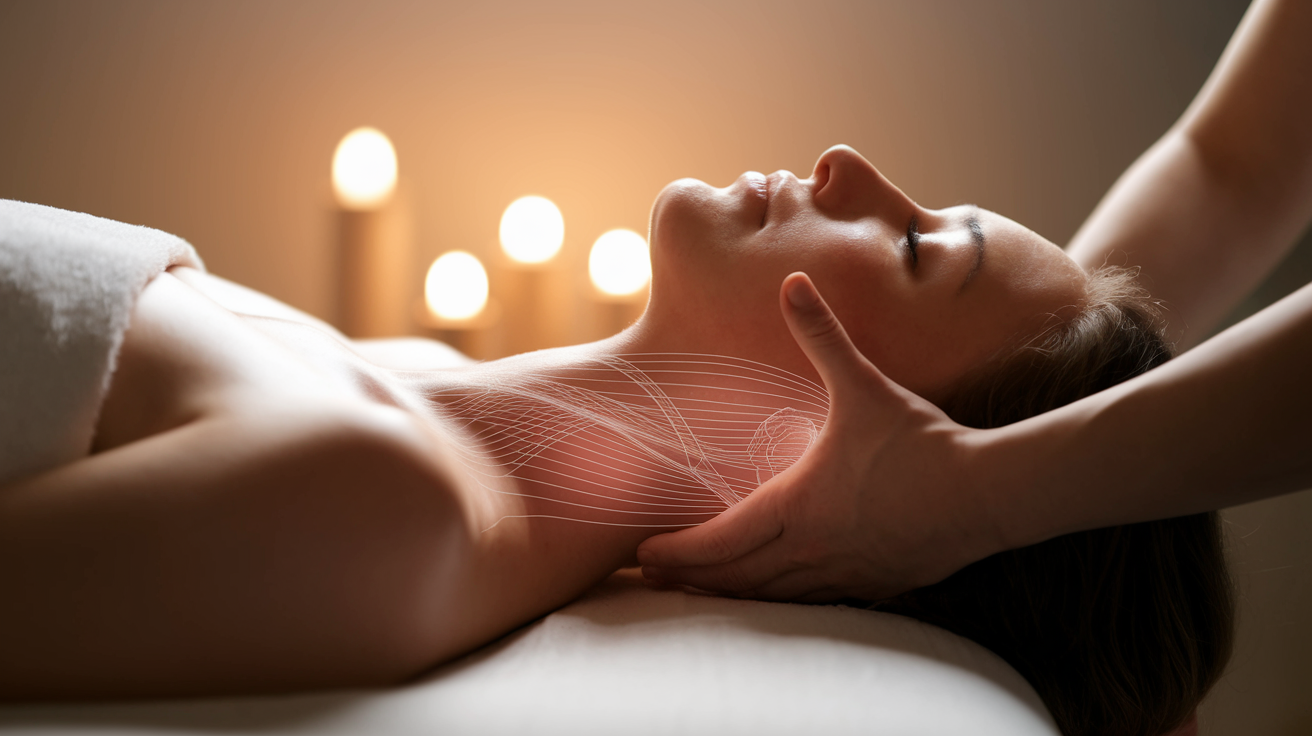
Different massage techniques address tension headaches through distinct mechanical pathways. Trigger point therapy applies direct sustained pressure to hyperirritable spots in muscle tissue that refer pain to the head. Myofascial release uses slow stretching force to restore normal glide between connective tissue layers. Swedish massage employs rhythmic strokes that calm the sympathetic nervous system and reduce the muscle guarding that keeps headache cycles going.
Understanding how each technique works helps match the right approach to your headache pattern. Therapists often combine methods within a single session, starting with broader relaxation strokes and then targeting specific areas of restriction once the nervous system has downshifted.
Trigger Point Work
Trigger points are small contracted knots within muscle fibers that send referred pain to distant areas. In the upper trapezius, suboccipital muscles at the base of the skull, and the masseter jaw muscle, these points commonly refer pain that feels like a tight band around the head or pressure behind the eyes. A therapist locates the point, applies steady pressure for 10 to 30 seconds, and holds until the tissue releases. This deactivation interrupts the pain referral pattern and can produce immediate relief in the headache zone even though the therapist is working several inches away from where it hurts.
Myofascial Release
Fascia is the thin connective tissue web that surrounds every muscle and organ. When fascia becomes tight or adhered from poor posture, repetitive strain, or chronic stress, it restricts normal movement and pulls on pain-sensitive structures. Myofascial release uses slow, sustained pressure or gentle stretching to soften these restrictions. For tension headaches, therapists often work the fascial planes along the back of the neck, across the shoulders, and around the jaw. The technique feels like a deep, melting stretch and can restore range of motion that allows muscles to relax more fully between headache episodes.
Swedish Massage
Swedish massage uses long gliding strokes, kneading, and rhythmic tapping to increase circulation and promote parasympathetic nervous system activity. For headache sufferers, this technique reduces the stress load that keeps neck and shoulder muscles chronically tight. A 2016 randomized controlled trial in the Journal of Clinical Psychiatry found that Swedish massage reduced generalized anxiety disorder symptoms, and similar calming effects help lower the stress-tension-headache loop. Therapists typically spend time on the upper back, neck, and scalp, using moderate pressure that feels soothing rather than intensely focused.
Expected Timeline and Frequency for Headache Relief

Some people notice a reduction in headache intensity within one or two sessions, especially if muscle tightness is the primary driver and the headache pattern is relatively new. Acute tension headaches that flare during a stressful week or after a long day hunched over a screen often respond quickly to targeted neck and shoulder work. You may leave the table feeling lighter in the head and notice that the next headache takes longer to arrive or feels less severe.
Chronic tension-type headaches, which recur multiple times per week or have persisted for months, typically require a longer treatment arc. Studies suggest that consistent weekly massage over four to six weeks produces the most reliable improvements in headache frequency and duration. During that window, the nervous system begins to reset its baseline muscle tone, circulation patterns stabilize, and stress-hormone levels trend downward. After the initial phase, many people transition to sessions every two to four weeks to maintain the gains.
Individual variation matters. Sleep quality, posture habits, physical activity, hydration, and ongoing stress all influence how quickly massage helps. Tracking headache frequency, intensity, and triggers in a simple log can show whether the pattern is shifting and help you and your therapist adjust the treatment plan. If headaches stay unchanged after six weekly sessions, it’s worth revisiting the working diagnosis with a healthcare provider to rule out other contributing causes.
Comparing Massage Therapy to Other Tension Headache Treatments
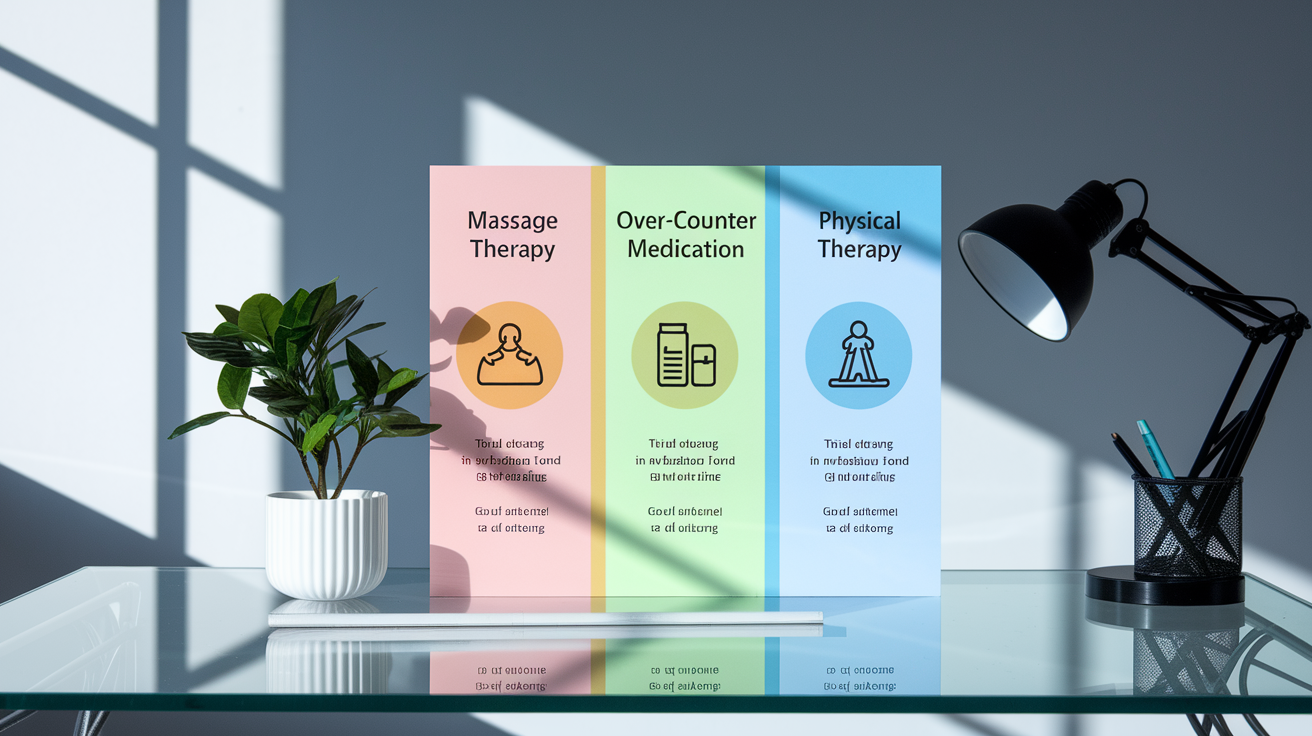
Massage addresses the muscular and nervous system components of tension headaches without introducing medication side effects, but it works more slowly than over-the-counter pain relievers for acute episodes. Physical therapy overlaps with massage in targeting muscle imbalances and posture but adds corrective exercises and ergonomic training that can prevent future headaches. Combining approaches often yields better long-term outcomes than relying on a single method.
Lifestyle interventions like improving sleep hygiene, staying hydrated, managing stress, and taking movement breaks reduce headache triggers but don’t directly release existing muscle tension the way hands-on therapy does. Medication can provide fast symptom relief during a headache but does nothing to change the underlying muscle tightness or stress patterns. Many people find that starting with massage to reduce baseline tension, then layering in posture work and trigger management, creates a sustainable plan that reduces both frequency and reliance on medication.
| Treatment Type | Key Benefit | Limitation |
|---|---|---|
| Massage Therapy | Reduces muscle tension and stress without medication | Requires multiple sessions; slower acute relief than medication |
| Over-the-Counter Medication | Fast symptom relief during active headache | Does not address underlying muscle tightness or prevent recurrence |
| Physical Therapy | Corrects posture and muscle imbalances for long-term prevention | Requires active patient participation in exercises; may take weeks to months |
When Massage May Not Help and Possible Risks
Massage is generally safe and well-tolerated, but it’s less effective when headache pain originates from sinus congestion, migraine physiology, recent head injury, or vascular abnormalities. If your headaches include throbbing on one side, nausea, visual disturbances, or aura symptoms, you may be dealing with migraines rather than pure tension-type headaches. Massage can still help reduce muscle tension that coexists with migraines, but it won’t stop the migraine cascade once it has started.
Mild temporary soreness in treated muscles is common, especially after the first session or after deep trigger point work. This usually resolves within 24 to 48 hours and indicates that the tissue is adapting. Serious adverse effects are rare when massage is performed by a trained therapist, but certain conditions require caution or medical clearance before treatment.
Avoid massage or seek medical evaluation first if you have:
- New, sudden, severe headache that feels different from your usual pattern
- Headache accompanied by fever, stiff neck, confusion, vision loss, or weakness
- Active inflammation, skin infection, or open wounds in the treatment area
Choosing the Right Massage Therapist for Headache Relief

Therapists who hold certifications in clinical massage, medical massage, or neuromuscular therapy often have advanced training in treating headache and pain conditions. Experience working with head, neck, face, and jaw structures matters because these areas require precise anatomical knowledge and careful pressure calibration. A therapist who regularly treats headache clients will know how to assess your posture, identify contributing muscle patterns, and adjust technique based on your feedback during the session.
Clear communication improves outcomes. Before your first session, describe your headache pattern, usual triggers, any recent injuries, and what you’ve already tried. During treatment, speak up if pressure feels too intense or if a technique reproduces your headache sensation. A skilled therapist will adjust in real time and use your input to refine the approach. Expect questions about your sleep, work setup, stress level, and physical activity because all of these influence muscle tension and headache frequency.
Qualities to look for in a headache-focused massage therapist:
- Licensed or certified with specialized training in clinical or neuromuscular techniques
- Experience treating chronic pain, headaches, or neck and jaw disorders
- Willingness to explain what they’re doing and why during the session
- Ability to collaborate with your other healthcare providers if you’re receiving physical therapy, chiropractic care, or medical treatment
Final Words
Right away: massage can loosen tight neck, shoulder, and jaw muscles, lower stress signals, and often cut the number and intensity of tension headaches.
This article looked at the research, how trigger-point work, myofascial release, and Swedish massage help, typical timelines, how massage stacks up against meds and physical therapy, safety limits, and tips for choosing a therapist.
If you wonder can massage therapy relieve tension headaches, the short answer is often yes when paired with regular sessions and simple self-care. It’s a reasonable, low-risk step to try while you track results and check in with your provider.
FAQ
Q: What massages are good for tension headaches?
A: The massages that are good for tension headaches are trigger point work, myofascial release, and Swedish neck/shoulder massage, because they loosen tight muscles, improve tissue glide, and lower stress-related muscle guarding.
Q: What do the Japanese do for headaches?
A: What the Japanese do for headaches often includes shiatsu (finger-pressure massage), acupressure, warm baths or hot compresses, and rest to release neck tension and calm the nervous system.
Q: Why does my headache feel better when I massage it?
A: Your headache feels better when you massage it because pressure relaxes tight neck and shoulder muscles, boosts local blood flow, and activates natural pain-relief signals in the nervous system.
Q: What gets rid of tension headaches fast?
A: What gets rid of tension headaches fast are posture breaks, hydration, a warm neck compress, gentle neck stretches, slow breathing, and light movement; seek care if pain is severe or sudden.
Comments are closed